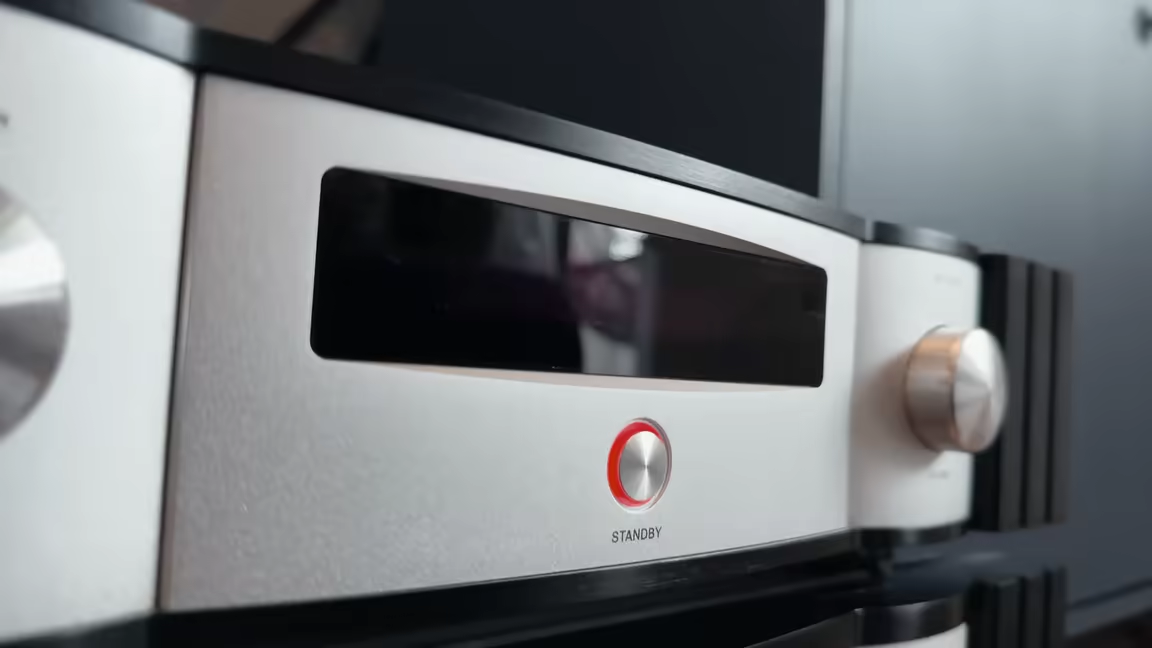
Loudspeaker amplification reviews - standalone power amps, integrated amplifiers, and line preamplifiers. Tube, solid-state, Class A, Class AB, and Class D, evaluated into real, low-sensitivity speaker loads and matched against reference amps in the same price tier so the verdict reflects sound, not spec sheets. Headphone amps live in their own hub - these never get cross-shopped against one.
3 reviews published so far, scored against the same reference list.
Filter by driver / topology, price and connectivity. Pick within a row to widen; combine rows to narrow. Only options the catalogue actually covers are shown.
Driver / topology
Price
Connectivity
Speaker Amps & PreampsHades 12th
9.0
Highly Recommended
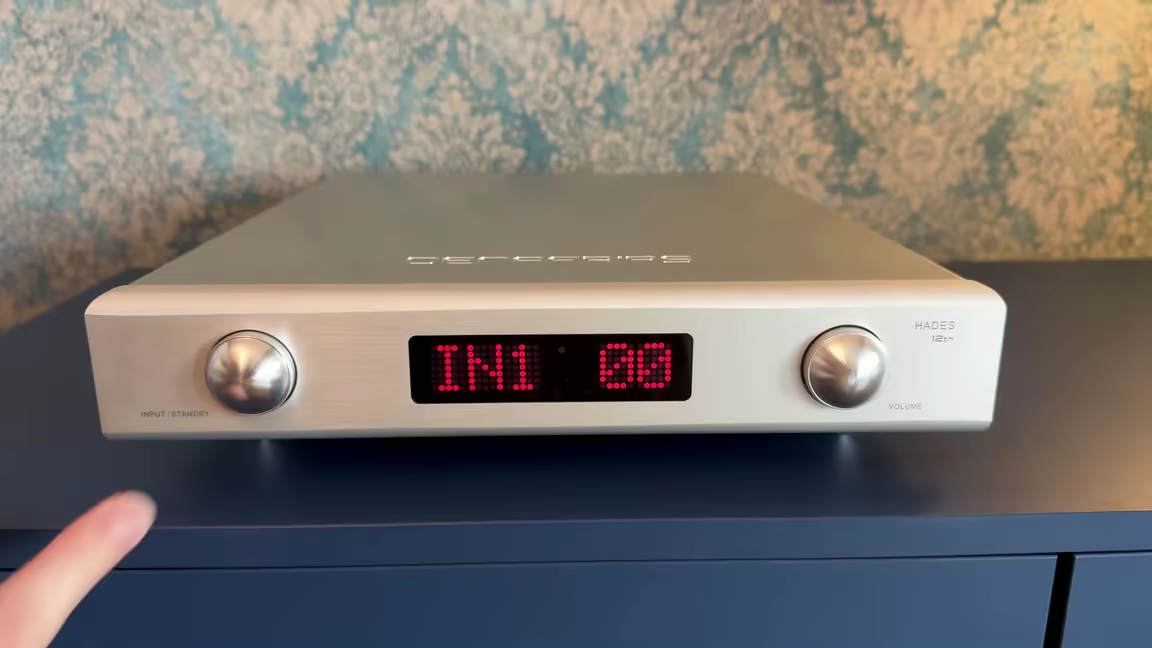
Denafrips Hades 12th Review: The R2R Preamp That Changes Things
A pure Class A, fully balanced, true discrete preamp with a 60-step relay-based resistor ladder volume control - perfect channel balance, 0.00045% THD, 122dB SNR.
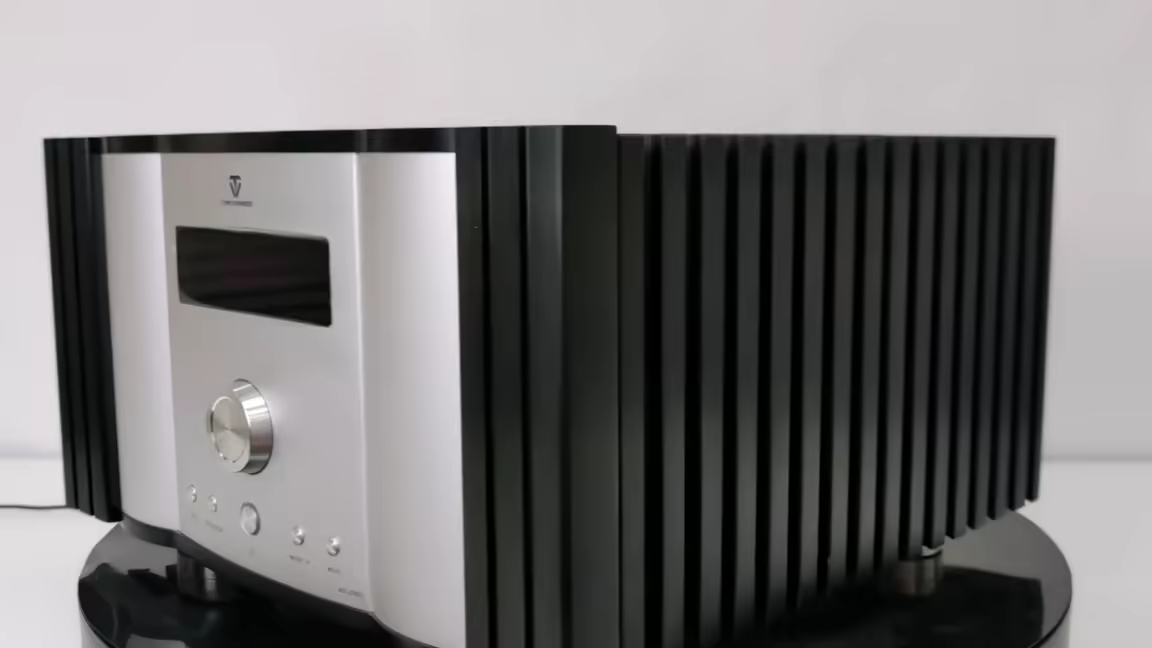
Tonewinner AD-1PA+ Review: A $3,175 Class A/AB Power Amp
A 43kg switchable Class A/AB power amplifier paired with a fully balanced preamp - 100W Class A or 500W Class AB into 4Ω with serious bass control and golden-hued mids.
Tonewinner AD-2PRO+ Review: 40 kg, 240W, and a Class A Switch
A 40 kg, 240W integrated amp with switchable Class A and Class A/B modes, neutral tonality, and the kind of dynamic headroom that pairs well with virtually any speaker.
How speaker amps & preamps reviews work on this site.
Every power amp, integrated amp and line preamp on this page drove the catalogue's reference floorstander, the Triangle Australe EZ, fed from the Denafrips Enyo 15th DAC and Hermes 12th transport. Output is measured for clipping headroom into the actual load rather than the spec-sheet nominal impedance, because a loudspeaker's impedance swings across the band and the dip is where an amplifier is really tested. Desktop headphone amps and DAC/amp combos are reviewed separately, on the headphone amps hub.
Continuous output and peak transient capability at the impedance dip rather than the nominal spec. An amplifier that does not hold up as impedance falls is the wrong amplifier for the speaker, whatever the headline wattage says.
Grip on the driver
Damping factor is the ratio of speaker impedance to amplifier output impedance plus cable resistance, and it is what decides whether bass arrives tight or approximate. Measured with the cable in place, because the cable is part of the circuit.
Tonal character
How neutrally the amp delivers the signal: solid-state transparency, the harmonic texture of Class A, the upper-harmonic spice of well-implemented tubes. Both transparent and characterful approaches can earn high scores; both have to be coherent.
Preamp and switching
For integrateds and preamps: input count and type, volume-control implementation and its behaviour at low settings, pre-outs and whether the line stage stays quiet enough to be worth separating in the first place.
Build, connectivity and value
XLR and RCA inputs, speaker terminal quality, thermal behaviour under real listening loads, and whether the amp pairs across a range of speakers rather than flattering one.
How to read the scores: A 9.0 speaker amplifier is a category benchmark: reference-tier current delivery, low-distortion electronics, and a coherent voicing. An 8.0 is the top of its price bracket without being category-defining. The lower the score, the more specific the flaw - not enough current for the load, audible coloration that does not serve the music, or build below the price bracket.
Terms you will hit in the reviews
Class A
An amplifier topology that runs both output devices on continuously at high bias. Lowest crossover distortion, hottest operation, lowest efficiency. Often described as the most "natural" sounding.
Class AB
The mainstream hi-fi topology, where output devices share the signal across a small overlap region. Efficient enough to scale to high power, low enough crossover distortion to satisfy audiophile demands.
Class D
A switching topology where output transistors are either fully on or fully off, modulated at high frequency and filtered to recover the audio waveform. Highly efficient; modern implementations measure better than most Class AB.
Damping factor
The ratio of speaker impedance to amplifier output impedance plus cable resistance. Higher damping factor means tighter bass control.
Pre-out
A line-level output taken after an integrated amp's volume control, which is what lets the same box later feed a separate power amp instead of being replaced by one.
We do not score speaker amplifiers by published wattage, by topology marketing, or by tube nostalgia. The rubric is built around measured behaviour into real loudspeaker loads - including the impedance dip - and weeks of listening with the actual reference speakers in the room.
Speaker Amps & Preamps reviews: common questions.
Buying advice, terminology, and how the speaker amps & preamps category is reviewed on The Audio Stuff.
How many watts do I need to drive my speakers?
It comes from three numbers: speaker sensitivity (dB/W/m), your listening distance, and your target SPL. An 87 dB/W/m bookshelf at 3 m playing realistic peaks wants far more power than a 92 dB/W/m floorstander up close. Use the SPL distance and speaker power calculators with your figures - and leave 10-20 dB of headroom for unclipped dynamic peaks rather than buying to the average level.
Class A vs Class AB vs Class D for speakers: which is best?
Class A runs hot, draws constant current, and historically sounded best at the cost of efficiency. Class AB is the mainstream high-end choice: clean enough, efficient enough. Class D used to be a compromise; modern implementations (Hypex Ncore, Purifi) measure better than most Class AB and run cool. The class is no longer a quality marker - the implementation is.
Integrated amplifier or separate pre and power amps?
An integrated puts the preamp and power amp in one chassis: simpler, cheaper, one less interconnect, and plenty for most rooms. Separates let you optimise each stage independently, place big power amps near the speakers, and upgrade one box at a time - at the cost of more money, more shelf space, and another cable. Start integrated unless you have a specific reason to split them.
What does a preamplifier actually do?
A preamp selects the source, controls volume, and drives the high-impedance line-level input of a power amp - it provides voltage gain and a clean output stage, not the current that swings a speaker driver. A pure preamplifier like the Denafrips Hades has no speaker or headphone output of its own: it feeds a separate power amp, which feeds the speakers.

 Speaker Amps & Preamps Hades 12th