Synergistic PowerCell 14 Review: A $15K Power Conditioner?
A 14-outlet flagship power conditioner with seven SRX folded EM cells, ULF+DC biasing, graphene treatment, and a silver matrix ground strap - a tier above any 'power strip'.
higher than 95% of everything we have tested
Value Steep. You are buying performance here, not value.
- Standout
- Carbon-fiber composite + plexiglass top
- Watch out for
- $15,000 entry price is far from affordable
- Closest rival
- DH Labs, iFi, Vera-Fi HiFi Tweaks Roundup: scores 1.4 lower.
Is it for you?
- You can hear hum or hash between tracks and want the fault fixed at the source
- You have a rack or a deep desk to give it
- Your system is already silent at the listening seat, where this is insurance rather than an upgrade
- It has to share a small desk, or move
Named Best Overall in our Best Hi-Fi Accessories guide, ahead of 12 others.
High-end audio isn't just about what you plug in - it's also about what you plug it into. The Synergistic Research PowerCell 14 promises to clean the power, and at this level, even small improvements can make a huge difference. But does it do anything, or is it just another fancy power strip?
Design & Build Quality: Carbon Fiber and Glass
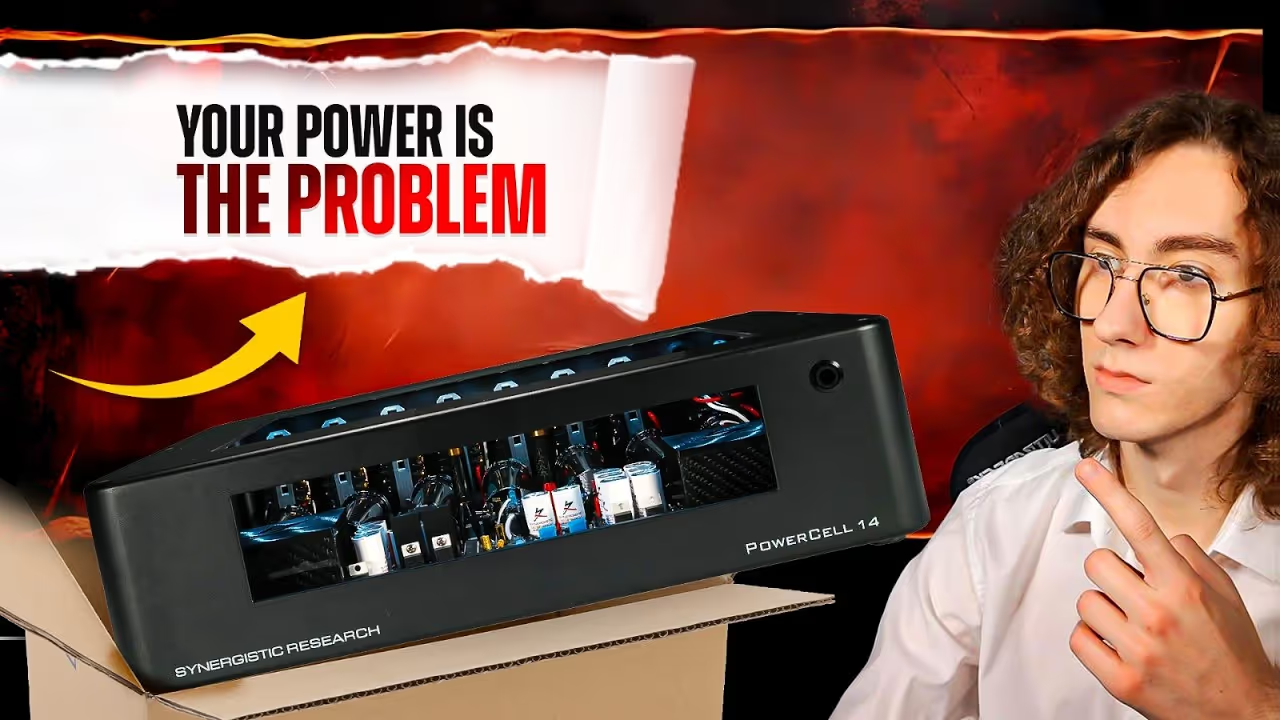
The Synergistic Research PowerCell 14 is one of those components you can't help but stop and look at. It doesn't feel like a typical power conditioner at all - it's more like a high-end amplifier that just happens to have outlets on the back. The casework is completely overbuilt in the best way. The top panel combines real carbon-fiber composite with a thick layer of clear plexiglass, so you can actually see inside, and the front is finished with a matching glass panel that gives you an even better view of the circuit.
None of this is cheap flimsy stuff - it's solid, very weighty, again like an amplifier, and well put together. Tap or press on it and there's no ring or flex - it's dense and dead silent. It gives off that "no-compromise" vibe before you even start wiring anything up.
This is the Schuko version, so across the rear you get fourteen heavy-duty outlets arranged in three separate banks. The spacing is generous, which is a lifesaver if you're running chunky high-end power cables or oversized plugs - nothing feels crammed. Each outlet is built to grip tight without feeling like you're forcing it, and everything about the back panel just screams precision.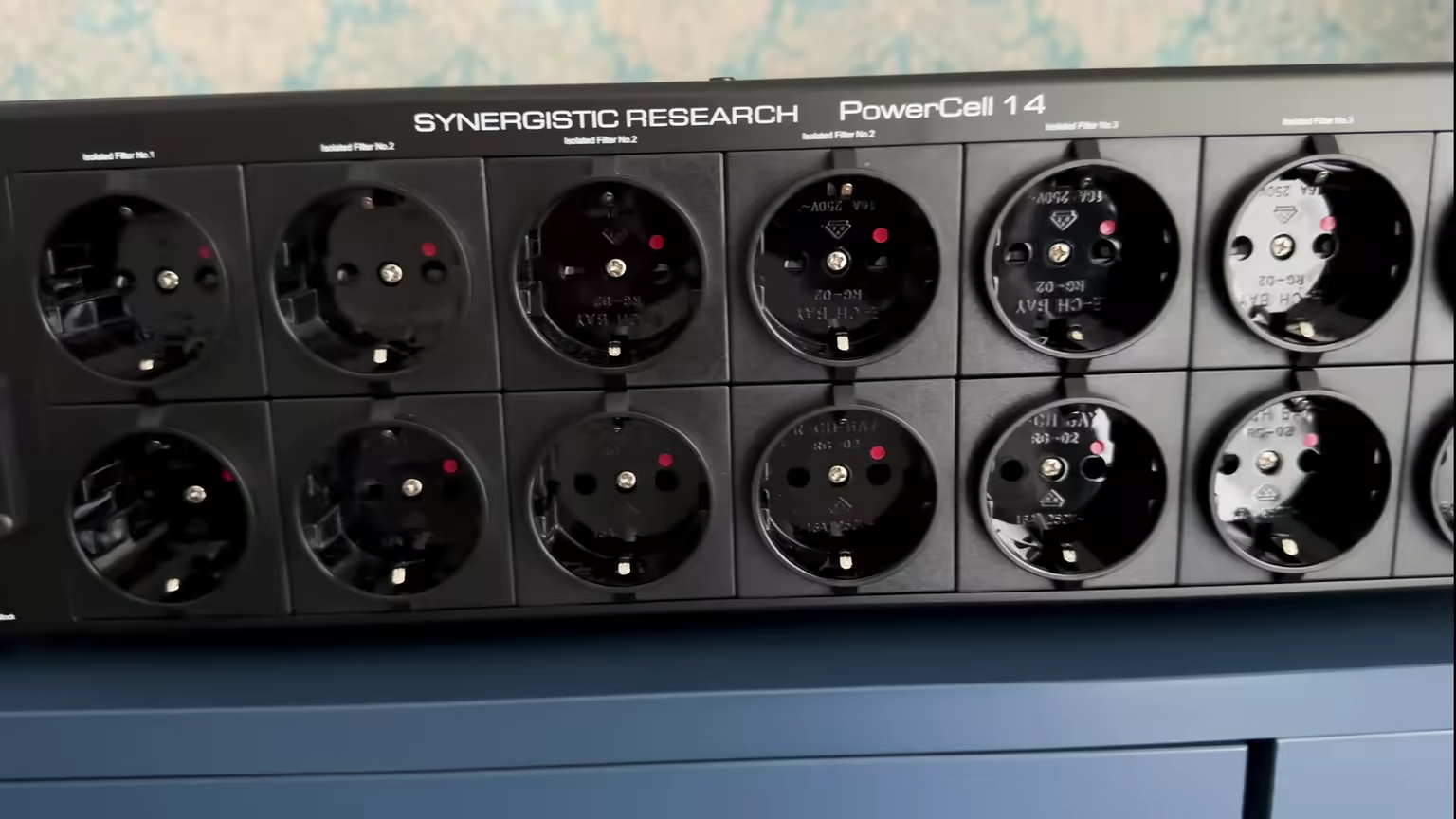 (view larger)
The front is clean and almost minimalist, which lets the materials do the talking. But what really catches your eye is what's inside. Through the top and front windows, you can see a noticeable, beautiful glow from the internal lighting, and Synergistic lets you pick the color. You can cycle through a handful of shades - dark blue, turquoise, deep red, even white - until it matches your system or the mood in the room. It's a small touch, but when the lights are low, it gives the whole setup a kind of dramatic look that makes it feel special.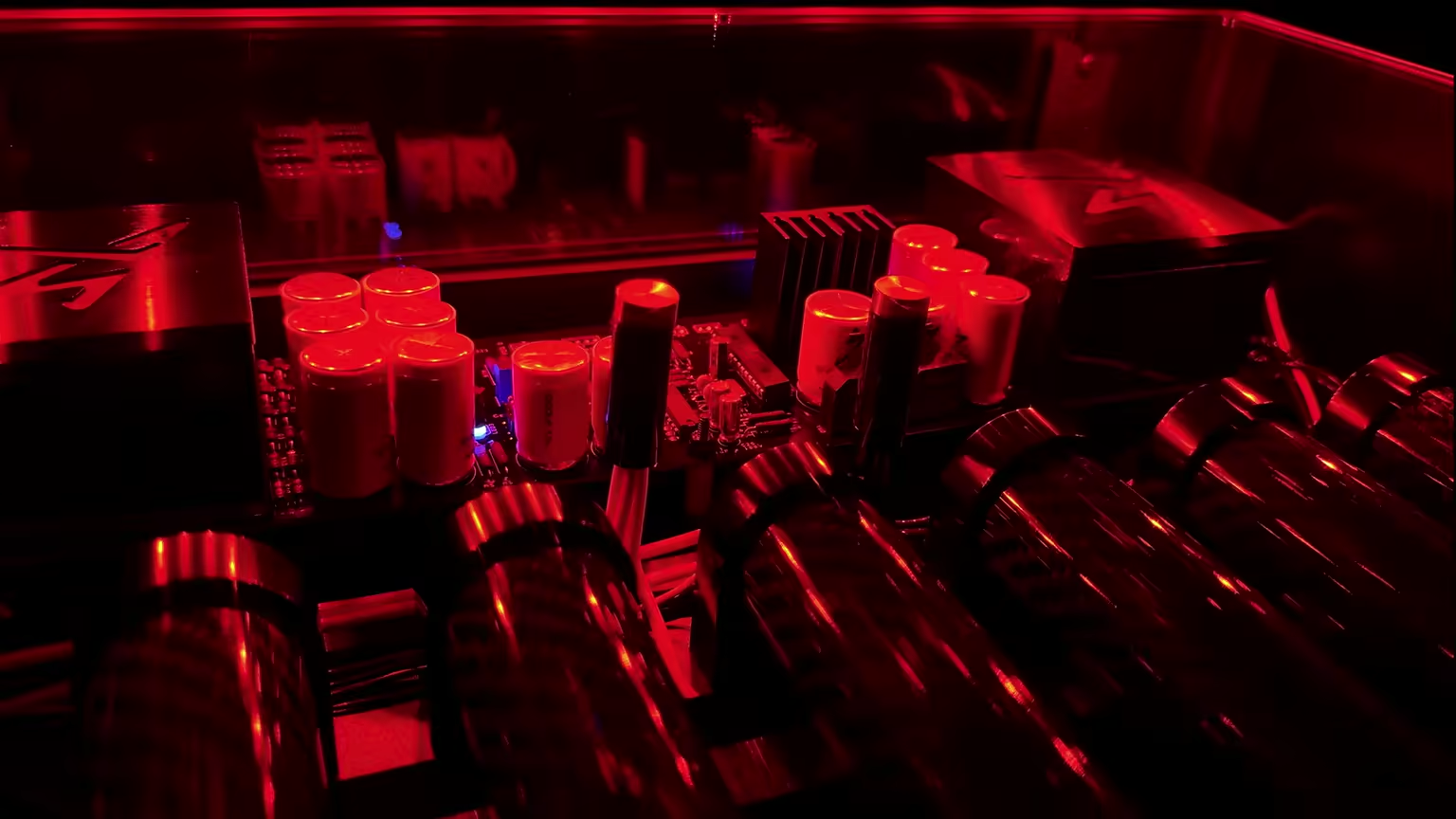 (view larger)
Even the little details are sorted. The feet are made of carbon fiber, and well-damped so the unit sits planted and stable on a rack or directly on the floor. Once again the weight is substantial - hefty enough that you know it's packed with serious hardware, but you can still handle it with no extra help. There's no USB port on this Schuko variant, but the US version is equipped with a 5V USB output on the back. Finally, a power switch that feels like it's going to last a lifetime. So many others I've used have failed miserably.
Technologies: EM Cells That Double as Supercaps
The PowerCell 14 isn't just a fancy power strip - it's loaded with tech that's meant to improve how your entire system behaves, not just clean up the AC. One of the core pieces is its redesigned Electromagnetic (EM) Cells. These aren't small tweaks - Synergistic Research increased the surface area of these cells by a factor of 100 compared to earlier models. The EM Cells also double up as supercapacitors, which means during musical peaks your gear can draw extra current more cleanly than when plugged directly into the wall.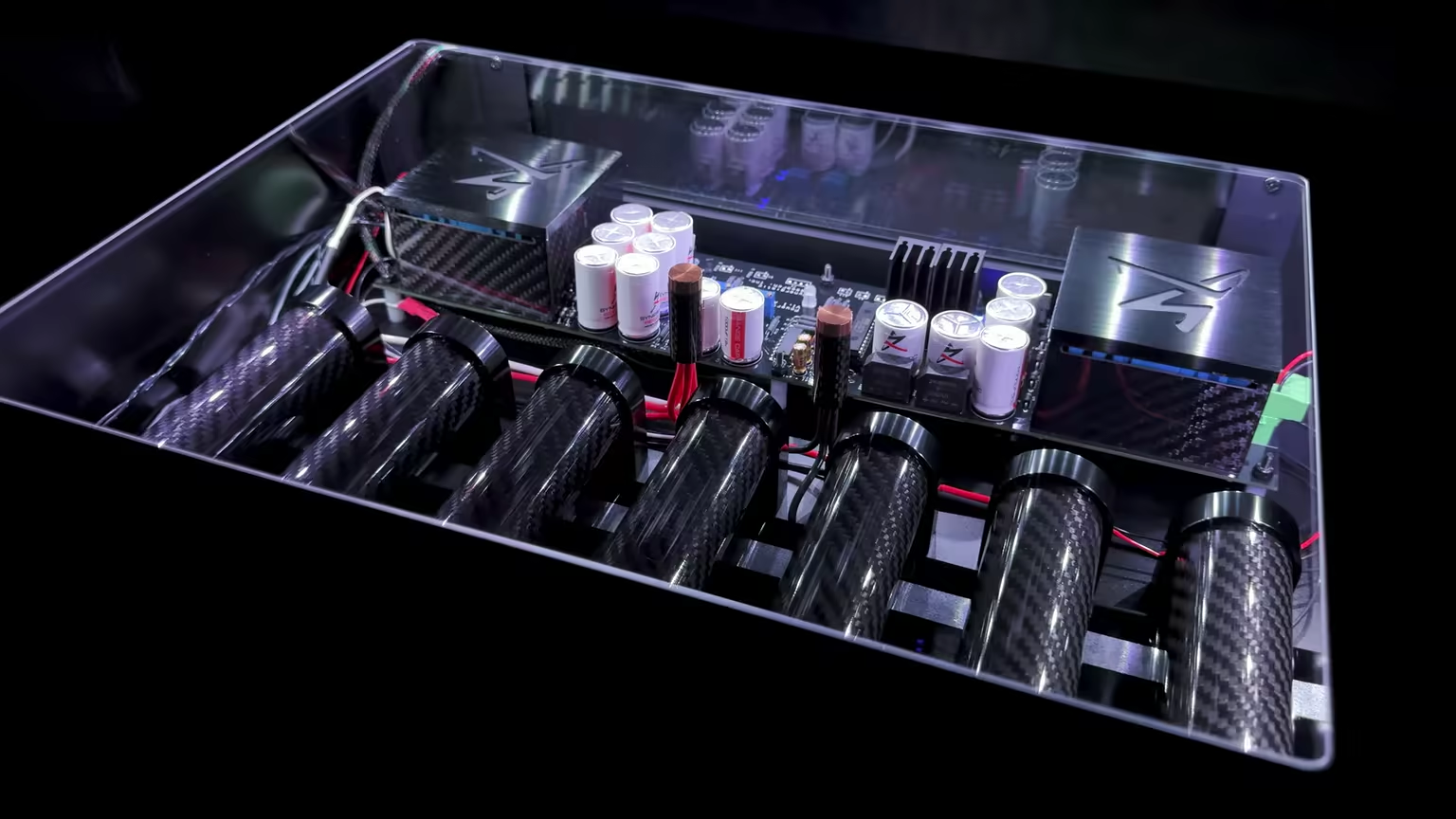 (view larger)
Then there's the "ULF + DC Bias" system. ULF stands for Ultra Low Frequency. They use ULF biasing together with DC to tame high frequency noise and RF interference that can otherwise degrade clarity and raise the noise floor. You get three selectable bias settings, allowing you to tune the response a little - depending on your preferences or what your system needs.
Another key tech is the UEF tuning getting upgraded with 24-karat gold circuits. These are part of the company's Unified Energy Field treatment - gold UEF tuning is supposed to bring richer harmonics and a more musical flow. It's probably rather subtle, but for gear at this level, these tweaks do add up.
There's also a graphene treatment throughout the unit and a massive pure silver ground strap that's been applied internally - all meant to reduce noise and stabilize the ground reference.
Technical Specifications: 14 Outlets, 3 Isolated Banks
Underneath the spectacle, the spec sheet is just as serious. All fourteen of the UEF Purple 2.0 outlets are designed to deliver filtered, conditioned AC, so the more components you plug in, the more of your system benefits directly - and they're split across three isolated output banks, which lets you separate analog and digital gear to keep them from interacting or injecting noise into one another. Everything inside is joined by point-to-point wiring using 10-gauge Silver Matrix wire, keeping resistance low and holding the current steady when a component suddenly demands a spike of power. The internal active EM Horizontal Cell area measures over 5,000 square centimeters across seven second-generation SRX folded EM cells, and a high-purity silver ground strap of around 62 square centimeters handles the grounding. The US version is rated for 20 amps at 125 volts and the international one for 16 amps at 250 volts - plenty of juice for power-hungry components. And at roughly 28 lbs (12 kilos), the sheer mass helps with vibration damping, which matters more than usual here given those supercapacitors-on-steroids EM cells inside.
Sound Quality: A Quieter Background, More Punch
When I introduced the PowerCell 14 into my system, it was like someone quietly cleaned the windows between me and the speakers. The first thing I noticed was how much quieter the background became. It's not about turning the noise floor into silence you can measure with a meter. It's the way soft reverbs and trailing decays are easier to follow because they're no longer masked by low-level garbage.
Dynamics were the next big surprise. Recordings I know inside out had more punch and microdetail without the slight compression that occurs when your AC line is dirty. It doesn't artificially hype anything - it just lets your gear pull current when it needs to, so the sound feels more immediate and effortless. Everything starts and stops with a little more authority.
Tonally, the PowerCell 14 is remarkably neutral. I didn't hear any obvious tilt toward warmth or brightness, which is exactly what you want from a conditioner. Unlike some power products that can smooth things over so much that you lose texture, this one keeps the tonal balance perfectly intact. It's actually delivering a more neutral presentation than without it.
Vocals retain body and natural sibilance, but the digital glare on top has been reduced by a fair bit. Bass is faster than ever before and surprisingly deep. There's a sense of control and articulation, that I think has to do something with the EM cells.
Imaging and Soundstage: Where It Earns Its Price
The improvements to imaging and soundstage are where this unit really earns its price point. With the PowerCell in place, the stereo field locks in more tightly. Instruments occupy more defined positions, and the stage itself opens up, stretching a little wider and, more noticeably, deeper. On good recordings, you get a clearer sense of the room boundaries and the distance between front-row performers and the back wall. It's not magic - it simply lowers the noise floor and the subtle timing smear that normally blur those cues.
What's just as impressive is what it doesn't do. There's no added color, no forced "hi-fi" sparkle. If anything, it steps out of the way and lets your components show what they can really do. I swapped the PowerCell in and out over a couple of weeks and each time I went back to a plain power strip, I missed the sense of calm and coherence it brings. It's not about boosting one frequency or another like EQ, it's about removing a layer of dirt you didn't know was there until it's gone.
Verdict: It Raises Your System's Ceiling
Long listening sessions confirmed that these changes hold across different types of gear and music. It doesn't turn a modest setup into a mega-system, but it raises the ceiling of what your existing gear can deliver. And what it can do to a well set up system is mind-blowing.
Watch the video review
Subscribe on YouTube (opens in new tab)Prefer to read? The written review above covers everything in the video.
- 0:00 Do You NEED A Power Conditioner For A Stereo System? (opens in new tab)
- 0:21 Design & Build Quality (LED Lighting, Carbon Fiber & Aluminum, Custom Outlets) (opens in new tab)
- 3:05 Technologies (ULF + DC Bias, EM Cells, Gold UEF Tuning, Graphene Treatment, Pure Silver Ground Strap) (opens in new tab)
- 4:40 Technical Specs (SRX Folded Electromagnetic Cells, 10 AWG Silver Wiring, UEF Purple 2.0 Outlets) (opens in new tab)
- 6:22 Sound Quality (Compression, Noise Floor, Neutral Tonality, Sound Stage, Bass Speed) (opens in new tab)
Common questions about the PowerCell 14
Is the Synergistic Research PowerCell 14 worth it?
Yes, and it is the piece we measure its category against - 9.2/10, Reference, higher than 95% of everything we have tested, against a catalogue median of 8.1. On value it rates steep: better value exists in accessories, so you are buying performance here, not value. Price: $14,495.
Who should buy the Synergistic Research PowerCell 14, and who should skip it?
Buy it if you can hear hum or hash between tracks and want the fault fixed at the source, and you have a rack or a deep desk to give it. Skip it if your system is already silent at the listening seat, where this is insurance rather than an upgrade, and it has to share a small desk, or move.
What else have you tested that is close to the Synergistic Research PowerCell 14?
No matchup page yet, and no close price match in the catalogue either. The nearest things we have scored in the same category: the Monosaudio AS-EU08 + SP-USB at 8.0/10, the Taga Harmony PF-1000LPS at 8.0/10, and the DH Labs, iFi, Vera-Fi HiFi Tweaks Roundup at 7.8/10.
Is the PowerCell 14 just an expensive power strip?
No, and the difference is in what it does beyond filtering. The EM Cells double as supercapacitors, so during musical peaks your gear draws extra current more cleanly than it would straight from the wall - that is a fundamentally different job from a filter. Synergistic increased the cell surface area by a factor of 100 over earlier models, and there are seven second-generation SRX folded cells inside covering over 5,000 square centimetres.
Why does the PowerCell 14 split its outlets into three banks?
To keep your digital and analogue gear from talking to each other through the mains. All fourteen UEF Purple 2.0 outlets deliver filtered, conditioned AC, and splitting them across three isolated banks means a noisy streamer cannot inject anything into your phono stage. Everything is joined by point-to-point 10-gauge Silver Matrix wiring, which keeps resistance low and holds current steady when a component suddenly demands a spike.
Does the PowerCell 14 colour the sound?
No, and that is exactly what you want from a conditioner. I heard no obvious tilt toward warmth or brightness. Some power products smooth things over so much that you lose texture; this keeps the tonal balance perfectly intact and actually delivers a more neutral presentation than going without it. There is no added colour and no forced hi-fi sparkle - it steps out of the way and lets your components show what they can do.
What does the PowerCell 14 change most?
Imaging and soundstage - that is where it earns its price. The stereo field locks in more tightly, instruments take more defined positions, and the stage opens wider and noticeably deeper, so on good recordings you get a clearer sense of room boundaries and the distance to the back wall. It is not magic: lowering the noise floor and the subtle timing smear removes what was blurring those cues.
Will the PowerCell 14 help a modest system?
Partly, and the honest framing is that its benefits scale with what you plug into it. It will not turn a modest setup into a mega-system - what it does is raise the ceiling of what your existing gear can deliver, and what it does to a well set-up system is genuinely striking. At roughly $14,495 that scaling matters: below a certain system level you are paying for headroom you cannot yet use.
What do the three bias settings do?
They let you tune the conditioning to your system. The ULF plus DC Bias system uses ultra-low-frequency biasing together with DC to tame high frequency noise and RF interference, which is what otherwise raises the noise floor and costs you clarity. Three selectable settings mean you can adjust the response to taste or to what the system needs, rather than accepting one fixed character.
What are the PowerCell 14's practical drawbacks?
Three, and none is sonic. It is 12 kilos and takes serious shelf space. The power switch sits where you have to reach behind the unit, which is irritating on something you may switch daily - though it feels built to last a lifetime, unlike many I have had fail. And on this Schuko version there is no USB output; the US variant gets a 5V USB port on the back. The carbon-fibre and plexiglass top also attracts dust.
If you're interested in this
All 13 accessories reviewsClosest alternatives