Taga PF-1000LPS Review: A Serious 8-Outlet Power Conditioner
A serious 8-outlet power conditioner with a linear DC/USB supply, 3-tier filtering, audiophile fuses, and a phase detector - real protection and a measurable noise drop.
higher than 34% of everything we have tested
- Standout
- Heavy, all-metal chassis acts as additional EMI/RFI shielding
- Watch out for
- Heavy
- Cheaper alternative
- Monosaudio AS-EU08 + SP-USB: $250 less, a near-tie on score.
Is it for you?
- You can hear hum or hash between tracks and want the fault fixed at the source
- Your system is already silent at the listening seat, where this is insurance rather than an upgrade
Pick #7 of 13 in our Best Hi-Fi Accessories guide.
No matter if you're running a high-end stereo system or an AV, surround-sound home theater system, you should use some form of power conditioning instead of a regular, plain old power strip or even plugging your gear straight into the wall. Let's see why this is so important - and what the Taga Harmony PF-1000LPS brings to the table.
Design & Build Quality: Heavy Metal, a Live VU Meter
Before we get into why you might actually need a power conditioner, let's take a good look at this one and see what it's all about.
First things first, this device feels solid. Like, really solid. It's got a good weight to it - it's not light and flimsy at all. I wouldn't recommend dropping it, so be careful, as it can cause some serious damage to whatever it lands on. That gives you a good feeling right away that it's well-made. The whole outside case, or chassis, is metal, which is always a good sign. Metal is tougher and it also helps block out any interference that could mess with your sound. It acts like an additional form of shielding from electromagnetic and radio waves that could otherwise get into the electricity and eventually into your audio components.
Looking at the front, it's pretty simple and clean. Nothing too fancy, except for one nice feature, but everything you need is right there. You've got the main power switch - it clicks nicely when you turn it on and off, it's not a cheap one from AliExpress that a DIY fan would put into their project. After all the electricity is passing through the power switch. So if you get a truly terrible one, it can cause signal degradation, increased resistance, or even heat up excessively leading to some damage.
One super important thing on the front is the VU-meter-styled voltage indicator. It's not just a fancy, useless addition - it actually tells you something useful. Basically, this meter shows you the exact voltage coming from your wall outlet. The voltage from your power company isn't always perfectly stable. It can fluctuate up and down a bit, and those fluctuations can actually affect the performance of your audio equipment. If the needle is bouncing around a lot or sitting way outside that range it indicates that something is happening - for example if a device on the line is drawing a lot of current, or if there's an unexpected resistance rise.
This meter gives you a quick visual check to see if the voltage is within a good range. You'll usually want it to be around 220-240V in Europe. It's not like you'll be staring at this meter all the time, but it's a handy way to keep an eye on things. If you're ever experiencing weird issues with your audio - like hums, buzzes, or just a general lack of clarity - checking the voltage meter is a good first step in troubleshooting. The meter itself is pretty easy to read. It's got a nice, clear scale, and the needle moves smoothly. It's likely not super precise like a professional multimeter, but it gives you a good general idea of what's going on with your voltage.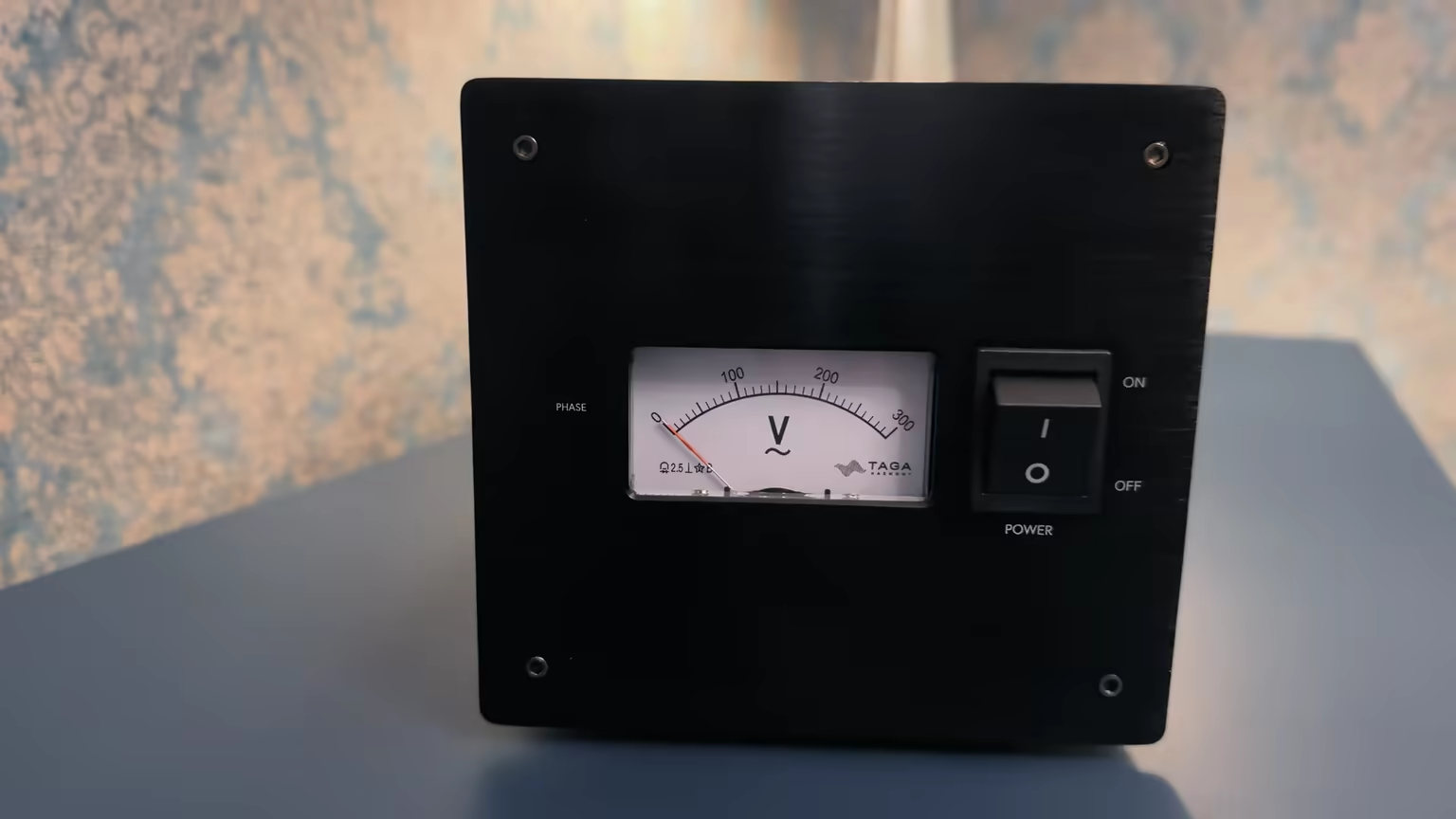 (view larger)
Now, the important part: the outlets. This thing has 8 of them, which should be enough for most setups. They're spaced out well, so you can plug in even those big power bricks, or large barrel plugs without blocking other outlets. And the outlets themselves feel really firm. When you plug something in, it stays put. It's not loose or wobbly at all, which is a good sign of quality. You don't want your plugs falling out.
If we flip it around to the back, you'll see where the power cord plugs in. It's a standard connector, so if you ever wanted to try a different power cable, you could. We have a few more interesting elements though, including a DC output, a voltage selector for that output, and something called polarity. I'll break it down later.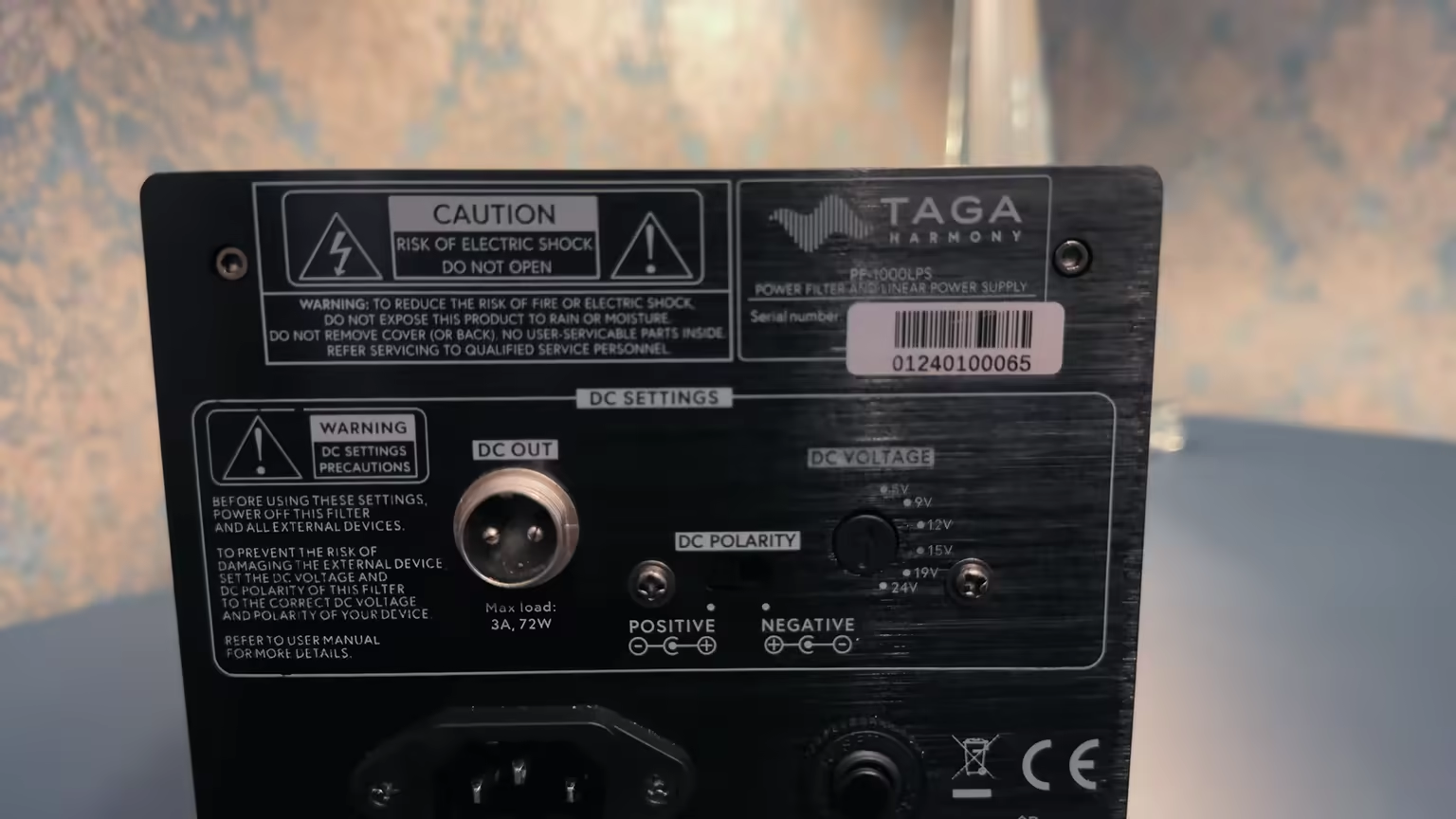 (view larger)
Even the little things are done well. It has these rubber feet on the bottom, so it sits nicely on your rack, or floor and doesn't slide around. They also help keep vibrations down, which is good for sound quality.
Overall, the PF-1000LPS is built really well. It's not trying to be super flashy or anything, but it's practical and feels like it's built to last. From the black metal case, which is also available in silver, to the solid outlets, everything feels quality. It's a tool that's designed to do its job, and it looks like it can handle it.
Features: Linear PSU, Phase Detector, 3-Tier Filter
Phase Detector - This is a really handy feature. The phase detector checks if the polarity of your incoming AC power is correct. Incorrect polarity can sometimes cause hum or other noise issues in your system. This detector helps you identify and correct any phase problems, ensuring optimal performance. Some audio devices tend to sound better if the polarity is correct, and a little bit different when it's reversed.
Linear Power Supply for DC and USB Outputs - Unlike some cheaper power supplies that use switching technology, the PF-1000LPS uses a high-quality linear power supply for its DC and USB outputs. Linear power supplies are known for providing cleaner, more stable power, which can make a noticeable difference in the sound quality of connected devices. With the help of those USB outputs, you can connect audio components and get all the benefits of a linear PSU.
Audiophile-Grade Fuses - Even the internal fuses are designed with audio quality in mind. The use of audiophile-grade fuses further contributes to the clean power delivery of this unit.
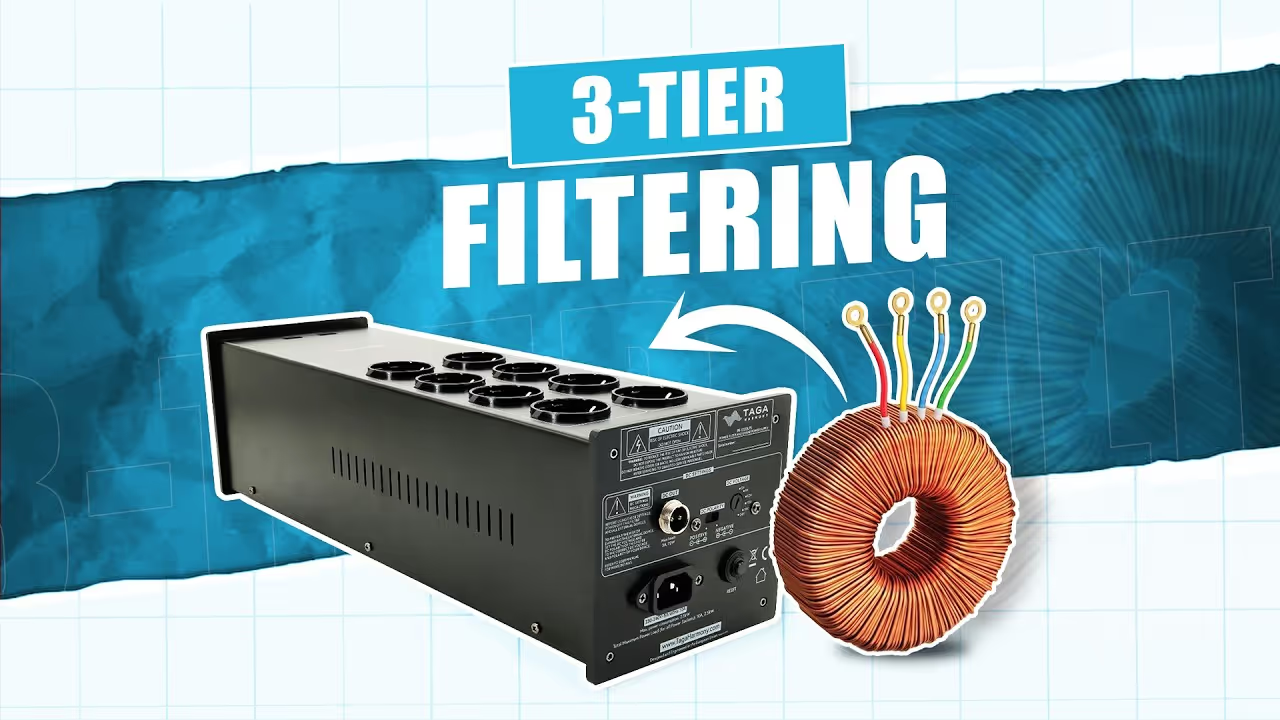
3-Tier Filtering Network - This is what really sets this power conditioner apart. The first two tiers of filtering work on the incoming AC power from your wall. The first tier is the device's own internal filtering system, and the second tier is provided by that beefy toroidal transformer. Together, they work to filter out noise and interference from your mains power. The third tier of filtering is specifically designed for the DC output and USB ports. This dedicated filtering ensures that devices powered by these outputs receive the cleanest possible power.
DC Output for Audio Devices - You're not very likely to encounter this on other power filters. They, in combination with the included connectors, allow you to use them with a variety of DC-powered devices to bring them to another level. Using cheap, stock switch-mode power supplies is often detrimental to sound quality, but manufacturers still repeatedly include them to save cost.
Technical Specifications: Eight Outlets, 72W of Clean DC
You get a total of eight Schuko-type outlets, which are standard in Europe. Four of these are direct, meaning they provide unfiltered power, while the other four are filtered to reduce noise and interference.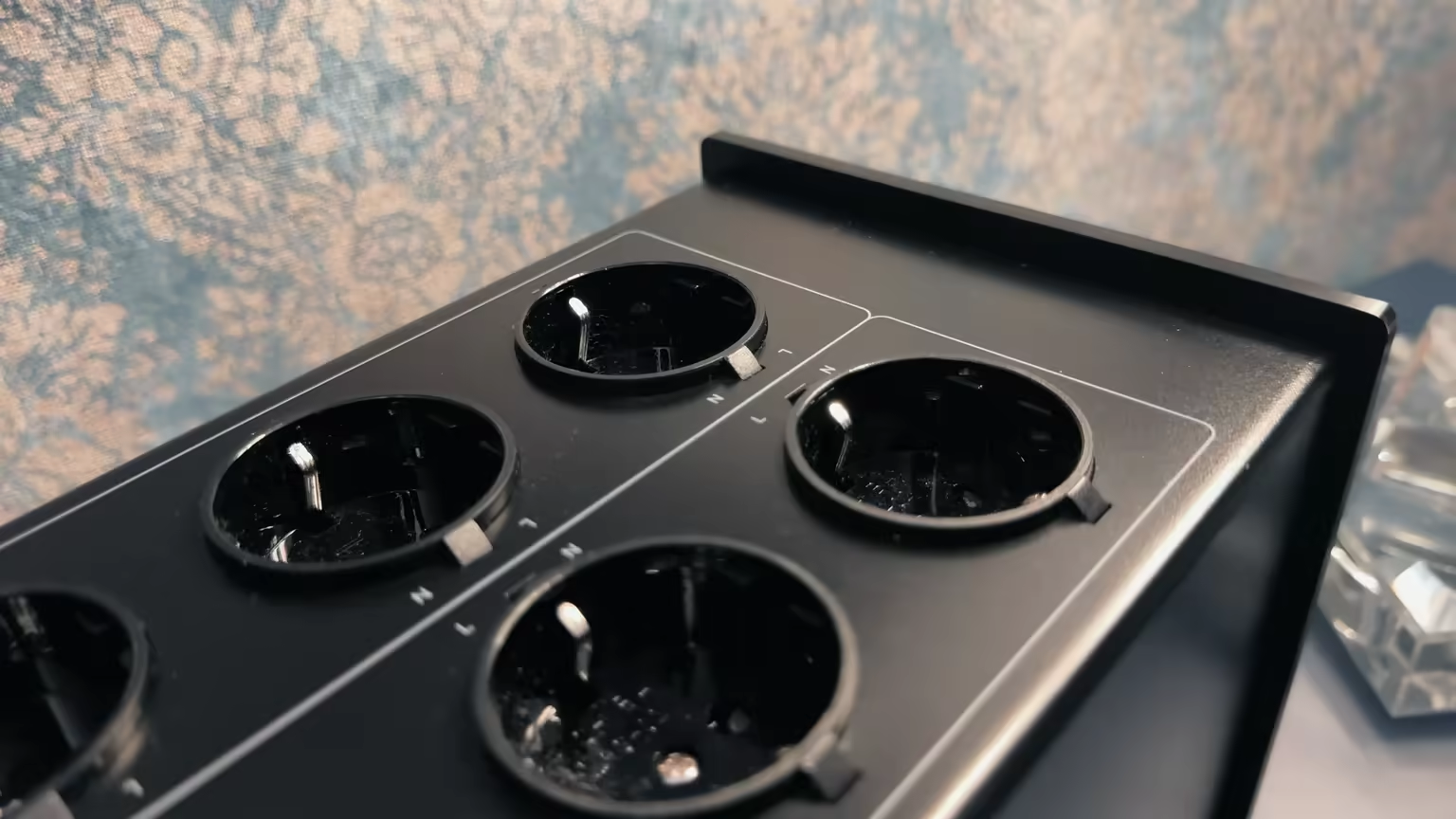 (view larger)
The DC output has six selectable voltages: 5, 9, 12, 15, 19, and 24 volts. It can provide up to 3 Amps of current, which translates to a maximum power output of 72 Watts.
There are two USB-A ports, both providing 5V power. They offer a combined current output of 2.1 Amps, which is enough to charge most smartphones and other USB-powered devices like DACs.
The PF-1000LPS has a total maximum power load of 10 Amps or 2500 Watts. This is the total combined power for all the AC outlets, the DC output, and the USB ports.
The noise filter is rated at greater than -10dB between 2 and 100MHz. So, it's not a snake oil device - it can measurably decrease the amount of noise on the line.
Why You Need a Power Conditioner
Reason 1: Protecting Your Investment
This is probably the most important reason. Power surges, spikes, and other electrical anomalies can seriously damage, or even kill your valuable audio equipment. These events can come from various sources, like lightning strikes, power outages, or even just turning on and off other appliances in your home. A good power conditioner acts as a shield, protecting your gear from these potentially damaging events. Think of it as insurance for your audio investment. It's much cheaper to replace a power conditioner than a whole stack of expensive Hi-Fi components or a high-end AV receiver.
Reason 2: Eliminating Noise and Interference
Your home's electrical wiring can be a source of noise and interference that can degrade your audio quality. This noise can manifest as hums, buzzing, or a general lack of clarity in your sound. Power conditioners filter out this unwanted noise, providing cleaner power to your equipment. This results in a noticeable improvement in sound quality, with a lower noise floor, better clarity, and improved detail retrieval. A cleaner signal means a cleaner, more accurate sound.
Reason 3: Ensuring Consistent Performance
The voltage from your wall outlet isn't always perfectly stable. It can fluctuate throughout the day. A power conditioner helps to regulate the voltage, providing a more consistent and stable power supply. This ensures that your equipment is always performing at its best, regardless of the time of day. This consistency is especially important for sensitive audio components like amplifiers and DACs, which can be particularly susceptible to voltage variations.
Verdict: Better Sound, Protected Gear
These benefits apply to all types of audio setups, from simple stereo systems to complex home theaters. It's not just about getting louder sound - it's about getting better sound and protecting the gear you've invested in.
Watch the video review
Subscribe on YouTube (opens in new tab)Prefer to read? The written review above covers everything in the video.
- 0:00 Power Conditioner For A/V Or Stereo HiFi? (opens in new tab)
- 0:19 Design & Build Quality (Metal Case, Premium Outlets, VU Meter, Robust Power Switch) (opens in new tab)
- 4:51 Features (AC Polarity Checker, Linear PSU, DC Outputs, USB 5V, Toroidal Transformer) (opens in new tab)
- 7:07 Technical Specification (Schuko Outlets, Standard Voltage, Voltage Selector, Max Power) (opens in new tab)
- 8:33 Reason 1 - Protecting Your Investment (opens in new tab)
- 9:17 Reason 2 - Noise & Interference Reduction (opens in new tab)
- 9:51 Reason 3 - Consistent Performance & Voltage (opens in new tab)
Common questions about the PF-1000LPS
Is the Taga Harmony PF-1000LPS worth it?
Yes, for the right listener - 8.0/10, Recommended, higher than 34% of everything we have tested, against a catalogue median of 8.1. On value it rates fair: mid-pack for the price in accessories. Price: $445.
Who should buy the Taga Harmony PF-1000LPS, and who should skip it?
Buy it if you can hear hum or hash between tracks and want the fault fixed at the source. Skip it if your system is already silent at the listening seat, where this is insurance rather than an upgrade.
What else have you tested that is close to the Taga Harmony PF-1000LPS?
No matchup page yet, and no close price match in the catalogue either. The nearest things we have scored in the same category: the Monosaudio AS-EU08 + SP-USB at 8.0/10, the DH Labs, iFi, Vera-Fi HiFi Tweaks Roundup at 7.8/10, and the Synergistic Research PowerCell 14 at 9.2/10.
Is the PF-1000LPS just an expensive power strip?
No, and there is a measurement behind that. The noise filter is rated at better than -10dB between 2 and 100MHz, so it measurably reduces noise on the line rather than claiming to. The filtering runs in three tiers: the internal network, the beefy toroidal transformer behind it, and a third stage dedicated to the DC and USB outputs. Four of the eight outlets are filtered and four are direct, so you can choose per component.
What is the DC output for?
Replacing the cheap switch-mode supplies that come with audio gear. Manufacturers keep including them to save cost even though they are often detrimental to sound, and this gives you a linear alternative with six selectable voltages - 5, 9, 12, 15, 19 and 24 volts - at up to 3 amps, which is 72 watts. Connectors are included. It is the feature you are least likely to find on another conditioner, and the reason to pick this one over a filtered strip.
What does the phase detector on the PF-1000LPS tell you?
Whether the polarity of your incoming AC is correct, which is not something most people can check. Incorrect polarity can cause hum and other noise in a system, and some audio devices genuinely sound better with it right and a little different with it reversed. The detector flags the problem so you can fix it at the wall. It is a diagnostic tool, and it takes a mysterious hum out of the guesswork category.
Is the voltage meter on the PF-1000LPS accurate?
Indicative rather than lab-precise, and that is enough for what it is for. It shows the voltage coming from your wall - you want roughly 220-240V in Europe - and the useful part is watching the needle. Bouncing around, or sitting well outside the range, tells you something is happening: a device drawing heavy current, or an unexpected rise in resistance. If you ever get hums, buzzes or a general loss of clarity, that meter is a sensible first check.
Will the PF-1000LPS handle a full system?
For most setups, yes. Eight Schuko outlets is enough for a typical stereo or home theatre stack, and they are spaced well enough to take big power bricks and large barrel plugs without blocking neighbours. The ceiling is 10 amps or 2500 watts total, combined across all the AC outlets, the DC output and the two USB ports. A large power amplifier plus everything else can approach that, so add it up before you commit.
Why does the chassis material matter on a power conditioner?
Because metal is shielding as well as structure. The whole case is metal, and beyond being tougher it blocks electromagnetic and radio interference that would otherwise get into the electricity and then into your components. Even the main power switch is a real one rather than something cheap - everything passes through it, and a bad switch can cause signal degradation, higher resistance, or enough heating to do damage. It also sits on rubber feet that keep vibration down.