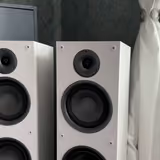
Taga TAV-500B v.2 Review: €249 Active Bookshelf Speakers
Active 6.5-inch bookshelf speakers with built-in Class D amplification, Bluetooth, USB, optical, and a 30Hz bass extension that punches way above their €249 price.
higher than 30% of everything we have tested
Value Excellent. It is one of the best-value pieces we have scored.
- Standout
- Active speakers
- Watch out for
- Plastic finishes feel modest in hand
Is it for you?
- You want the balance to lean bright, with the detail pushed forward
- You want the most performance per dollar on the list
- You're treble-sensitive
Named Best Value in our Best Speakers guide.
If you think that HiFi audio is a hobby for the wealthy and that being an audiophile is out of reach if you have a limited budget, a compact space, and realistic goals, you need to keep reading. The Taga Harmony TAV-500B v.2 active speakers can shift perceptions about the quality and performance available at this price point.
Design & Build Quality: Real Veneer at €250 a Pair
Those bookshelf speakers are quite small. They still need to fit a 6.5-inch driver. The weight is also not a problem. It's important to note that one speaker weighs a bit more than the other, due to the amplification elements inside.
Does the weight make for a low-quality feeling though? For some, most likely, yes. But they're priced at around 250 euros. For a pair! The finishes aren't going to blow your mind, as on most high-end speakers just the finish costs more than 250 euro. However, when we look at other similarly priced speakers, their finishes are rarely veneers, as is the case with this one. There are 4 colors to pick from - modern wenge, oak, walnut, and black - which is the one I have on hand. The colorway I've got is perhaps the most universal, but all of the more natural finishes just look fancier and more interesting.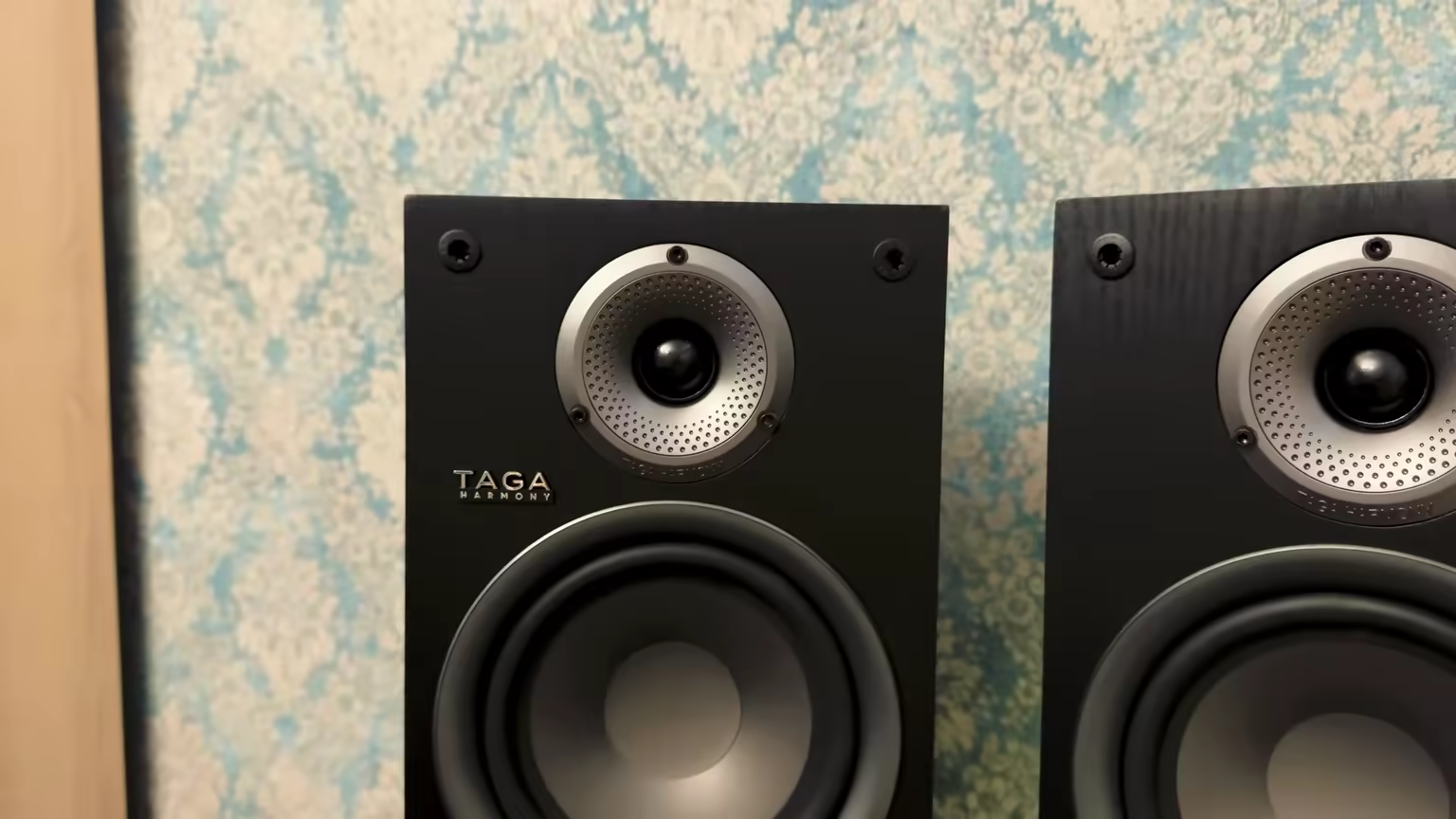 (view larger)
Regardless, the enclosure itself isn't a perfect squared-off box, and that's for a reason. The top of the speaker is angled at around 4 degrees from the front to the rear, helping to limit unwanted resonances and turbulences. It's a very smart idea to do something like this, as the standing waves practically disappear from the speaker's top to its bottom. They can bounce off indefinitely, as they don't have a perfectly parallel surface to do so. I think it's a trickle-down technology from their Diamond series of speakers, which have curved edges and no parallel surfaces whatsoever.
The enclosure uses a wide, rectangular port to enhance bass output. Color-matched gray drivers and rings around create a clean, understated aesthetic. There are 4 holes though for the included fabric grills. You might not be a fan of the grills being non-magnetic, however, I don't see that as a real problem. The grilles themselves sit securely mounted to the speaker, yet they are easy to remove without damaging anything. Their fabric is rather thin, so it should be acoustically transparent for the most part.
Technologies: A Waveguided Silk Dome, Class D Power
A new premium damping material is used to effectively disrupt standing waves, reduce resonances, and minimize distortions, enhancing the clarity and quality of sound across all ranges. They didn't put just regular foam inside.
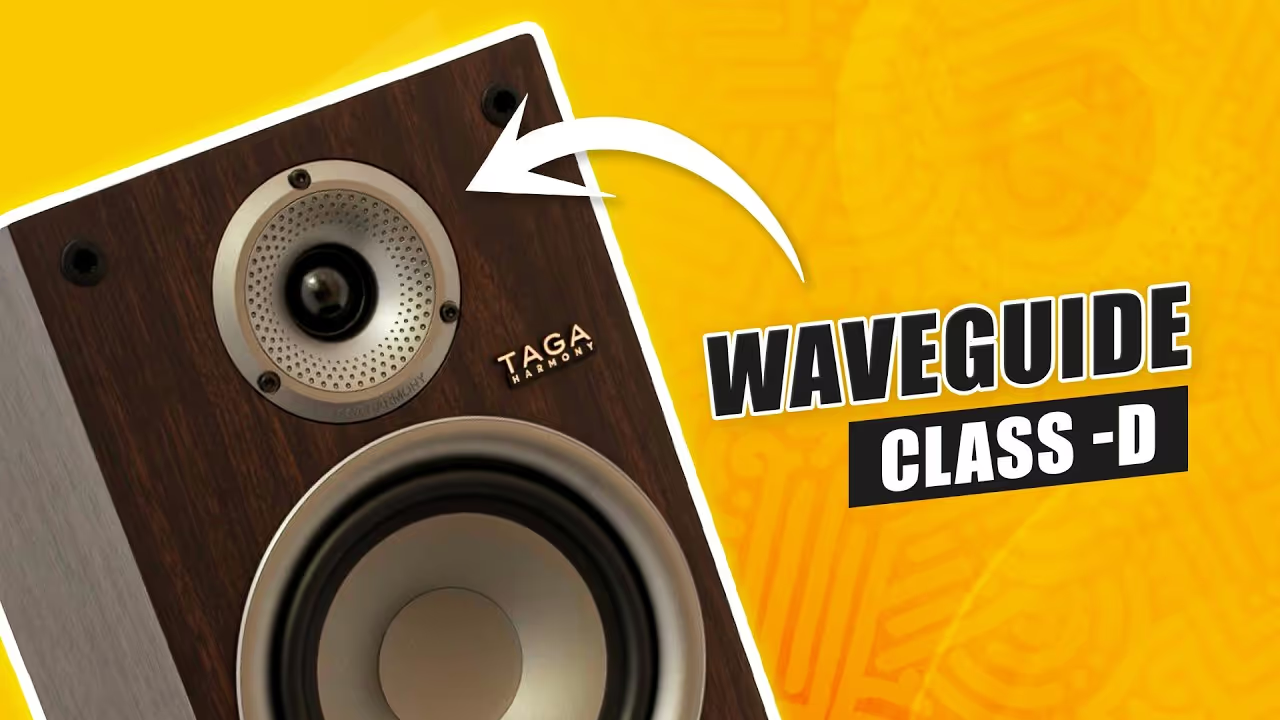
The tweeter is an upgraded 1" silk dome driver equipped with an oversized magnet, ferrofluid cooling, and a heavy-duty copper voice coil for accurate, clear, smooth, detailed, and airy highs, even at high power. Housed in a re-engineered second-generation waveguide with concave diffusers, it enhances sound dispersion for a more natural and immersive soundstage by improving sound flow and reducing distortions.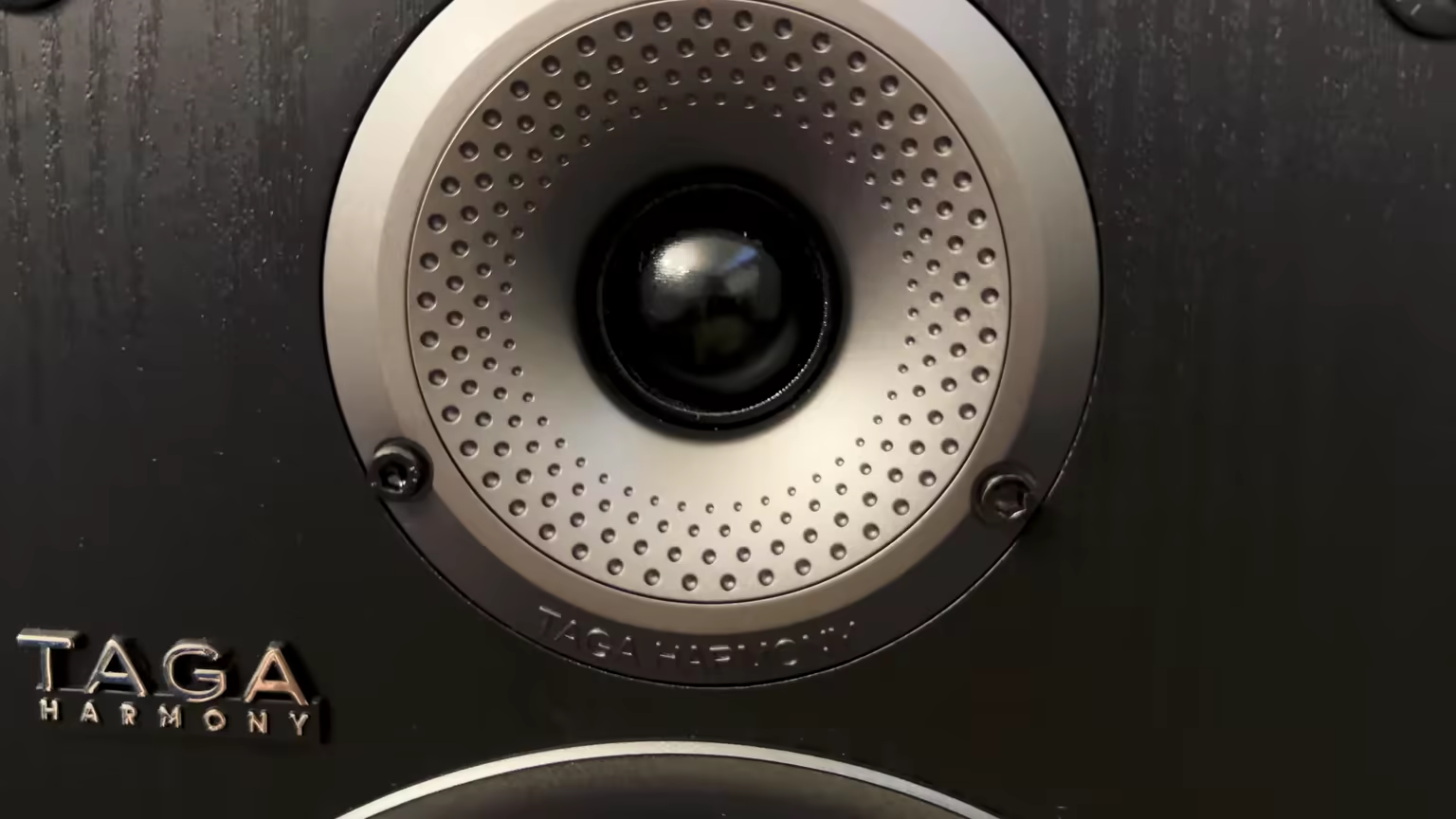 (view larger)
The midbass driver is made from ultra-light polypropylene with a rubber surround, large magnet, and heavy-duty voice coil that handles high power efficiently. Its rigid chassis ensures stability at high volumes. This design aims for a smooth, rich midrange and deep, musical, precise bass, aided by a flat dust cap for improved airflow.
The internal Class-D amplifier is highly efficient and paired with a 24V 4A power supply. This combo ensures plenty of headroom and minimal distortion, for pristine audio reproduction.
As if that wasn't enough, it'll even charge your phone from the USB output! I'm not sure why you'd need it, but it's there if you do.
Inputs & Outputs: Everything Down to a USB Drive
Practically all of the I/O is located on the back of the active "master" speaker. Power comes in through a standard figure-8 C7 connector, and from there you get a pretty complete set of inputs: a pair of RCA inputs for analog sources like a DAC or preamp, optical TOSLINK for CD or DVD players, consoles and TVs, and Bluetooth built in for wireless streaming from a phone or tablet. The real surprise is the USB-A port - something you're not very likely to see on most powered speakers. It means you don't even need a streamer or a computer for this thing; you can just plug in a USB drive and boom, you've got music. On the output side there's a speaker terminal that feeds the second, passive speaker so the pair can play together in a stereo configuration, plus a single-ended, mono subwoofer output if you ever want more bass extension. You'll also find the volume control potentiometer and playback buttons back here, and they all tie into the display on the front, which shows the current input, volume, and status.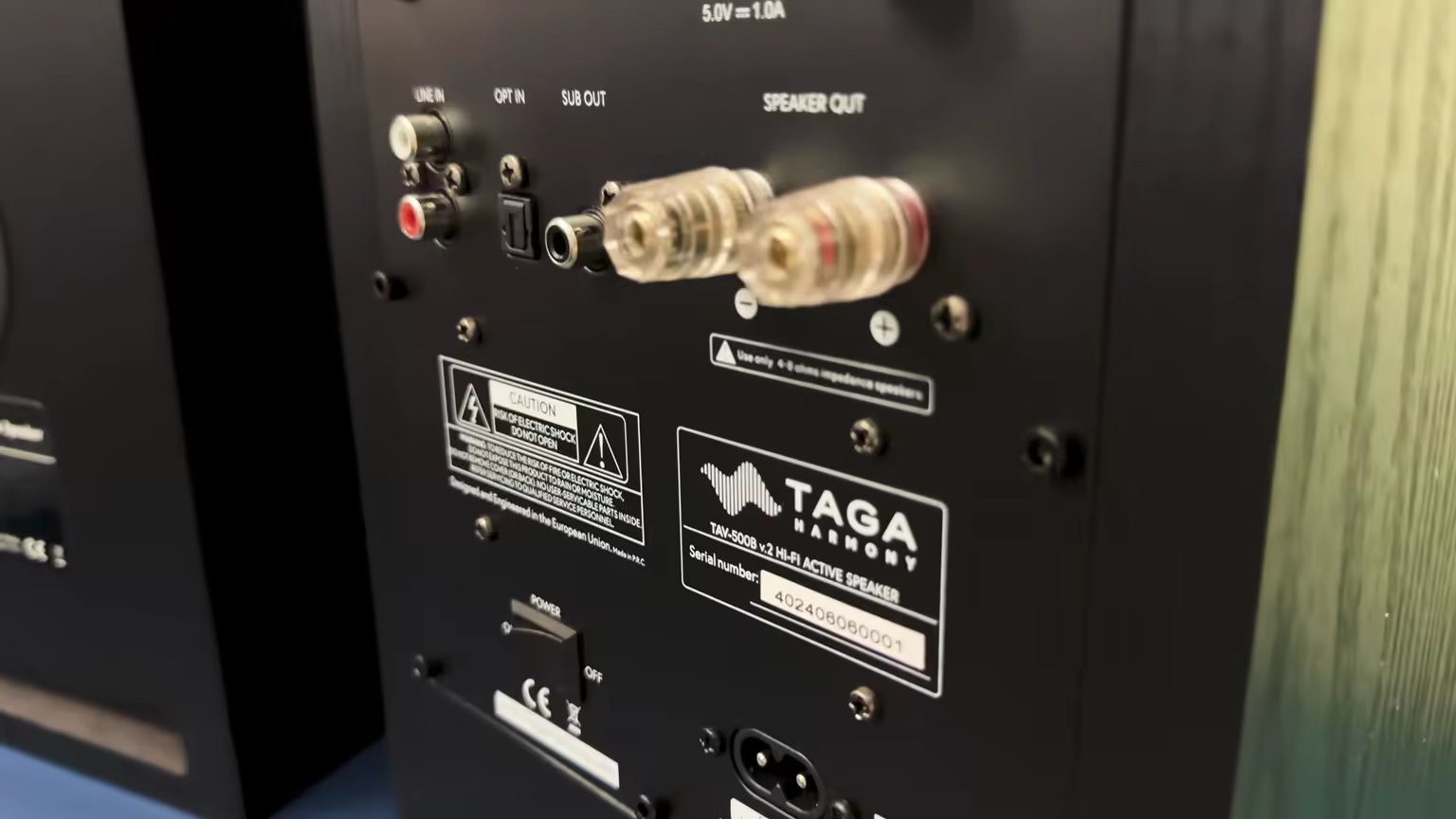 (view larger)
Technical Specifications: 30Hz from a Bookshelf
The crossover point is at 3.5kHz, so not the lowest, but it's a 2-way design with just two drivers, so we can't expect it to break the laws of physics. The amplifier is rated at 2x 40W RMS into 4Ω, with a 100W peak power output, and uses a Class D design.
The frequency response goes from 30Hz on the bottom, to 20kHz on top. It's an impressive result for a stand-mount speaker. They have to be doing some DSP trickery internally to achieve it. When I got those speakers, I expected their bass extension to end at 45Hz at most, so I was like "Well... I'll prepare my subwoofer already..." But I ended up not even using it with these speakers once I heard them. Then I looked at the specs and it explained everything, except how they achieved that.
The speaker's impedance is 6Ω, and its sensitivity is 87dB.
Sound Quality: Deep Bass, Easy-Listening Balance
How do Taga Harmony speakers sound? We need to explore tonality, the balance of bass, mids, and treble that defines any audio device's sound signature. The TAV-500Bs have a unique character worth discussing.
Starting with the low end, they are designed to deliver a noticeable and impactful bass response. They use a 6.5-inch mid-woofer which, combined with the built-in amplifier, allows them to produce a surprisingly deep and well-defined bass for their size. I'm not kidding, and I'm used to much larger, multi-driver speakers. It's not just about the amount - it's about control and definition. You can expect a solid foundation for your music, with enough punch to make things exciting, especially in genres like electronic music, hip-hop, and rock.
However, it's important to note that these are bookshelf speakers, so while the bass is impressive, it won't necessarily shake the room like a dedicated subwoofer with a 12-inch woofer for example. The bass is designed to be tight and responsive, avoiding muddiness or boominess that can mask other frequencies, but it still comes off as very tactile and fun.
The midrange is where most musical information resides, including vocals and most instruments. The TAV-500B V2s aim for a natural and clear midrange presentation. Vocals sound present and clean, with exceedingly good intelligibility considering this tonal balance. While not sounding perfect, instruments like guitars and pianos have a realistic enough timbre and body. The midrange is neither overly forward nor recessed, maintaining a good balance with the bass and treble. This balance is important for accurately reproducing a wide range of musical styles. You can expect a decent, but not mindblowing level of detail in the midrange, allowing you to appreciate the nuances in your favorite tracks.
The treble is not overdone. It's not aggressively bright or forward, which is good for avoiding listening fatigue that plagues some speakers even 20 times the price. Instead, the high frequencies are rather clean and present, providing sufficient detail. For the most part, it allows you to notice the low-level information in music without becoming harsh or sibilant. The resolution is what I would describe as medium - you'll hear the shimmer of cymbals and the airiness in vocals, but don't expect the micro-detail retrieval of higher-end speakers. It's a good balance: enough detail to make the music engaging, but not so much that it becomes analytical or fatiguing. Taga Harmony knew how much this speaker could resolve, and fortunately, they didn't try to make it seem like it could do more, by boosting the treble. This characteristic contributed to the overall easy-listening nature of these speakers.
Soundstage and Imaging: Respectable for the Size
The TAV-500B v.2s offer a respectable soundstage for their size. While they won't project a massive, room-filling soundscape like larger floor-standing options, they create a decent sense of width and some depth.
Imaging is also reasonably good. You can generally discern the placement of vocals and instruments. However, don't expect pinpoint accuracy or laser-sharp instrument separation - these are bookshelf speakers, not high-end monitors. Dynamics, the ability to handle sudden changes in volume, are handled surprisingly well with punchiness.
Verdict: Budget HiFi That Just Sounds Good
These speakers are a great option for those seeking a versatile and enjoyable listening experience without breaking the bank. They are not analytical or clinical and don't have any major flaws - they are designed to make music sound good, and they succeed at that.
Sound signature
Derived from the words this review uses: each axis runs between two opposite descriptors, and the shape leans toward whichever side the writing does.
- Warm ↔ Bright Leans bright
- Relaxed ↔ Analytical Leans analytical
- Polite ↔ Aggressive Leans aggressive
- Lean ↔ Bass-heavy Neutral, no clear signal in the review language
- Intimate ↔ Wide stage Leans wide stage
Hear what "bright, analytical, aggressive, wide stage" means: a short synthesised loop, flat and then with those leanings. An illustration of the words, not a recording of the TAV-500B v.2.
Not sure which signature suits you? Find yours with a blind A/B test
Watch the video review
Subscribe on YouTube (opens in new tab)Prefer to read? The written review above covers everything in the video.
- 0:00 Are ALL Audiophiles RICH? (opens in new tab)
- 0:25 Design & Build Quality (Lightweight Bookshelf Speakers, Wooden Veneer Finish, Tilted Enclosure, Bass Port) (opens in new tab)
- 2:23 Technologies (Unique Damping Solution, Waveguide "Horn", Polypropylene Mid-Woofer, Class D AMP) (opens in new tab)
- 4:04 Inputs & Outputs (Power Connector, Single-Ended Line Input, Digital input, USB, Subwoofer Output) (opens in new tab)
- 5:21 Technical Specifications (Crossover Point, 2-Way Design, Amplifier Power, Frequency Extension) (opens in new tab)
- 6:28 Sound Quality (Tonality, Soundstage Width, Imaging Depth, Detail Retrieval, Dynamic Range) (opens in new tab)
Common questions about the TAV-500B v.2
Is the Taga Harmony TAV-500B v.2 worth it?
Yes, for the right listener. It scored 7.9/10, Recommended, higher than 30% of everything we have tested, against a catalogue median of 8.1. On value it rates excellent: top 17% for the price in speakers, so it is one of the best-value pieces we have scored. Price: €249/pair (≈ $270/pair approx.).
Who should buy the Taga Harmony TAV-500B v.2, and who should skip it?
Buy it if you want the balance to lean bright, with the detail pushed forward, and you want the most performance per dollar on the list. Skip it if you're treble-sensitive.
What else have you tested that is close to the Taga Harmony TAV-500B v.2?
There is no head-to-head page for this one yet, and nothing we have scored sits close enough in price to call a direct rival. The nearest reference points in the same category: the Taga Harmony TAV-607F at 7.9/10, the Triangle Borea BR09 at 8.0/10, and the Triangle Australe EZ at 8.1/10.
Do you need an amplifier for the TAV-500B v.2?
No - these are active speakers with Class D amplification built in, rated at 2 x 40W RMS into 4Ω with 100W peaks, fed by a 24V 4A supply. That is the whole point of them: a complete system for around €249 a pair. The master speaker carries all the connections and feeds the passive one over a speaker terminal, so a stereo pair needs nothing between it and your source.
What can you plug into the TAV-500B v.2?
More than you would expect. RCA inputs for a DAC or preamp, optical TOSLINK for a CD player, console or TV, and Bluetooth for a phone or tablet - and then the genuine surprise, a USB-A port. That means no streamer and no computer required: plug in a USB drive and you have music. There is a mono subwoofer output for later expansion, and the USB port will even charge your phone, though I am not sure why you would.
Is 30Hz from a bookshelf speaker believable?
I did not believe it either. I expected extension to stop at 45Hz at most and had my subwoofer ready - then I never used it with these once. Looking at the specification afterwards explained what I was hearing but not how they achieved it; there has to be some internal DSP doing work. The bass is genuinely deep and well defined for the size, tight and responsive rather than muddy, and impressive even coming from much larger multi-driver speakers.
Does the TAV-500B v.2's angled top matter?
It does, and it is trickle-down thinking from Taga's Diamond series. The top slopes about 4 degrees front to rear, so there is no perfectly parallel surface for standing waves to bounce between from top to bottom - they practically disappear rather than ringing on indefinitely. The Diamond speakers take the idea further with curved edges and no parallel surfaces at all. Inside, a premium damping material does the same job for resonance and distortion.
How detailed are the TAV-500B v.2?
Medium, and I respect that Taga did not pretend otherwise. You hear cymbal shimmer and vocal air, and you will not get the micro-detail of higher-end speakers. The important part is the treble is not overdone to fake it - it is clean and present without being aggressive or forward, so there is none of the fatigue that plagues speakers twenty times the price. That restraint is exactly what makes them easy to listen to for a long time.
Are the plastic finishes a problem at this price?
They feel modest in the hand, and then you remember what they cost. At around €250 for the pair, most rivals do not offer veneer at all - these come in four colours, and the more natural finishes look considerably fancier than the black I have. The grills are non-magnetic, mounted on posts, which I do not regard as a real problem: they sit securely, come off without damage, and the fabric is thin enough to be acoustically transparent.
If you're interested in this
All 6 speakers reviewsClosest alternatives