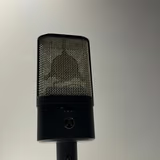
t.bone SCT 2000 Review: A $231 Tube Mic That Robs the Industry
A large-diaphragm tube condenser at $231 with a real 12AX7B tube, nine polar patterns, gold-sputtered diaphragm, and a sound that competes with mics 3-5x the price.
higher than 49% of everything we have tested
- Standout
- Real, user-replaceable 12AX7B vacuum tube inside the mic
- Watch out for
- Needs external PSU
- Better alternative
- Austrian Audio OC16: leans brighter, $200 more, scores 0.6 higher.
Is it for you?
- You want the balance to lean warm, with the top end eased
- You want more performance per dollar than most of its peers
- You want every last bit of treble detail
Named Best Budget in our Best Audio Sources guide.
When you think of a budget microphone, tube gear probably isn't the first thing that comes to mind. You're more likely picturing a basic, transistor-based mic with decent but not mind-blowing sound, minimal accessories, and packaging that screams 'cost-cutting.' But the t.bone SCT 2000 is none of that.
Build Quality: A Full Kit That Feels Expensive
Just holding the SCT 2000 gives you a clear sense that this is not your average budget mic. The body is made entirely of metal - no plastic panels, no flimsy parts. It's finished in gray, with a subtle metallic sheen that catches the light in a really premium way. There's a nice vintage vibe to the design, too. The grille is a silver mesh with a classic basket shape. And it's not just for show - it's double-layered and feels solid to the touch. Even the branding is tastefully minimal.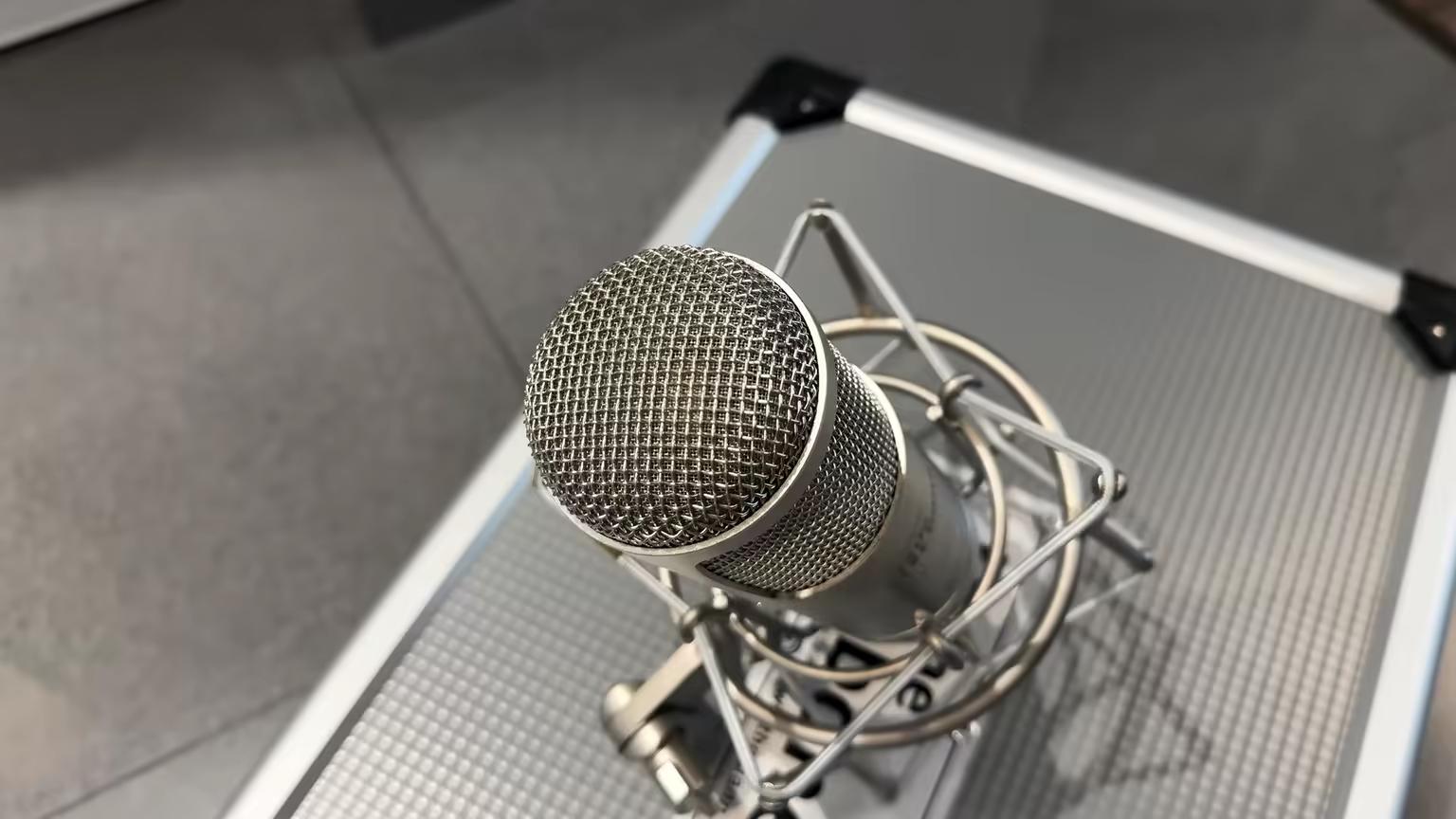 (view larger)
In terms of feel, this mic has a reassuring weight to it. It's not just heavy for the sake of it - it feels like you're working with something reliable and professional. You pick it up and think, "Yeah, this is built to last."
That build quality carries over to everything that comes with it. For starters, there's the power supply unit. Since this is a proper tube mic, it needs external power, and what they include here is no afterthought. The PSU is housed in a clean, all-metal chassis that feels like a little tank. It's got actual weight to it, and the connectors feel rock-solid when plugged in. It's not oversized or clunky - just a well-built, purpose-made unit that wouldn't look out of place in a high-end rack setup. Even the polar pattern selector on the PSU unit is honestly great. It is massively tactile.
The included cable is another huge plus. Tube microphones need a special 7-pin cable to connect to the power supply, and the one you get here is both very long and high-quality. It's thick, but flexible enough to run cleanly through a studio without coiling up awkwardly or putting strain on the connectors. And the connectors themselves are great. You're not going to accidentally tug this loose mid-session.
Then there's the shock mount, and honestly, this thing surprised me. It's full metal, nicely finished, and it grips the mic with confidence. There's soft padding inside the mount ring so the mic doesn't get scratched or slide around. And the elastic bands feel tight and durable, offering actual vibration isolation - not just the appearance of it. Plus you get an extra pair of these rubber elements if they ever wear out.
Finally, we have the carrying case - and this isn't some lightweight bag or plastic box. This is a full-on, hard-shell case. It's huge in the best way - it fits everything: the mic, the PSU, the cable, the shock mount, and there's even room for a few extras if you want to customize the setup. The foam inside is thick and precisely cut, so every piece of gear sits snugly in place. The case itself has reinforced edges, heavy-duty latches, and a sturdy handle. What t.bone has done here is genuinely impressive. The SCT 2000 isn't just a mic - it's a full, high-quality package that feels like it belongs in a much higher tier of gear. And for the price? It's almost absurd how much you're getting.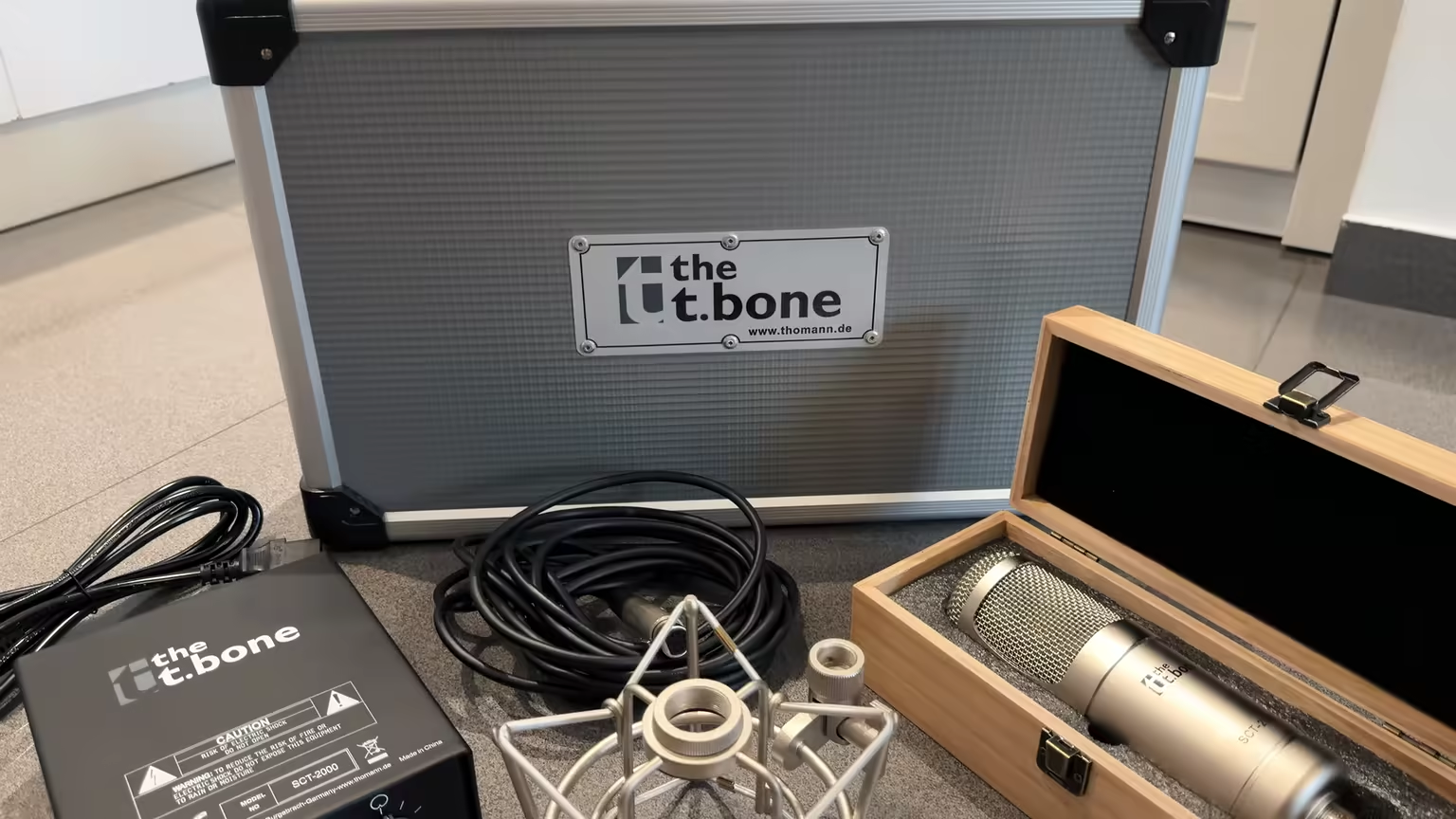 (view larger)
Technologies: A Real Tube, Nine Polar Patterns
What really makes the t.bone SCT 2000 stand out is the tech packed inside - especially for a mic in this price bracket. This isn't just a flashy tube mic for the sake of being "vintage." It's thoughtfully designed with real, useful features that give you serious control over your sound.
Inside the mic body is a real 12AX7B tube. This is the same type of vacuum tube found in classic analog gear - the kind that gives recordings that smooth, warm, slightly saturated tone. And the best part? It's user-replaceable. So if you want to experiment with different tube types down the line, or just keep your mic running in top shape after years of use, you can. That's pretty rare for a mic at this price.
The SCT 2000 also features a 1.07-inch diaphragm that's gold-sputtered - which basically means it's ultra-responsive and sensitive, especially to the nuances in vocals and acoustic instruments. That large diaphragm helps it capture low-end detail and presence in a way small-diaphragm condensers just can't match.
One of the most flexible features is the nine selectable polar patterns. You're not locked into just cardioid or omni - you've got those, plus figure-8, and six more hybrid positions in between. And all of that is controlled right on the external power supply, so you can fine-tune your mic's pickup pattern without even touching the mic itself.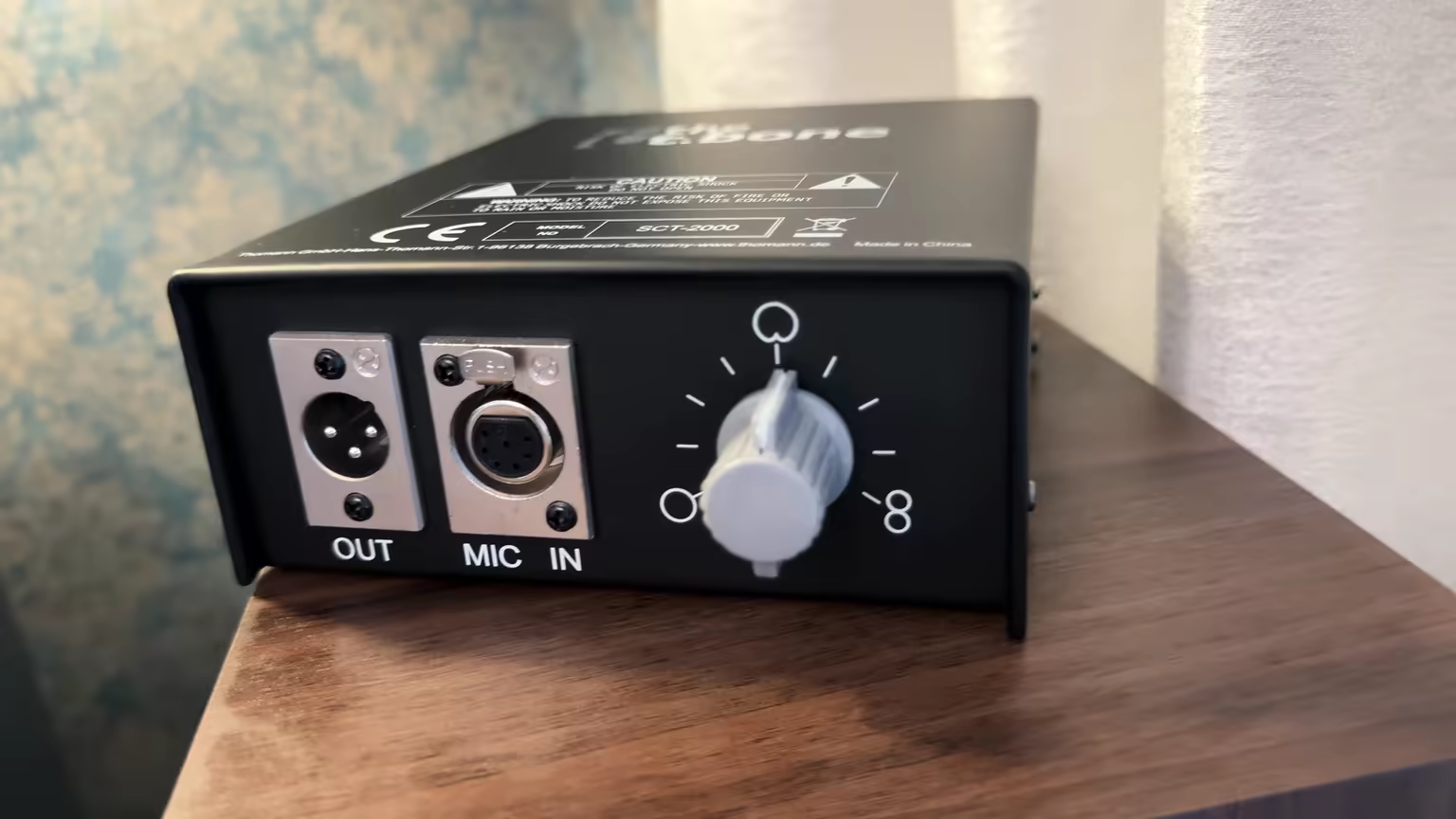 (view larger)
Technical Specifications: Quiet for a Tube Mic
The frequency response of 20Hz to 20,000Hz covers the full range of human hearing. That means it picks up deep lows, airy highs, and everything in between.
The sensitivity of -38.5dB tells you how good the mic is at picking up quiet sounds and how much gain it needs. It's actually quite sensitive, especially for a tube mic.
The low impedance of 200Ω helps preserve signal quality over long cable runs. It also means it'll play nicely with most preamps and audio interfaces.
The self-noise is 16dB. This is how much noise the mic makes by itself when nothing is being recorded. For a tube mic it's impressively low - meaning your recordings will be clean and quiet, even when capturing quiet sounds.
The max SPL of 130dB tells you how loud a source the mic can handle before it starts distorting. 130dB is loud - louder than a guitar amp cranked in a small room, or a really aggressive vocal. You can throw it in front of a loud source without worrying about clipping.
How Does It Sound? Warm, Full, Properly Tube
The overall character of this mic is warm, full, and detailed - exactly what you'd want from a proper tube condenser. You immediately notice the low-end weight - it doesn't boom or get muddy, but there's a real depth to the bass that gives vocals and instruments a natural body. Perfect for male vocals, voiceover, or anything that benefits from that chesty, grounded tone.
Then you've got the midrange, which is where this mic really shines. It has a smooth, musical quality that flatters just about anything you throw at it - especially vocals and acoustic instruments. There's no harshness - just that sweet, slightly compressed tube character.
As for the highs, they're present and open, but not overly bright or brittle. You're not getting that hyped sizzle like you might hear on something like a Rode NT1-A or even some cheaper condensers that try to fake "air" by pushing the top end. The SCT 2000 is much more restrained - in a good way. The highs are natural and slightly rounded, so sibilance is controlled and you don't end up with sharp "S" sounds jumping out in the mix.
Comparisons: WA-47, Aston Spirit, AT4040
If you're familiar with the Warm Audio WA-47 or the Aston Spirit, this mic actually plays in a similar tonal space. It has that vintage smoothness like the WA-47, but it's a bit less dark and slightly more transparent in the mids. Compared to the Aston, which can sound very modern and open, the SCT 2000 leans more classic and analog - with a rounder, less clinical vibe.
Compared to something like the Audio-Technica AT4040, the SCT 2000 sounds less sterile. The AT4040 is very clean and accurate, but it can feel flat or thin on certain voices. The SCT 2000, on the other hand, gives you that little bit of harmonic lift - the slight saturation and tonal richness that just makes a vocal feel more alive. And the fact that this comes from an actual tube circuit, not digital modeling or EQ tricks, makes it all the more impressive.
You can plug it in, get a decent preamp, and what you hear already sounds "produced." This mic gives you a really flattering starting point.
It also handles dynamic performances really well. Whispery vocals sound intimate and close, while louder singing or speaking doesn't distort or lose clarity. Even in louder acoustic environments, it holds its own - offering a smooth capture with no brittle peaks. You can layer vocals, harmonies, instruments, room takes - and they still retain clarity and separation. That's a rare quality even in mid-range microphones.
Verdict: It Doesn't Sound Like $231
To put it simply, this mic doesn't sound like a $231 mic. It sounds like something you'd expect in the $600 to $1000 range. And no, it's not going to beat out a real U87, but it definitely punches way above its weight. The sound has a vintage soul but enough clarity and modern handling to make it useful across genres - pop, hip hop, acoustic, voiceover, podcasting, jazz - you name it.
The t.bone SCT 2000 has real character. It's smooth, rich, warm, natural and detailed. It's the kind of mic that helps shape your recordings into something beautiful. And again - all of that, for $231? It's borderline robbery.
Sound signature
Derived from the words this review uses: each axis runs between two opposite descriptors, and the shape leans toward whichever side the writing does.
- Warm ↔ Bright Leans warm
- Relaxed ↔ Analytical Sits close to centre
- Polite ↔ Aggressive Leans aggressive
- Lean ↔ Bass-heavy Neutral, no clear signal in the review language
- Intimate ↔ Wide stage Leans wide stage
Hear what "warm, aggressive, wide stage" means: a short synthesised loop, flat and then with those leanings. An illustration of the words, not a recording of the SCT 2000.
Not sure which signature suits you? Find yours with a blind A/B test
Watch the video review
Subscribe on YouTube (opens in new tab)Prefer to read? The written review above covers everything in the video.
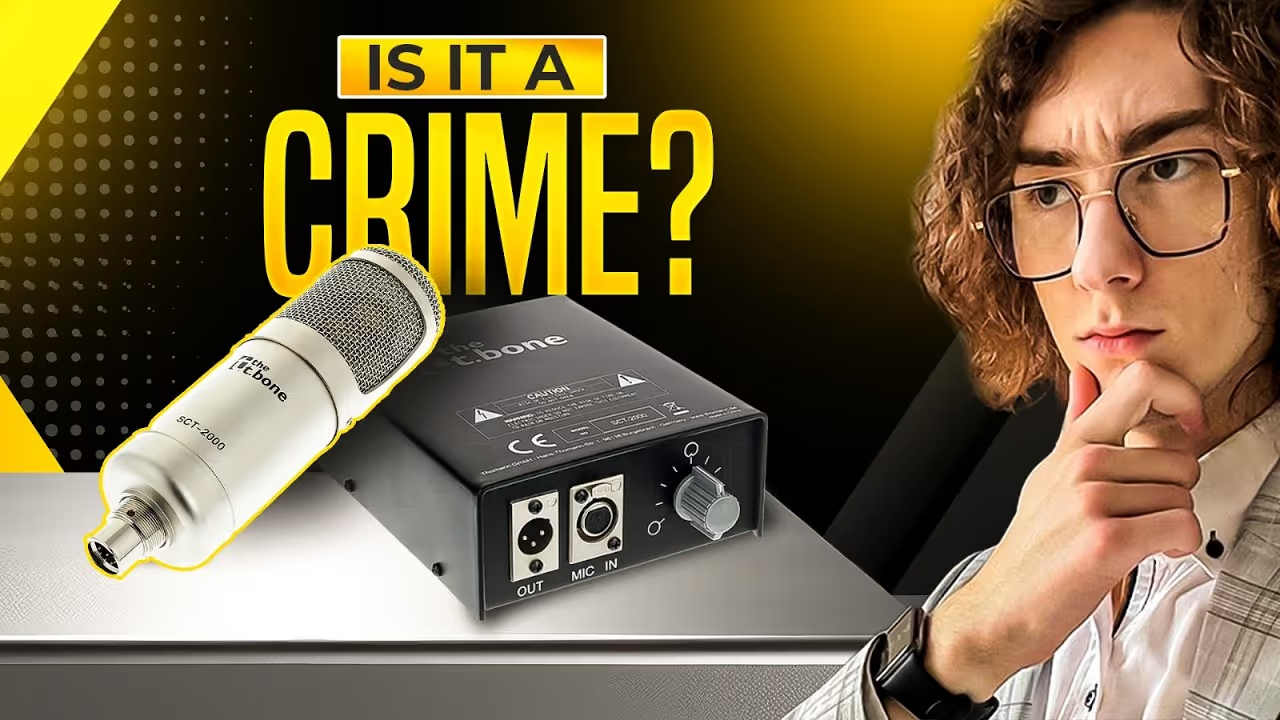
- 0:00 The BEST Budget Tube Condenser Microphone For Studios (opens in new tab)
- 0:23 Design & Build Quality (Fully Metal Body, External Power Supply, 7-pin XLR Cable, Shock Mount) (opens in new tab)
- 3:21 Technologies (Replaceable 12AX7B Tube, Large Diaphragm, Multiple Polar Patterns) (opens in new tab)
- 4:42 Technical Specifications (Wide Frequency Response, Sensitivity, Max SPL) (opens in new tab)
- 5:48 Sound Quality (Tonal Balance, Midrange Warmth, Compression, vs. Rode NT1-A, WA-47 & AT4040) (opens in new tab)
Common questions about the SCT 2000
Is the t.bone SCT 2000 worth it?
Yes, for the right listener. It scored 8.1/10, Recommended, higher than 49% of everything we have tested, against a catalogue median of 8.1. On value it rates strong: above average for the price in sources. Price: $231.
Who should buy the t.bone SCT 2000, and who should skip it?
Buy it if you want the balance to lean warm, with the top end eased, and you want more performance per dollar than most of its peers. Skip it if you want every last bit of treble detail.
What else have you tested that is close to the t.bone SCT 2000?
There is no head-to-head page for this one yet, and nothing we have scored sits close enough in price to call a direct rival. The nearest reference points in the same category: the Austrian Audio OC16 at 8.7/10 and the FIFINE K688 at 7.2/10.
Can you replace the tube in the SCT 2000?
Yes, and that is unusual at this price. Inside the body is a real 12AX7B vacuum tube - the same type found in classic analogue gear - and it is user-replaceable. So you can roll tubes to experiment with the character later, or simply keep the microphone running years from now when the original wears. A tube mic with a soldered-in valve is a mic with an expiry date; this one is not.
Do you need the external power supply for the SCT 2000?
Yes - it is a proper tube mic, so it cannot run off phantom power and it is not plug-and-play. What you get is not an afterthought, though: an all-metal chassis with real weight, rock-solid connectors, and a genuinely tactile polar pattern selector on the front. The special 7-pin cable is included, and it is long, thick and flexible enough to run cleanly through a studio without straining the connectors.
How does the SCT 2000 compare with a Warm Audio WA-47 or an Aston Spirit?
It plays in the same tonal space, which is the point. Against the WA-47 it has similar vintage smoothness while being a bit less dark and slightly more transparent through the mids. The Aston Spirit sounds very modern and open; the SCT 2000 leans classic and analogue, rounder and less clinical. Against an Audio-Technica AT4040 it sounds far less sterile - the AT4040 is clean and accurate and can read flat or thin on some voices.
Is the SCT 2000 a U87 killer?
No, and I would not sell it that way. It will not beat a real U87. What it does is punch far above its price: it sounds like something you would expect in the $600 to $1000 range rather than a $231 microphone. That gap is where the value sits. The character is vintage-souled with enough clarity and modern handling to work across pop, hip hop, acoustic, voiceover, podcasting and jazz.
Is 16dB of self-noise quiet enough?
For a tube mic it is impressively low, and it is not pro-grade silent. Self-noise is the hiss the microphone generates on its own with nothing in front of it, and tube circuits are noisier than solid state by nature. At 16dB your recordings stay clean and quiet even on quiet sources. If you are capturing extremely delicate material in a treated room, a quieter condenser exists; for everything else this will not be the limiting factor.
What do the SCT 2000's nine polar patterns give you?
Real flexibility, controlled from the power supply so you never touch the microphone. You get cardioid, omni and figure-8 plus six hybrid positions between them, which means you can tune the pickup pattern for a room, a duet, or an instrument without moving anything. On a budget microphone that is genuinely rare - most give you one pattern and expect you to solve the rest with placement.
Is the SCT 2000 too smooth for clinical work?
It can be, and that is the honest limit of its character. The midrange is smooth and musical and flatters almost anything you put in front of it, with the slightly compressed tube quality that makes a vocal feel alive. The highs are present and open rather than hyped - no faked air like a Rode NT1-A - so sibilance stays controlled. If you need a ruthlessly accurate capture rather than a flattering one, this is the wrong tool.