
Tonewinner AD-1PA+ Review: A $3,175 Class A/AB Power Amp
A 43kg switchable Class A/AB power amplifier paired with a fully balanced preamp - 100W Class A or 500W Class AB into 4Ω with serious bass control and golden-hued mids.
higher than 86% of everything we have tested
Value Steep. You are buying performance here, not value.
- Standout
- Massive 43kg overbuilt chassis with side heatsinks
- Watch out for
- Significant heat output in Class A mode
- Closest rival
- Tonewinner AD-2PRO+: $500 less, scores 0.2 lower.
Is it for you?
- You drive real speakers in a real room and want the amplifier to be the last thing that runs out
- You are adding one piece to a system that already works
- Your speakers are efficient and near-field, where most of that rating never leaves the box
- You want one box that covers the whole chain
Named Best Overall in our Best Speaker Amps and Preamps guide, ahead of 2 others.
This high-end amplifier isn't your typical, compact Class D speaker amp. It's the complete opposite. The Tonewinner AD-1PA+ operates in full Class A or Class AB. It's a heavy, high-power beast built for serious audiophiles. Raw yet refined, powerful yet controlled - that's what makes it truly stand out.
Design & Build Quality: 43kg of Machined Intent
The moment you see the Tonewinner AD-1PA+ and its matched preamp, the AD-1PRE+, you realize these aren't just components - they're statements. This system isn't trying to blend into your media console or hide behind a screen.
Let's start with the AD-1PA+ power amplifier. This thing is a brute in the best way possible. We're talking over 40 kilograms of raw metal, fins, and power - and that weight isn't just for show. It's built like a tank, and that's because it has to be. The heat generated is real, and the engineering around it has to be serious.
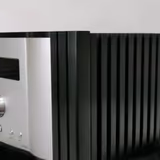
That's why one of the most striking elements of the AD-1PA+ is its massive heatsinks running along both sides. Each fin is machined and spaced for maximum thermal efficiency, giving the amp a kind of industrial elegance. It's aggressive, but refined. You know immediately this thing means business.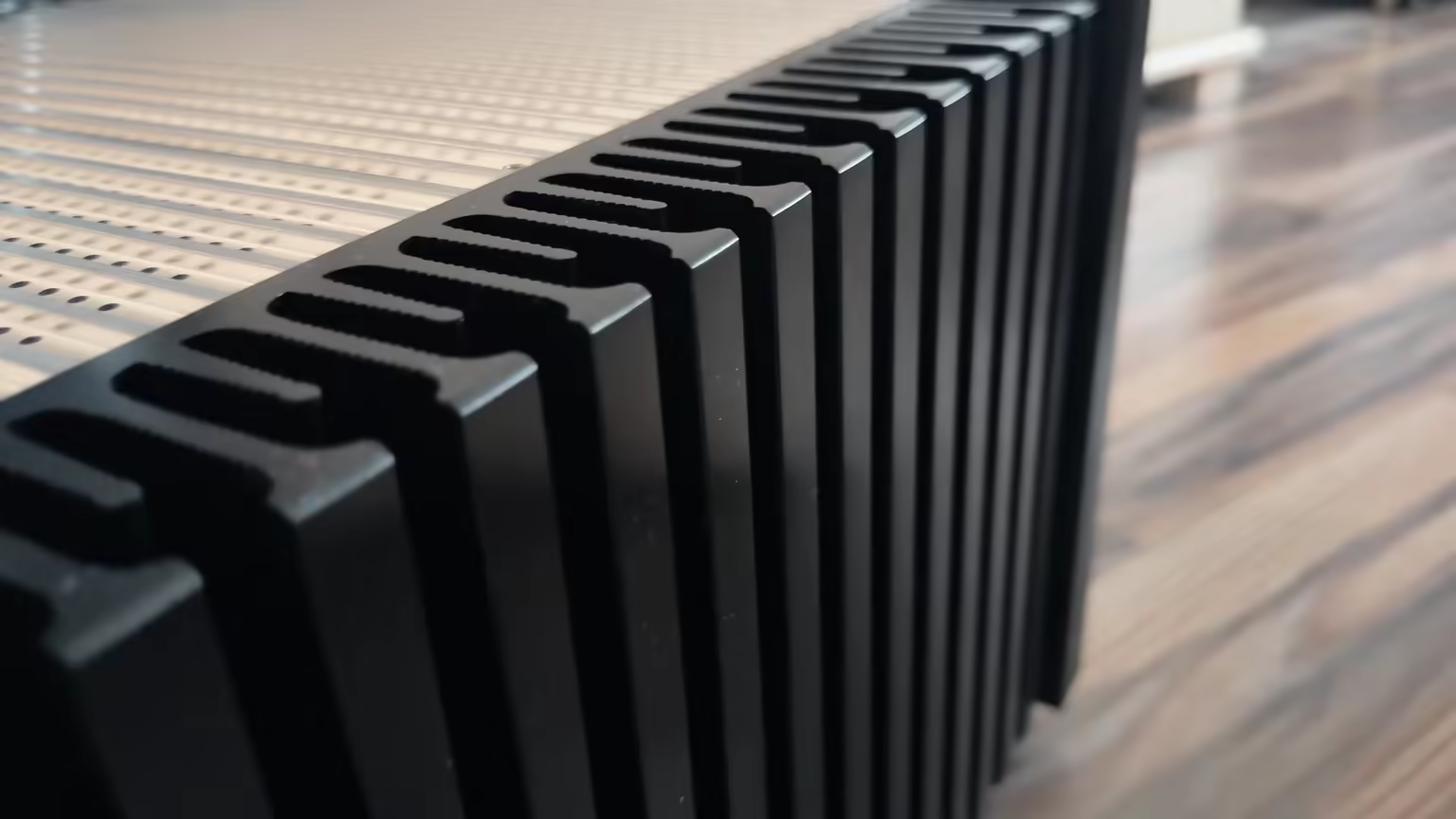 (view larger)
The front panel continues that premium feel - thick, brushed aluminum with a clean, minimalist layout. There's no over-the-top lighting or gimmicky displays. Instead, you get a serious, functional aesthetic. The power button is solid and tactile, and it has an LED ring around it as a status indicator, which lets you know the amp is alive. You'll also notice the Class A to Class AB switch, a thoughtful touch that gives you control over performance and efficiency.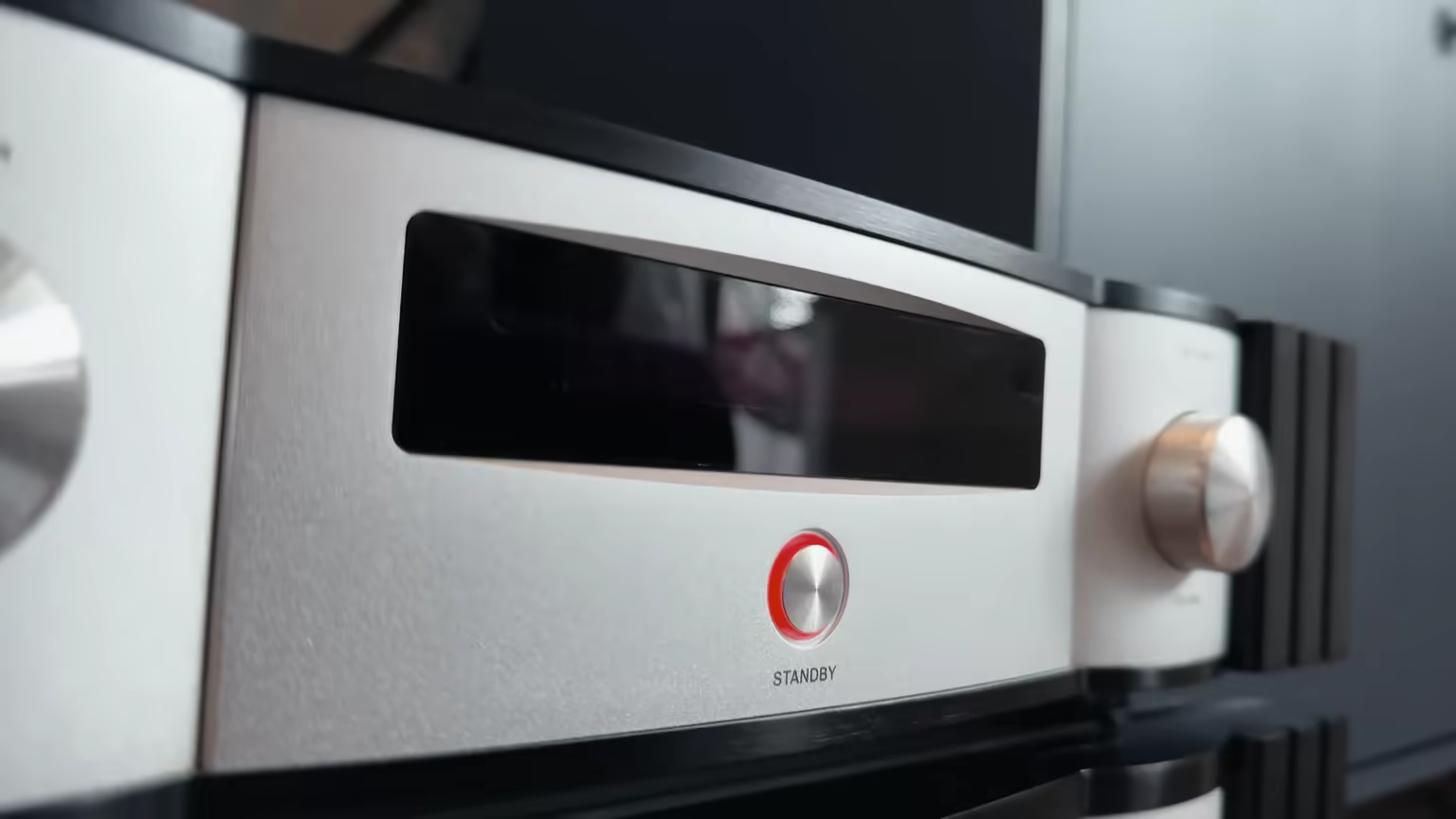 (view larger)
Flip the unit around, and the rear panel tells the same story: high-grade binding posts, secure inputs, and clearly labeled connectivity that makes setup straightforward for balanced or unbalanced systems.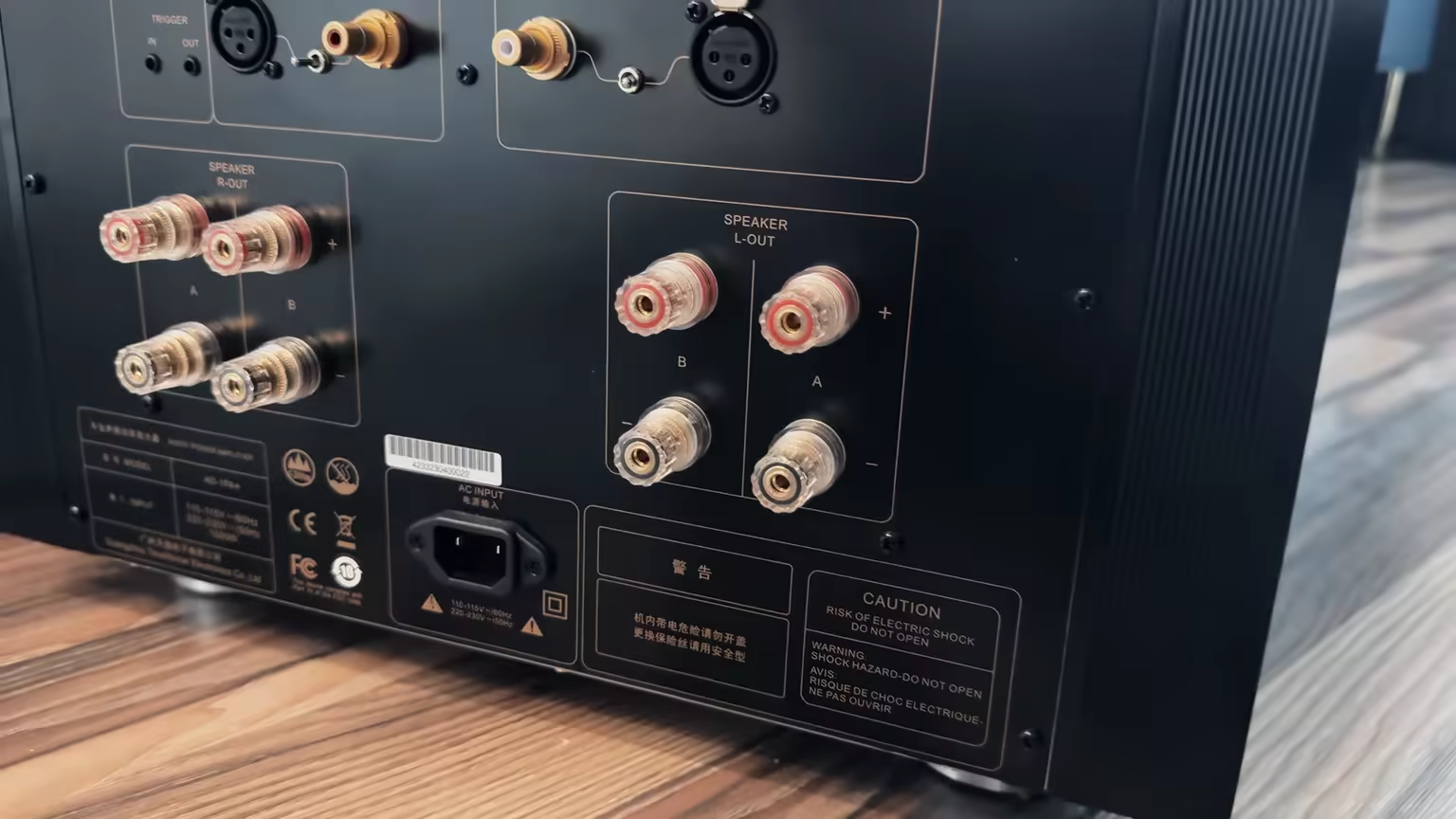 (view larger)
The amp weighs 43 kilograms - you feel the weight of its overbuilt chassis the second you try to move it. And when paired with the AD-1PRE+ preamplifier, the system becomes a visually and functionally integrated high-end stack. The preamp shares the same design language, and just the right number of controls. The central display is crisp, giving you immediate access to volume, input, and configuration options. The volume knob is another standout - milled metal with notched rotation points. Nothing here feels cheap or compromised.
Taken together, the AD-1PA+ and AD-1PRE+ are a flagship-level front end that delivers mechanical satisfaction.
Technologies: Switchable Class A/AB, 60A on Tap
This amplifier has a fully discrete, two-channel architecture, ensuring each channel is electrically and mechanically isolated for maximum stereo separation and minimal crosstalk. Each channel gets its own independent winding from the toroidal transformer, providing superior channel balance and dynamic headroom.
One of the star features here is the amp's switchable Class A / Class AB topology. You can select pure Class A mode for that lush, harmonic-rich tonality that audiophiles love - or switch to Class AB for a dramatic boost in power and efficiency, especially when driving demanding speakers at higher volumes.
Tonewinner has also implemented full balanced differential input and BTL output stages. The signal path is symmetrical and kept as short as possible. Each amplification channel uses eight pairs of high-current Hi-Fi transistors, providing a massive 60-ampere current capacity per side. This ensures stability, control, and transient speed even under heavy dynamic swings.
Protection circuits are also top-tier: over-current, DC offset and overheating are all on board. They help preserve long-term reliability without degrading sonic performance.
The companion AD-1PRE+ preamplifier continues this with its own fully balanced topology, low-noise circuitry, and a phono stage built right in. Whether you're feeding digital or analog sources, it's designed to pass through your signal with minimal coloration and maximum fidelity.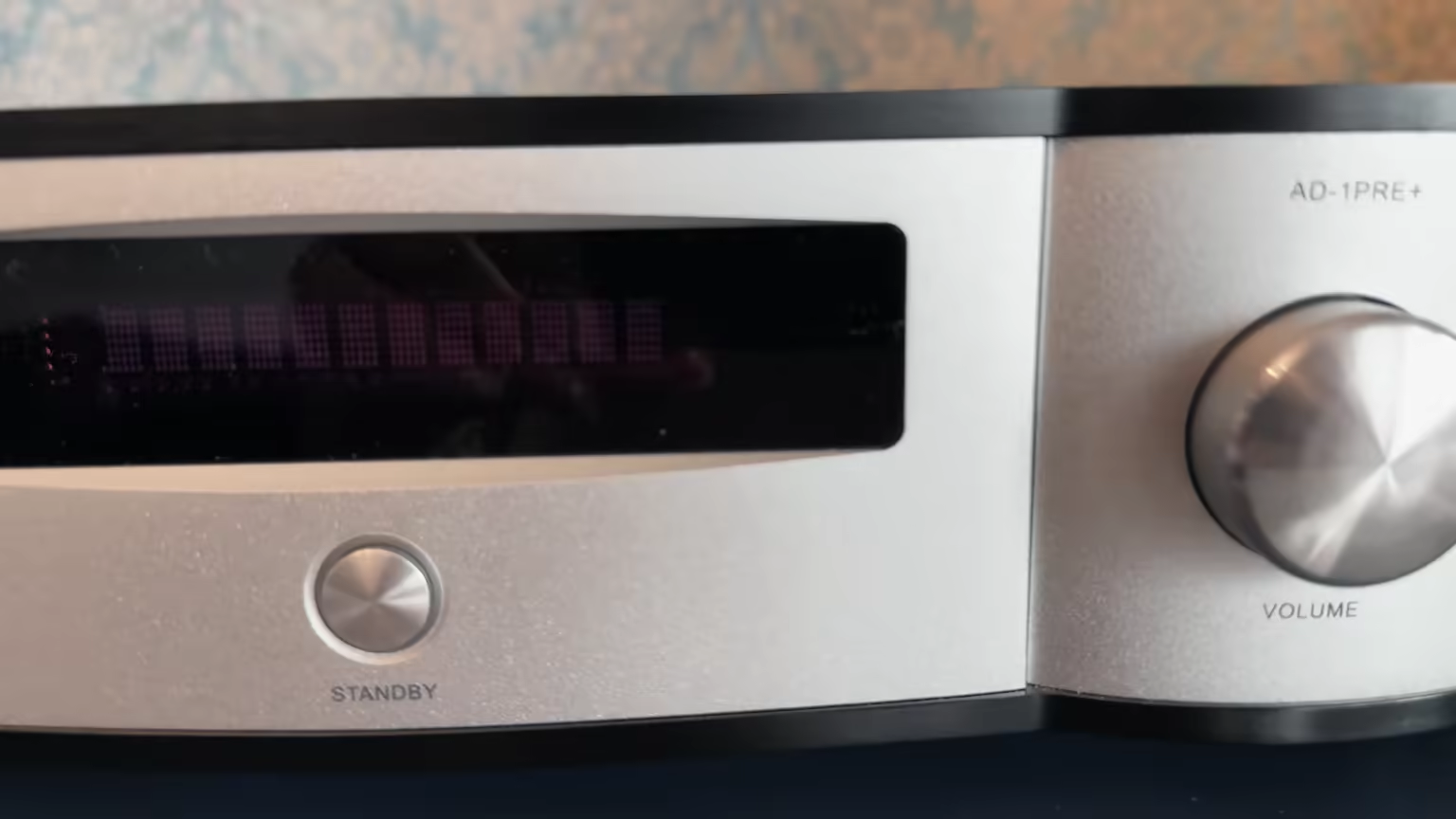 (view larger)
Technical Specifications: 100W Class A, 300W AB
On paper, the numbers back up the build. In Class A the AD-1PA+ puts out 100W per channel into 8Ω; flip it to Class AB and that jumps to 300W per channel into 8Ω, or a full 500W per channel into 4Ω with one channel driven. THD stays under 0.0016% at 100W, so the output is clean and transparent even when you lean on it, and the signal-to-noise ratio sits above 116dB for a whisper-quiet background and excellent dynamic range. Frequency response runs from 10Hz all the way out to 104kHz (-3dB), far beyond anything you'll actually hear, while the gain is a standard 29.5dB that matches easily with most source components. The damping factor of over 200 gives it real grip on a speaker, especially down in the bass, and it stays stable all the way down to 2Ω, so it can safely drive demanding, low-impedance loads. Underpinning all of it is a 1200W toroidal transformer and 180,000μF of filter capacitance for rock-solid voltage stability - though that does mean it can pull up to 1200W from the wall.
How Does It Sound? A Golden Hue in Class A
The first thing you'll notice with this setup - especially when running the AD-1PA+ in Class A - is that it has this slightly golden hue in the mids. It's not overly romantic, but it's got that rich, nostalgic tone. There's a rawness to it. Not in a negative sense - not gritty or aggressive - but rather something that's unpolished in a good way, like it hasn't been overly filtered or modernized to sound sterile.
In Class A mode, the amplifier opens up in a really special way. The sound gets more dimensional, more colorful. Vocals have this palpable body to them, the midrange blooms just a bit, and everything feels more textured. Switch it to Class AB, and things tighten up. The amp runs cooler, yes, but also a bit drier - more clinical. It's still dynamic, still strong in the low end, but it loses that golden sheen. Personally, I always gravitated back to Class A.
The treble here is interesting. It's clean and extended, but not overly sharp. You won't get that glare that some amps use to fake "detail." This gives space for detail without drawing a spotlight on it.
The mids are where the magic happens. There's real presence here. It's dense, tangible, and slightly warm. Male and female vocals feel centered and intimate. Instruments sound physical. It never feels too rounded or soft.
And now, the bass. I did not expect this much control and impact from an amp at this price. The AD-1PA+ punches hard. Bass is fast, deep, and tight, without being boomy or bloated. It doesn't just hit - it moves air. I've heard amps twice the price that don't handle bass this well.
Detail, Imaging, and Character: Natural, a Touch Dry
This stack doesn't scream "resolution" in the way some modern gear does. What it does instead is present detail in a natural, almost unassuming way. You hear it if it's in the recording, but it doesn't feel like the amp is trying to show off. It's subtle. You get space between the notes, and nuance in vocals - without being analytical.
The imaging is solid, stable, and three-dimensional. With the right speakers, the soundstage can be wide and immersive.
There's one area where I think this amp shows its character - or limitation, depending on your preferences - and that's in dryness. It's not brittle, but it lacks a bit of liquidity in the flow. Notes start and stop a little more abruptly than they do on something truly fluid like a tube amp or higher-end designs from Pass Labs. It's subtle, and for some people, it might actually be a benefit. Still, it's something to keep in mind.
Verdict: Refinement Meets Rawness
What makes this amp-preamp combo special is that it manages to blend refinement with rawness. It gives you the tight, clean, modern sound of good Class AB gear, but layers in the tone, texture, and dimensionality you'd normally expect from older high-end gear - especially in Class A. It doesn't sound generic. It doesn't sound overly polite. And it definitely doesn't sound cheap.
No, it's not perfect. But it gets dangerously close to the sound of much more expensive gear, and it brings a whole lot of soul to the table. And for the price? It's honestly hard to beat.
Watch the video review
Subscribe on YouTube (opens in new tab)Prefer to read? The written review above covers everything in the video.

- 0:00 Is It The BEST Class A Amplifier And Preamplifier Combo Up To $3000? (opens in new tab)
- 0:26 Design & Build Quality (Big Metal Heatsinks, Overbuilt Aluminium Chassis, Digital Display) (opens in new tab)
- 3:17 Technologies (Selectable Modes - Class A & Class A/B, Balanced Input Stage, DAC, Phono Stage) (opens in new tab)
- 5:20 Technical Specs (Power Output, THD+N, Frequency Response, SNR, Dynamic Range, Damping Factor) (opens in new tab)
- 6:40 Sound Quality (Tonal Balance, Midrange Warmth, Refinement, Sound Stage, Dryness, Bass Speed) (opens in new tab)
Common questions about the AD-1PA+
Is the Tonewinner AD-1PA+ worth it?
Yes. It scored 9.0/10, Highly Recommended, higher than 86% of everything we have tested, against a catalogue median of 8.1. On value it rates steep: better value exists across the catalogue, so you are buying performance here, not value. Price: $3,175.
Who should buy the Tonewinner AD-1PA+, and who should skip it?
Buy it if you drive real speakers in a real room and want the amplifier to be the last thing that runs out, and you are adding one piece to a system that already works. Skip it if your speakers are efficient and near-field, where most of that rating never leaves the box, and you want one box that covers the whole chain.
What should I consider instead of the Tonewinner AD-1PA+?
On the same chain, against the same recordings: the Tonewinner AD-2PRO+ scores 0.2 lower and costs $476 less. Each of those has a full head-to-head page below.
Class A or Class AB on the AD-1PA+?
Class A, for me, almost always. In Class A the amplifier opens up - the sound gets more dimensional and colourful, vocals gain palpable body, the midrange blooms slightly and everything feels more textured. Switch to Class AB and things tighten: it runs cooler, it is still dynamic and strong in the low end, and it goes a bit drier and more clinical, losing the golden sheen. There is no automatic switching, so it is a decision you make and live with for the session.
How much heat and power does the AD-1PA+ draw?
A lot, and you need to plan for it. In Class A the heat output is significant - that is what the machined heatsinks along both sides are for - and the unit can pull up to 1200W from the wall, backed by a 1200W toroidal transformer and 180,000μF of filter capacitance. Check the circuit you are plugging into, and give it air. Class AB mode is the answer if the room gets uncomfortable in summer.
Will the AD-1PA+ drive difficult speakers?
Comfortably. It makes 100W per channel into 8Ω in Class A, 300W into 8Ω in Class AB, and a full 500W into 4Ω with one channel driven. Each channel carries eight pairs of high-current transistors for 60 amps of capacity per side, and it stays stable down to 2Ω - so genuinely low-impedance loads are safe. The damping factor of over 200 is what gives it grip on a woofer, and you hear that in the bass.
Does the AD-1PA+ lack fluidity?
Slightly, and it is the one real character limitation. It is not brittle, but notes start and stop a little more abruptly than they do on something genuinely fluid - a tube amplifier, or a higher-end Pass Labs design. The flow has a touch less liquidity. It is subtle, and for some listeners the tighter start and stop will read as a benefit rather than a shortcoming. It is worth auditioning for if that quality matters to you.
How is the AD-1PA+'s bass?
Better than I expected at this price, and it is the thing that most surprised me. It punches hard - fast, deep and tight, never boomy or bloated - and it does not just hit, it moves air. I have heard amplifiers at twice the money that do not handle bass this well. The damping factor and the current capacity are the reasons, and this is where the 43 kilograms of overbuilt chassis stop being a styling exercise.
Is the AD-1PA+'s weight a practical problem?
Yes - 43 kilograms means placement is effectively permanent, and you will feel every one of them the first time you try to move it. Plan the rack before it arrives rather than after. In return you get a chassis that is genuinely overbuilt, with heatsinks machined and spaced for thermal efficiency rather than appearance, and thick brushed aluminium on the front with no gimmicky lighting.
Is the AD-1PA+ analytical?
No, and it is not trying to be. It does not scream resolution the way some modern gear does - it presents detail naturally and almost unassumingly, so you hear what is in the recording without feeling the amplifier showing off. There is space between notes and nuance in voices without ever tipping into analysis. The treble is clean and extended without the glare some amps use to fake detail.
If you're interested in this
All 3 speaker amps & preamps reviewsClosest alternatives