
Tonewinner AD-2PRO+ Review: 40 kg, 240W, and a Class A Switch
A 40 kg, 240W integrated amp with switchable Class A and Class A/B modes, neutral tonality, and the kind of dynamic headroom that pairs well with virtually any speaker.
higher than 79% of everything we have tested
Value Steep. You are buying performance here, not value.
- Standout
- Massive 40 kg / 80 lb solid build with large heatsinks
- Watch out for
- Center image can be a little fuzzy
- Closest rival
- Tonewinner AD-1PA+: $500 more, scores 0.2 higher.
Is it for you?
- You drive real speakers in a real room and want the amplifier to be the last thing that runs out
- You want one box to replace a stack, and one power lead behind the desk
- Your speakers are efficient and near-field, where most of that rating never leaves the box
- The converter or the streamer in your system is already settled and you will not be paying for a second
Pick #3 of 3 in our Best Speaker Amps and Preamps guide.
I have great admiration for massive and powerful high-end amplifiers, especially when their size is not just for show. The Tonewinner AD-2PRO+ fits this description perfectly. Although it is a costly amplifier, it isn't exorbitant - and it is truly thrilling. Stick with me till the end and you will understand why I feel this way.
Coming at around $2,700, greatly depending on when you find it, it promises a lot - but does it deliver?
Build Quality and Design: 40kg You Can Stand On
It makes a statement with its build quality. It's got a solid, hefty feel thanks to the classic black and silver aluminum alloy chassis. The black finish feels smooth and looks great - it should easily complement most audio setups. Tonewinner prioritized durability here and you can feel it. It weighs almost 40 kg, or close to 80 pounds. I can stand on it comfortably without any harm - but please don't try it.
On both sides of the amplifier there are large heatsinks that serve a purpose beyond just looking impressive. The large surface area of these heatsinks is designed to effectively handle high power output without overheating. This is particularly beneficial for those who enjoy extended listening sessions, as the device is less likely to shut down or become damaged due to overheating. Trust me, this is important - because the amplifier generates a significant amount of heat over time.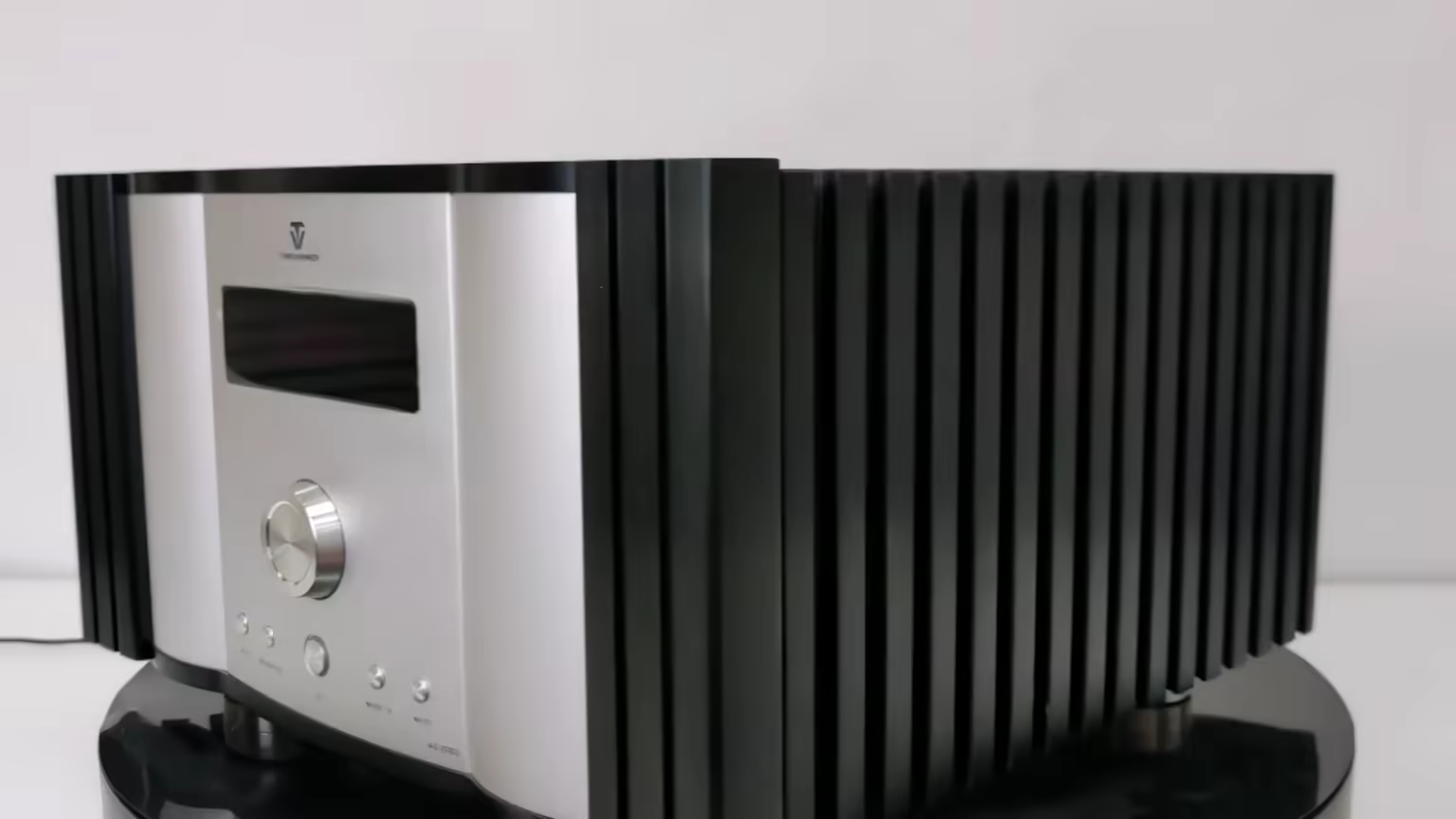 (view larger)
A remarkable design feature of this amp is its easy-to-read LED screen located on the front panel. The screen is capable of clearly displaying the current input of the amplifier, its volume, the mode in which it's working, and the type of files it's playing back, which is a pleasant addition.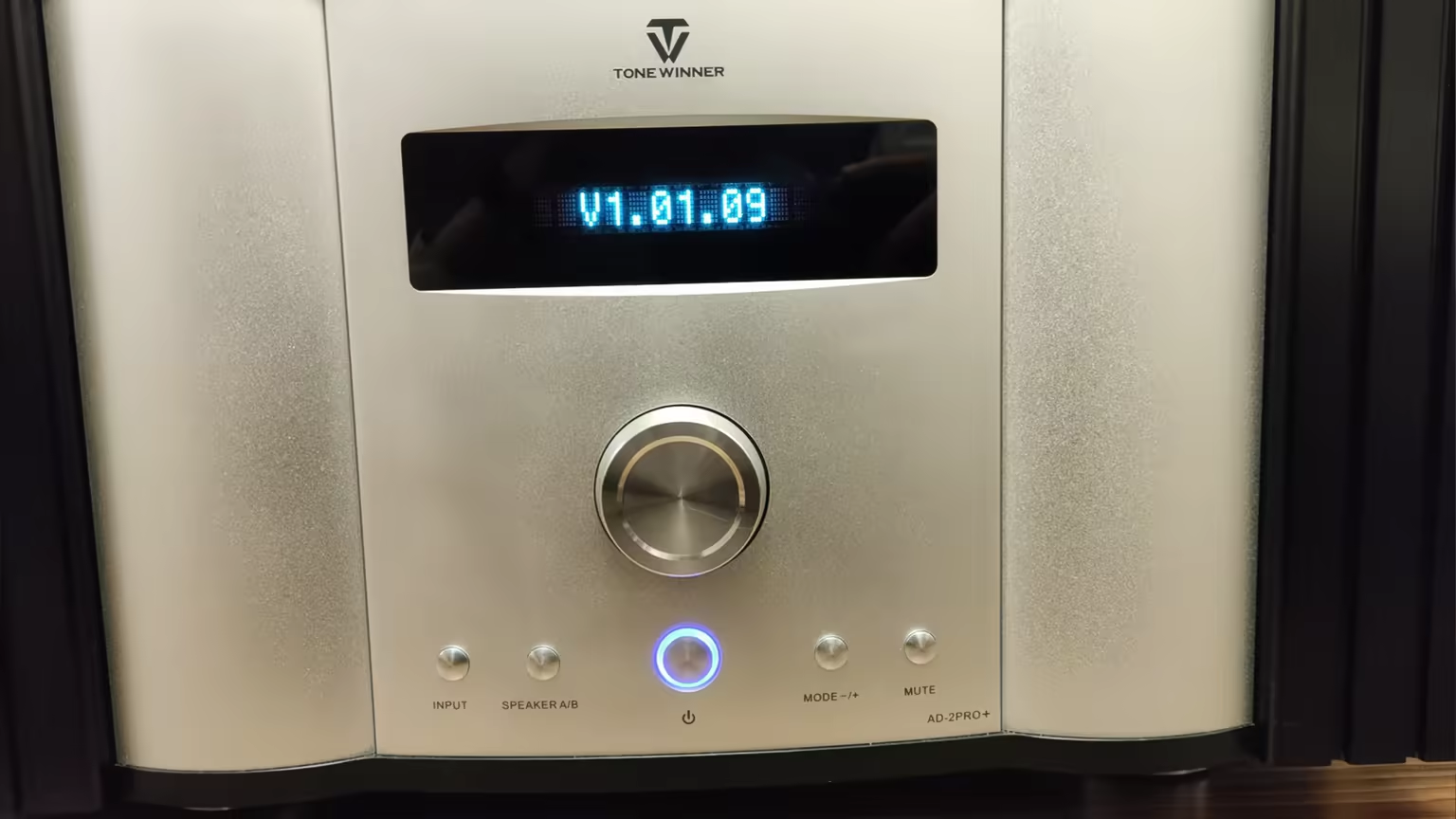 (view larger)
Inputs and Outputs: DAC, Phono, Dual Speaker Sets
The AD-2PRO+ is an integrated amplifier that offers a variety of input/output options.
Let's start with the digital inputs, which go through the internal DAC. There is one USB Type-B port to connect computers and some music streamers, along with two optical Toslink connectors and a single COAX RCA port.
Then we've got some analog options, that bypass the internal DAC and stay analog through the entire remainder of the audio chain. We can also connect the phono output of an MM or MC turntable. But most of you will probably use regular single-ended RCAs or balanced XLRs for the left and right channels.
The power connector is separated by some space from everything else on the back to accommodate even the thickest audiophile-grade power cables. A useful addition is a ground connection, which can be connected to some kind of grounding unit to reduce noise or solve ground loop issues.
The speaker terminals are large and sturdy, and there are two sets of them. This allows you to connect two pairs of speakers, which can be useful for A/B testing. You can use a remote to switch between the outputs, or you can simply choose to bi-wire your speakers, setting the amplifier to use two sets of outputs at once.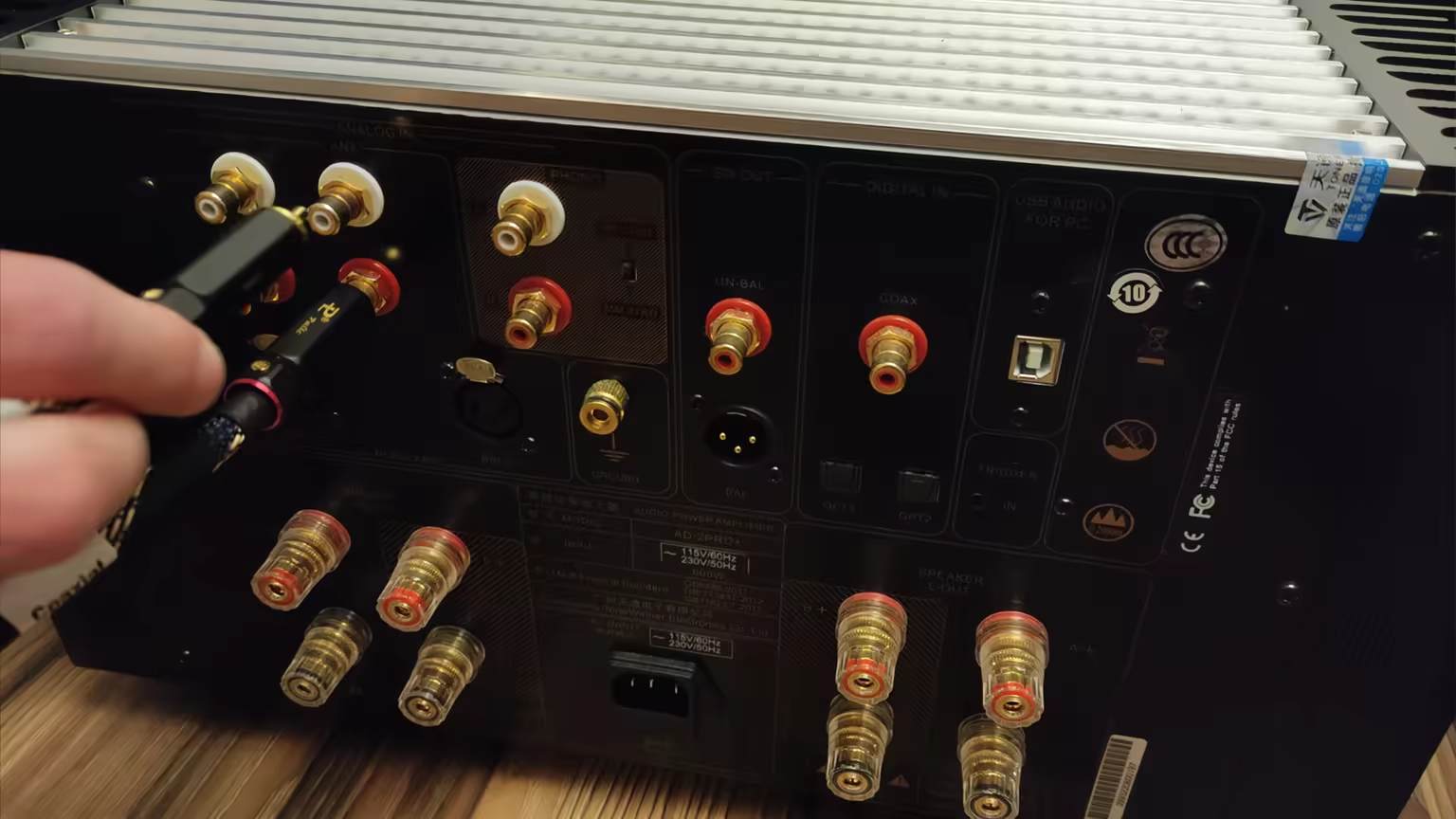 (view larger)
If you want to use a subwoofer, you can connect it to this amplifier using dedicated sub outs - either RCA or XLR.
Technical Specifications: 240W and DSD512
The device has a signal-to-noise ratio (SNR) of over 100dB (A-weighted), which indicates a decent level of clarity in the sound. The frequency response range is wider than the standard 20Hz to 20kHz, with a range of 15Hz to 95kHz. It has a maximum power output of 240W when one channel is driven at 8 ohms.
Despite being rated at 8 ohms, the device can handle speakers with an impedance of less than 4 ohms without any issues. The total harmonic distortion of the unit is below 0.05% at 1kHz, which is not extremely low, but it applies to the entire unit, including the DAC and amp.
The USB input supports DSD512 and PCM 32-bit up to 768kHz - that's quite impressive. The optical and coaxial inputs go up to 192kHz, due to their nature.
Sound Quality: Neutral Power, Width over Pinpoint
Tonality-wise, both Class A and Class A/B modes have a neutral sound, without any added bass or treble energy like some cheaper Class D amps.
It's very dynamic, which can largely be attributed to the immense power it provides to the speakers and the headroom it has in most cases. While the Class A/B mode offers higher headroom, making it slightly more dynamic, I still prefer Class A in most situations. Regardless of the mode, it produces a rich and full sound with a well-done midrange that brings out the vocals.
The separation of instruments is exceptional, which means that they are easily distinguishable and do not blend at all. Regarding the soundstage, this amplifier slightly widens it but sacrifices imaging a little bit. The center image is sometimes fuzzy. That's not a big issue in my opinion, but I know that some people prefer crystal-clear imaging with a dead center, that's why I think it's worth bringing up the fact that this amplifier focuses on soundstage width more.
In general, this amplifier provides a high-end audio experience with a refined sound that pairs well with a wide range of speakers. It is versatile and can handle both low and high impedance loads, and also allows for switching between Class A and Class A/B modes. The high power of the amplifier ensures consistent and powerful performance, no matter what it is connected to.

Watch the video review
Subscribe on YouTube (opens in new tab)Prefer to read? The written review above covers everything in the video.

- 0:00 Why do I like High-End Amps? (opens in new tab)
- 0:24 Build Quality (LED Display, Aluminum Radiators, Weight, Heat Output) (opens in new tab)
- 1:41 Inputs & Outputs (Digital & Analog - Toslink, Coax, USB, RCA, XLR, Phono, Ground) (opens in new tab)
- 3:11 Technical Specification (DAC & AMP - S/N Ratio, THD, Frequency Response, Dynamic Range Power, PCM, DSD) (opens in new tab)
- 4:07 Sound Quality (Tonality, Dynamics, Midrange, Vocals, Imaging, Soundstage Width) (opens in new tab)
Common questions about the AD-2PRO+
Is the Tonewinner AD-2PRO+ worth it?
Yes. It scored 8.8/10, Highly Recommended, higher than 79% of everything we have tested, against a catalogue median of 8.1. On value it rates steep: better value exists across the catalogue, so you are buying performance here, not value. Price: $2,699.
Who should buy the Tonewinner AD-2PRO+, and who should skip it?
Buy it if you drive real speakers in a real room and want the amplifier to be the last thing that runs out, and you want one box to replace a stack, and one power lead behind the desk. Skip it if your speakers are efficient and near-field, where most of that rating never leaves the box, and the converter or the streamer in your system is already settled and you will not be paying for a second.
What should I consider instead of the Tonewinner AD-2PRO+?
On the same chain, against the same recordings: the Tonewinner AD-1PA+ scores 0.2 higher and costs $476 more. Each of those has a full head-to-head page below.
What can you plug into the AD-2PRO+?
Almost anything, which is the point of an integrated at this level. Digital goes through the internal DAC: one USB-B, two optical TOSLINK and a coaxial RCA. Analogue bypasses the DAC entirely - MM or MC phono for a turntable, plus single-ended RCA and balanced XLR. There are two sets of large speaker terminals, a ground post for hum problems, and subwoofer outs on both RCA and XLR. The power inlet is spaced clear of everything else to take thick audiophile cables.
Why does the AD-2PRO+ have two sets of speaker outputs?
For A/B comparison or for bi-wiring, and both are genuinely useful. You can connect two pairs of speakers and switch between them from the remote, which makes real comparison possible without swapping cables. Or you can drive both sets at once and bi-wire a single pair. That flexibility is rare on an integrated and it is the sort of thing you only appreciate once you own it.
Is the AD-2PRO+'s imaging precise?
Wide rather than pinpoint, and that is a deliberate character. The amplifier slightly widens the soundstage and sacrifices a little imaging precision to do it - the centre image is sometimes fuzzy. I do not consider that a big issue, and I know plenty of listeners want crystal-clear imaging with a dead-centre vocal, which is exactly why it is worth saying out loud before you buy. Instrument separation, by contrast, is exceptional.
Does the AD-2PRO+'s 0.05% THD matter?
Not as much as the number suggests, because of what it covers. Below 0.05% at 1kHz is not extremely low for the money, and the figure applies to the entire unit - the DAC and the amplifier together, not just the output stage. Read it as a whole-system specification rather than an amplifier specification. The supporting numbers are solid: better than 100dB A-weighted signal-to-noise, and a frequency response from 15Hz to 95kHz.
Does the AD-2PRO+ get hot?
Yes, significantly, over time - and that is what the large heatsinks on both sides are for. Their surface area exists to handle high power output without the unit overheating, which matters if you listen for long stretches and do not want it shutting down or being damaged. Trust that the heat is real: this is a 40 kilogram Class A-capable amplifier, and physics applies. Give it clearance.
Is the AD-2PRO+ neutral?
Yes, in both modes, and that is its defining quality. Neither Class A nor Class A/B adds the bass or treble energy some cheaper Class D amplifiers use to sound impressive. What you get instead is a rich, full sound with a well-done midrange that brings vocals forward. It is very dynamic, largely because of the sheer power and headroom on tap - Class A/B has more of both, though I still prefer Class A most of the time.
If you're interested in this
All 3 speaker amps & preamps reviewsClosest alternatives