Triangle Australe EZ Review: Floorstanders That Cheat a Stage
French three-way floor-standers with a rear-firing DPS tweeter that 'cheats' a massive soundstage - lively, detailed, and demanding the right partnering gear.
higher than 49% of everything we have tested
Value Steep. You are buying performance here, not value.
- Standout
- Real wood veneer (or high-gloss) finish in 6 colorways
- Watch out for
- Treble can become bright/fatiguing without careful system matching
- Better alternative
- Diora Acoustics Chors 5: $2,500 less, scores 0.4 higher.
Is it for you?
- You want the balance to lean bright, with the detail pushed forward
- You're treble-sensitive
- $4,999/pair has to buy value as well as performance
Pick #3 of 6 in our Best Speakers guide.
Who doesn't love a huge soundstage in a stereo system? Audiophiles invest in high-end DACs, amps, tweaks, and other gear to widen the soundstage. But what if I told you that a pair of speakers - the Triangle HiFi Australe EZ - can "cheat" their way into achieving a very wide staging?
Design & Build Quality: Real Wood, Glass Pedestal
Those speakers are truly something to behold. We've got the chestnut finish here, and honestly, the photos online just don't do it justice. I think it's the best-looking colorway out of all 6 available ones. 3 wooden finishes aren't just a veneer - this is real wood, applied and finished to an incredibly high standard. You can feel the texture and its subtle grain. But if you want to go for a high-gloss black or white, you can also do that and achieve a modern look.
The shape of these speakers is just a regular, plain old rectangular box. They are a bit deeper than you might expect for a reason, that I'll touch on later. Overall it's a rather slim enclosure. It's so slim that the driver rings had to be trimmed down on the sides.
You get a glass pedestal with a rubber vibration-damping segment. It's a significant upgrade over the Borea series of speakers, where the pedestal is made from MDF or similar material and is mounted by directly screwing it into the speaker, with no rubber layer. This upgrade makes the speaker transfer less energy to the floor, thus reducing unwanted vibrations and resonances. The glass pedestal is very heavy, and glossy - making for an amazing look and a premium feel. The speakers can stand directly on a soft surface, using included rubber segments for hard floors or spikes for carpets and such.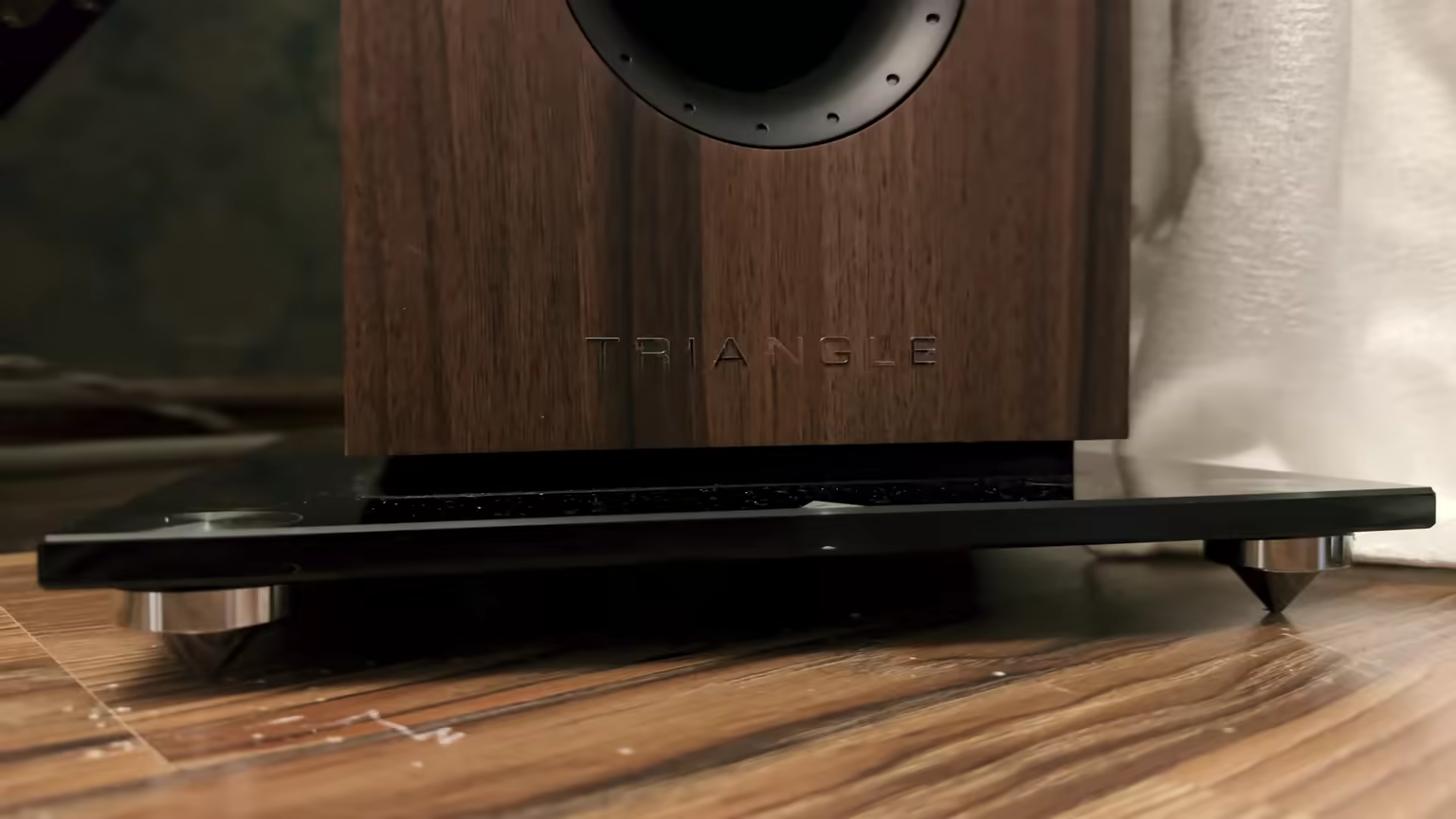 (view larger)
The front of the speakers looks very appealing with those beautiful, simple midrange and bass driver units with shiny rings around them. Just look at those gold horn-loaded tweeters in a mirror-like waveguide. It's very contrasty, and shiny, but keeps its elegance. However, if you want even more of this elegance, you can use the included fabric grills, to cover the entire front.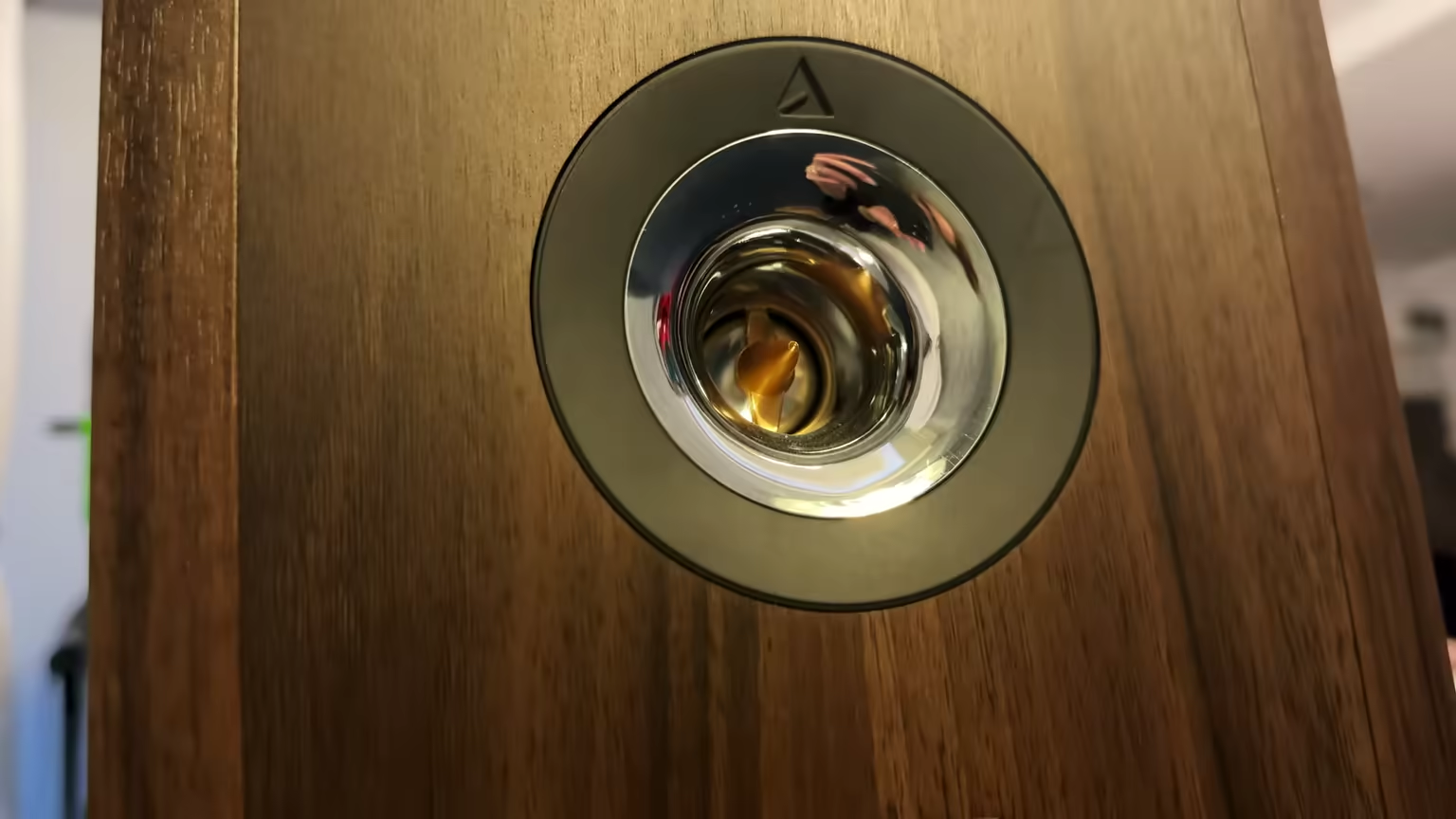 (view larger)
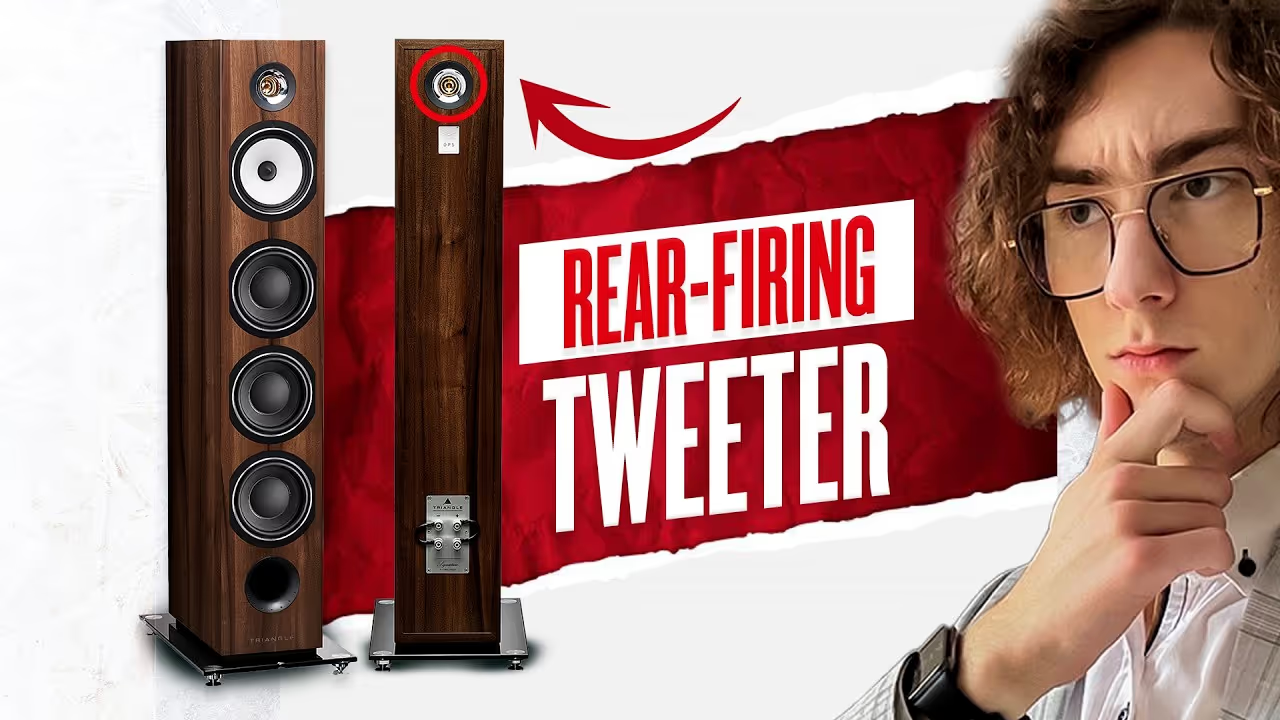
Once we get to the back side of the speaker, there's even more good stuff for us to talk about. It incorporates a rear-firing tweeter, more about it later though. Just below it, there's a shiny badge with their DPS technology.
The binding posts are very good. If you've used an entry-level Triangle HiFi speaker, they're nothing like them. You can bi-wire or bi-amplify the speaker, due to dual posts - and I like this feature. If you decide not to do that, jumper cables are included instead of the typical brass plates that can hurt the sound quality. The speakers can take banana plugs, spades, or even two at the same time if you wish to maximize the contact area. Moreover, the binding posts on this speaker are simply premium. They're made of copper and aluminum - not cheap steel or brass.
The weight of the Australe EZ is serious. One speaker weighs almost 40kg or close to 90 pounds.
Technologies: DPS, the Rear-Firing Tweeter Trick
The tweeters are Triangle's own TZ2550 models - their latest incarnation of a titanium dome in combination with a compression chamber. This provides high efficiency with low distortion and excellent directivity. Triangle wanted to develop a new horn profile and improve the phase plug. This provides almost the same sound level throughout the room. It is powered by a high-power neodymium ring magnet. An absorption chamber has been implemented for a more natural listening experience in the high-frequency region, which helps in back-wave absorption.
The midrange driver is 6.5 inches and made out of paper with a white membrane. The floor-standing models of this series combine it with a small pleat suspension to increase the emissive surface area. That's possible because the midrange drivers don't need much excursion for bass, since we have dedicated drivers just for the low frequencies.
From a distance, the woofers might look similar to the ones in the Borea loudspeakers, but as you get closer, you realize they aren't the same. Here, fiberglass was selected for its excellent effect on the lower midrange and higher bass. It's a combination of textile material and fiberglass, which improves the rigidity of the membrane. The ferrite magnets driving the cone movements are on both sides, improving the sensitivity, dynamics, and accuracy.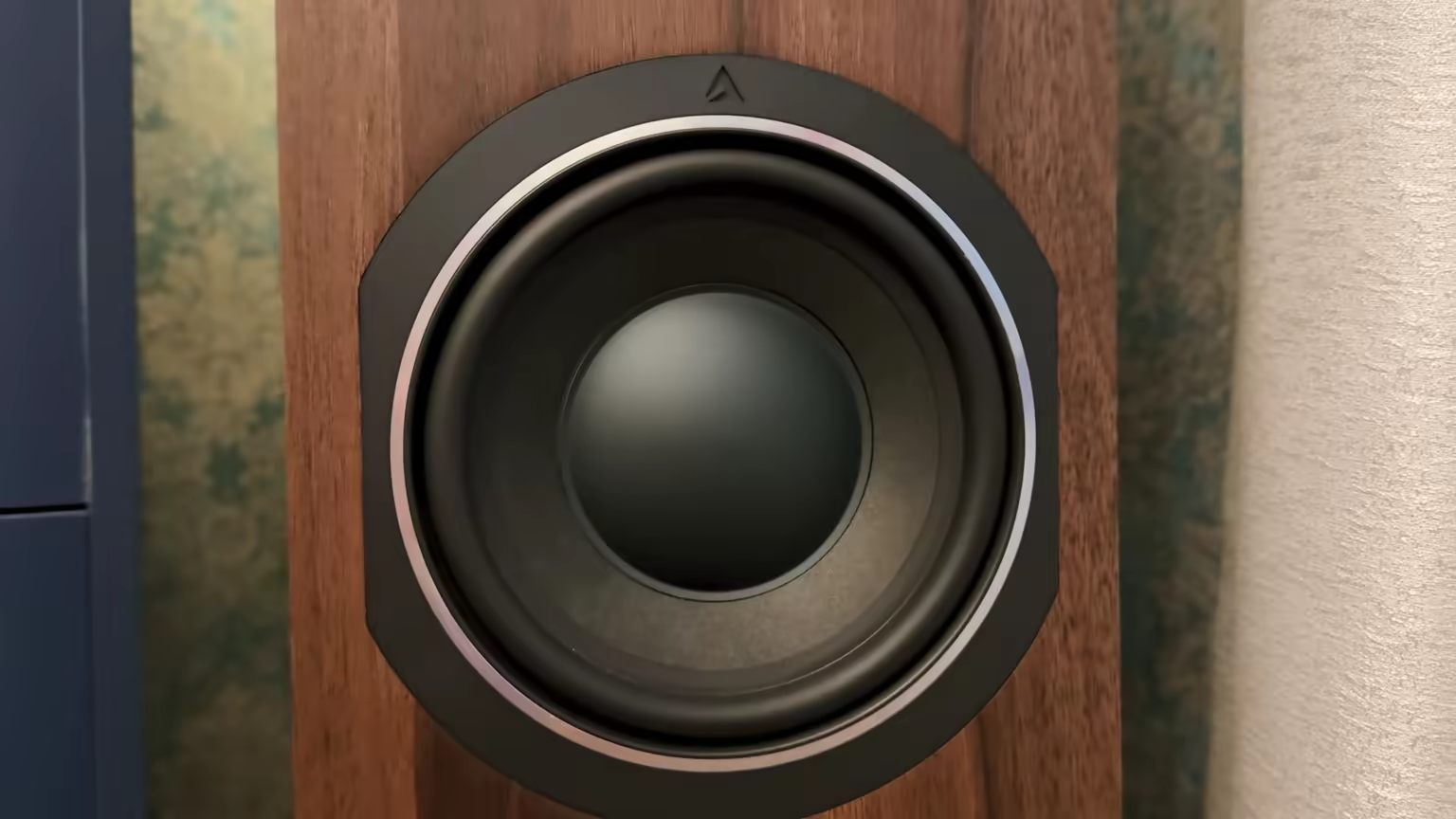 (view larger)
The speaker integrates the new DPS technology, with a second tweeter at the back of the cabinet, which has been reserved until now for speakers of the Magellan range. It evens out the response across the room. More importantly, though, it projects the sound behind the speaker, making the soundstage much, much larger. It's like a hack for good staging width and more importantly, depth. This speaker has both of those aspects at a level much higher than its price would suggest.
The crossover uses audiophile-grade parts like copper coils with a diameter of 1mm and MET capacitors. Moreover, a crossover split is being used for better acoustic performance. It is meant to minimize interference by separating noise-radiating components.
Does It Need a Big Amp? Sensitive, but Dips to 3Ω
This speaker is recommended for room sizes above 30m², but once you pull it away from the walls, it can work in significantly smaller listening rooms, providing good bass extension and no boominess.
It can handle 150W, so you can push serious power through the speaker, achieving massive volumes. Triangle recommends pairing it with amplifiers anywhere from 100 to 200 Watts into 8Ω. It's very important to have some headroom - maybe not that much, but more is always better, and that power needs to be of high quality.
How difficult to drive is it on paper? Not overly! It features a high sensitivity of 92.5dB, with a nominal impedance of 8Ω. However, don't focus excessively on the nominal impedance, as it goes down to 3Ω at its lowest.
The Australe EZ has a front-firing bass port for better bass extension and higher sensitivity. It's always important to consider where the ports are when positioning speakers in a room. This speaker can cover a frequency range from 35Hz on the bottom end up to 22,000Hz on the top end. So those woofers are doing something, they aren't just for aesthetics. You can get away without a subwoofer and still get a decent bass extension. The high-frequency extension above 20kHz guarantees that no audible sound will be rolled off.
Sound Quality: Lively and Crisp, Bright if Mismatched
Triangle speakers are known for their lively and engaging sound signature. They have a noticeably forward presentation, with a focus on detail and clarity. The treble is super crisp and extended, which can be a double-edged sword. While this contributes to their airy and detailed sound, it can also easily lead to a sense of brightness in some systems or rooms. This brightness, if not carefully managed with appropriate partnering equipment and room acoustics, can become fatiguing during longer listening sessions. It's not possible to just slap a few random pieces of gear together with this speaker and get a neutral, or even a pleasant experience. You'll have to build your system around it.
The midrange is open, transparent, and detailed, with a mostly natural and lifelike presentation. You won't confuse it with real life, as it has some coloration that seems to be related to resonances. Vocals are rendered with clarity and emotion - although the presentation can be a bit shouty in this region. On the other hand, instruments in this range, such as guitars, pianos, and saxophones, but especially all strings, have a realistic timbre and texture. I'm a big fan of Allan Taylor's music. This speaker delivers an impeccable sound for his guitar, or all guitars for that matter, especially with the satisfying initial string plucking. Generally, the midrange is not overly warm or lush, nor is it overly analytical or sterile. It finds a balance that allows for both enjoyment and critical listening.
The Australe EZ's sonic character makes it particularly well-suited for certain genres and listening styles while being a less-than-ideal choice for others. It truly shines with high-quality recordings, especially those with a focus on natural timbre and dynamics. Well-recorded acoustic or classical music and instrumental jazz come to life with exceptional clarity and realism. While on some other speakers, those types of songs would be boring, here - they're very exciting. However, this same characteristic can be unforgiving with poorly recorded or compressed music. Flaws in the recording, such as harshness, sibilance, or a lack of dynamic range, are readily exposed. While the Australe EZ can certainly play pop and EDM, it might not be the best choice. The emphasis on hi-hats and synthesized sounds in these genres can sound a bit out of place or fatiguing.
The bass performance is where things get interesting. Triangle has focused on achieving a deep and extended low-end response but didn't overdo it. It's not sacrificing the cleanliness and tightness. It's quite the opposite, as it's not just about how low they go - it's about how they get there. The bass presentation is remarkably clean and articulate, avoiding the muddiness or bloat that can plague some speakers. There's a sense of control and precision that allows you to pick out individual bass notes and follow complex bass lines with ease.
Soundstage and Imaging: Massive, Slightly Stretched
These speakers create a massive soundstage that extends far beyond their physical boundaries. It's a truly three-dimensional presentation, with remarkable width and depth - although it feels a bit stretched. Instruments and vocals occupy distinct positions in space, creating a palpable sense of separation. This precise imaging allows you to easily localize the individual sounds and separate them.
Summing up, the Australe EZs can make for an engaging sound, filled with technicalities, liveliness, and emotion, but at times it can get too bright.
Sound signature
Derived from the words this review uses: each axis runs between two opposite descriptors, and the shape leans toward whichever side the writing does.
- Warm ↔ Bright Leans bright
- Relaxed ↔ Analytical Sits close to centre
- Polite ↔ Aggressive Leans aggressive
- Lean ↔ Bass-heavy Neutral, no clear signal in the review language
- Intimate ↔ Wide stage Leans wide stage
Hear what "bright, aggressive, wide stage" means: a short synthesised loop, flat and then with those leanings. An illustration of the words, not a recording of the Australe EZ.
Not sure which signature suits you? Find yours with a blind A/B test
Watch the video review
Subscribe on YouTube (opens in new tab)Prefer to read? The written review above covers everything in the video.
- 0:00 Is Soundstage Width Important? How To Make It Wider? (opens in new tab)
- 0:22 Design & Build Quality (Natural Veneer / High-Gloss Finish, Vibration-Damping Pedestal, Bi-Wire, Bi-Amp) (opens in new tab)
- 3:50 Technologies (TZ2550B Tweeters, Natural Cellulose Paper Midrange, 6.5 Inch Woofers, Dynamic Pulse System, Signature Cables) (opens in new tab)
- 6:36 Technical Specification (Recommended Room Size, AMP Pairing, Power Handling, Impedance, Frequency Extension) (opens in new tab)
- 8:19 Sound Quality (Forward Tonality, Detail Retrieval, Vocal Presentation, Imaging, Soundstage, Dynamic Range) (opens in new tab)
Common questions about the Australe EZ
Is the Triangle Australe EZ worth it?
Yes, for the right listener - 8.1/10, Recommended, higher than 49% of everything we have tested, against a catalogue median of 8.1. On value it rates steep: better value exists in speakers, so you are buying performance here, not value. Price: $4,999/pair.
Who should buy the Triangle Australe EZ, and who should skip it?
Buy it if you want the balance to lean bright, with the detail pushed forward. Skip it if you're treble-sensitive, and $4,999/pair has to buy value as well as performance.
What should I consider instead of the Triangle Australe EZ?
The pieces we have actually run against it: the Diora Acoustics Chors 5 scores 0.4 higher and costs $2,500 less and the Triangle Borea BR09 scores 0.1 lower and costs $3,900 less. Every one of those matchups has its own page in the head-to-head section.
What does the Australe EZ's rear tweeter actually do?
It is the trick the whole speaker is built around. DPS puts a second tweeter on the back of the cabinet - technology previously reserved for the Magellan range - and it does two things: it evens out the response across the room, and more importantly it projects sound behind the speaker. That is what produces a soundstage far wider and deeper than the price suggests. Calling it a hack is fair, and it works.
Can the Australe EZ be bright?
Yes, and this is the thing to plan for. Triangle voice their speakers lively and forward, with a focus on detail and clarity, and the treble is super crisp and extended - a double-edged sword. In the wrong system or room that reads as brightness, and over a long session it becomes fatiguing. You cannot slap random gear together with this speaker and expect a pleasant result; you have to build the system around it.
What amplifier does the Australe EZ need?
100 to 200 watts into 8Ω, and quality matters as much as quantity. The 92.5dB sensitivity looks easy and the nominal 8Ω looks friendly, but do not focus on the nominal figure - the impedance drops to 3Ω at its lowest, and that is where cheap amplifiers struggle. Power handling is 150W so you can push it hard. Some headroom is important; a lot of headroom is better, and clean power is what this speaker actually rewards.
What music suits the Australe EZ?
Well-recorded acoustic, classical and instrumental jazz - material that on other speakers can be boring comes alive here with genuine clarity and realism. The same character is unforgiving with poorly recorded or compressed music: harshness, sibilance and squashed dynamics are all laid bare. It will play pop and EDM, but it may not be the best choice, because the emphasis on hi-hats and synthesised sounds can end up out of place or fatiguing.
How is the Australe EZ built differently from the Borea?
In almost every part you touch. The pedestal is glass with a rubber damping segment rather than MDF screwed straight in, so far less energy reaches the floor. The binding posts are copper and aluminium rather than cheap steel or brass, dual so you can bi-wire or bi-amp, with jumper cables instead of brass plates. The woofers use fiberglass with ferrite magnets on both sides rather than one, and the crossover carries 1mm copper coils and MET capacitors.
Are the Australe EZ's wood finishes real wood?
Three of the six are, and they are not veneer in the usual sense - real wood, applied and finished to a very high standard, with texture and grain you can feel. I have the chestnut and photographs genuinely do not do it justice; it is the best-looking of the six to my eye. The other option is high-gloss black or white for a modern look. Either way the cabinet is a plain rectangular box, slim enough that the driver rings had to be trimmed at the sides.
Is the Australe EZ's soundstage accurate?
Massive, and slightly stretched - which is the honest version. It extends far beyond the physical boundaries of the speakers in a truly three-dimensional way, with remarkable width and depth, and instruments occupy distinct positions with a palpable sense of separation. The stretching is the side effect of the rear tweeter doing its work. Precision within that space is genuinely good; the overall scale is a little larger than life.