Triangle Borea BR09 Review: The Best Budget Tower Speakers
Three-way French floor-standers with three bass drivers, neutral tonality, and a bigger-than-expected soundstage - balanced, distortion-free, and free of overdone bass.
higher than 34% of everything we have tested
- Standout
- Clean, slim aesthetic
- Watch out for
- Single pair of binding posts
- Better alternative
- Diora Acoustics Chors 5: leans brighter, $1,400 more, scores 0.5 higher.
Is it for you?
- You want the balance to lean warm, with the top end eased
- You want every last bit of treble detail
Pick #4 of 6 in our Best Speakers guide.
People that are just starting with their HiFi speaker journey are often looking for big speakers that don't break the bank, but also sound good with extended bass. The Triangle Borea BR09 seems to check all these boxes.
Build Quality and Aesthetics: Made to Blend In
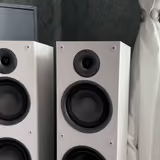
The Borea series of speakers is looking super clean. There are no exposed screws, cheap-looking materials, or straight-up low-quality finishes. Instead, they went for a clean, slim aesthetic. It's clear that they're made to look neutral and don't stand out much - in a good way. That makes them simply complement regular living rooms or other places where people with no dedicated listening rooms are going to place them.
Let's be honest for a moment. When you're buying such a budget speaker, it's for a reason. That reason is you don't have lots of money to blow on audio, which is absolutely understandable. In most cases, it means that you don't have a dedicated, acoustically treated listening room. This French company knows that very well - they don't want you to get these speakers, appreciate their sound, but eventually get rid of them because of how they look.
The build quality, despite this speaker being built to a price point, is not bad. The speaker isn't that heavy, coming at 23kg. Low weight usually indicates lots of resonances, especially in larger speakers. The solution high-end speakers usually go for to counter it, is to use very heavy, thick cabinets, made out of higher-density materials. But that costs a lot of money and is impractical for some people.
That's why Triangle came up with their Driver Vibration Absorption System to counteract the unwanted resonances and make the cabinet more inert. It involves adding a back brace to every driver that interacts with the rear of the driver's motor using a high-density foam gasket. It's made to reduce driver suspension vibrations from being transferred to the cabinet.
In the box, you're also getting a wooden pedestal, which not only looks good but also serves a purpose. First of all, it makes the speaker much more stable, as it's larger than the speaker base. Then, it absorbs a small amount of vibrations from the speaker cabinet. And finally, allows for the use of included rubber pads, or even better, included spikes. If you can, go for the spikes. In most cases, for most floor materials, they minimize the speaker's vibrations from reaching the floor and all the equipment that's standing on it.
The included fabric grills are magnetically attached, fairly simple, and make the speakers blend in even more. I didn't use them, as I believe that most speakers sound better with no grills between the drivers and the listener.
Finally, let's finish with the speaker terminals - once again, they're very pretty. There's only one pair of binding posts though, so you can't bi-wire or bi-amp - but with a speaker of this level, I see very little reason to do it. Quality is the main goal here, not quantity.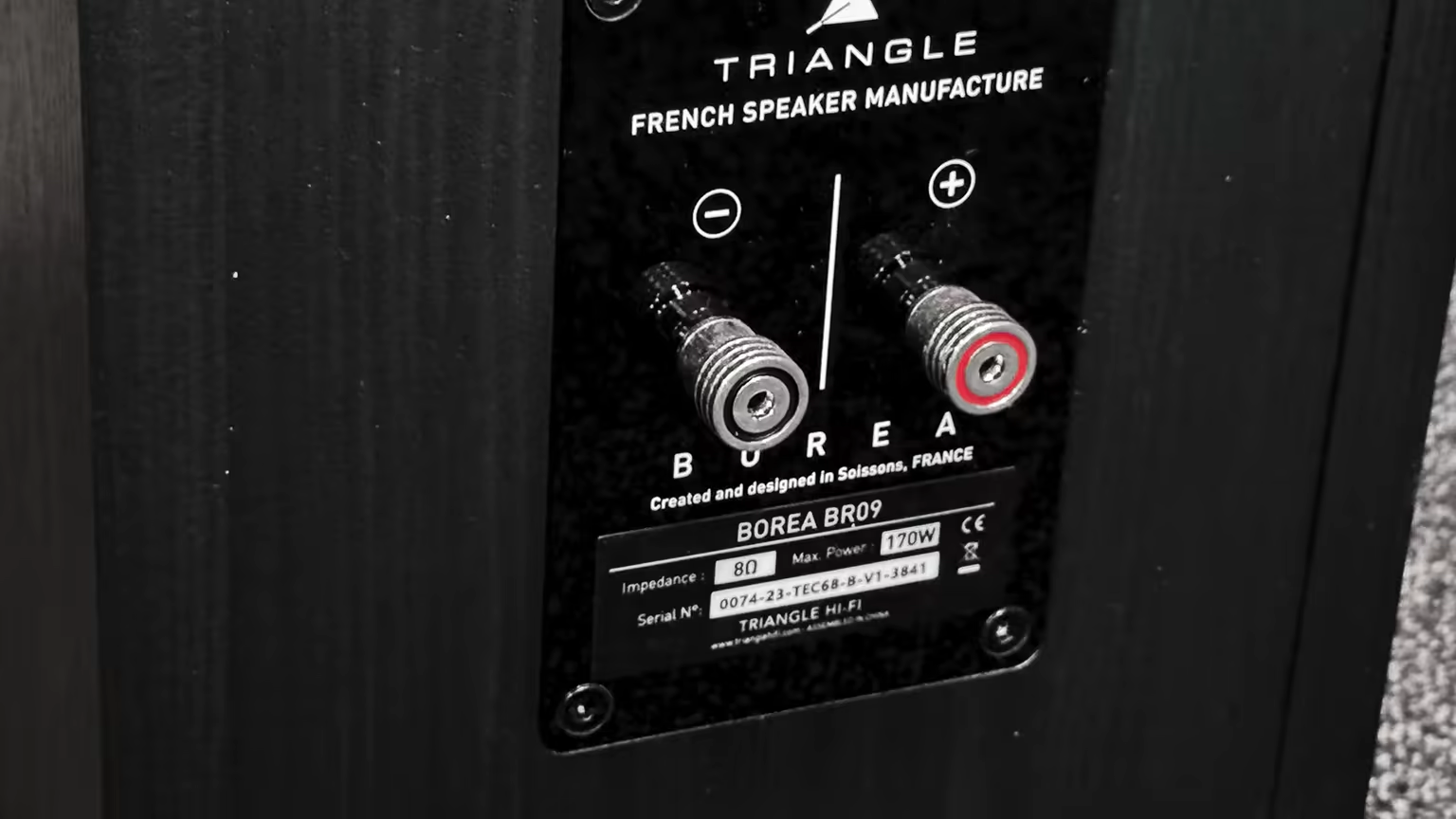 (view larger)
Technologies: Esprit EZ Trickle-Downs
Borea loudspeakers benefit from research and innovations from the Esprit Ez range, so we can see some trickle-down tech from the higher series.
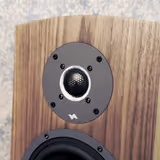
The tweeter itself is a regular 25mm silk dome construction, with two special technologies. It is equipped with a next-generation Efficient Flow System, which refers to the vertical phase plug, designed to diffuse the frequencies horizontally for a wider soundstage and less beaming effect at high frequencies. Then, the dome itself is placed inside the partial horn, made to reduce reflections and allow for a clear reproduction of the high frequencies. Its transducer is powered by a neodymium motor, known for its high magnetic power per unit of volume. Finally, it has a cooling system internally, for better power handling. That's a lot for a seemingly ordinary driver.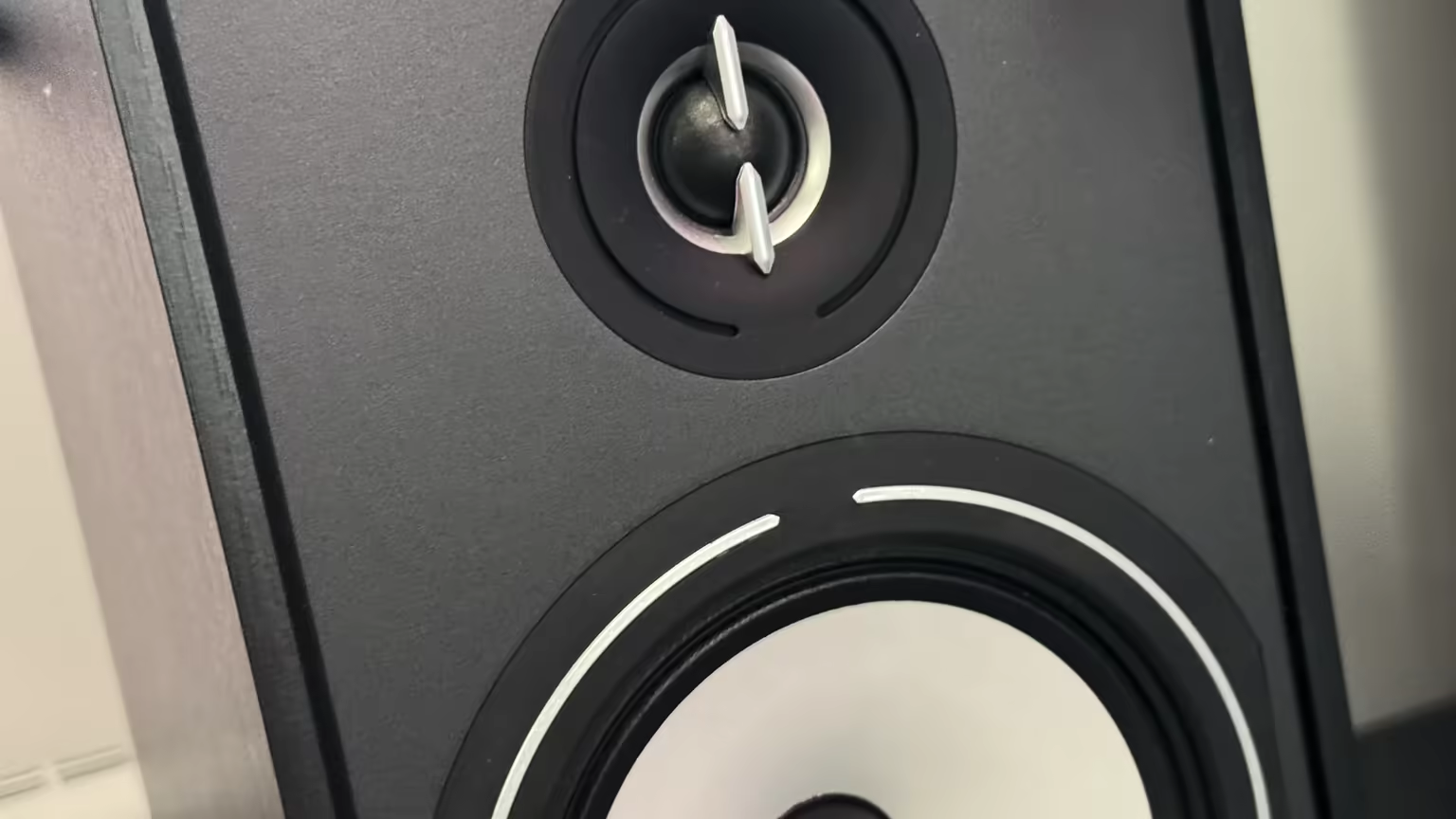 (view larger)
For the midrange, Triangle used almost the same driver as in their Esprit EZ series. It's a 165mm cone, made fully of natural cellulose paper, with no surface treatment. Here, the goal was to avoid any coloration while retaining realistic vocals and tonality. The profile of the cone was also redesigned to improve the rigidity and increase the breakup frequency. That way they can cross it over higher than previously, and it should improve the matching with the tweeter. Since this speaker is a 3-way design, this driver is doing only the midrange - that's why it can have a short-travel suspension, which allows for perfect control of the movement. As far as I'm aware, the only difference between the Borea and Esprit EZ midrange drivers is the amount of magnets. In Borea it's just on one side, while on the Esprit EZ, it has two magnets, one on each side.
For the bass drivers, in this model the BR09, we have 3, 165mm each, the same size as the midrange ones. Here, the goal was to deliver a rich, dynamic sound in the low frequencies while not introducing any unwanted distortion. To achieve this, Triangle has opted for membranes in fiberglass, as their rigidity emphasizes strong impact reproduction. They have a single magnet on one side of the voice coil, unlike Esprit EZ with two magnets.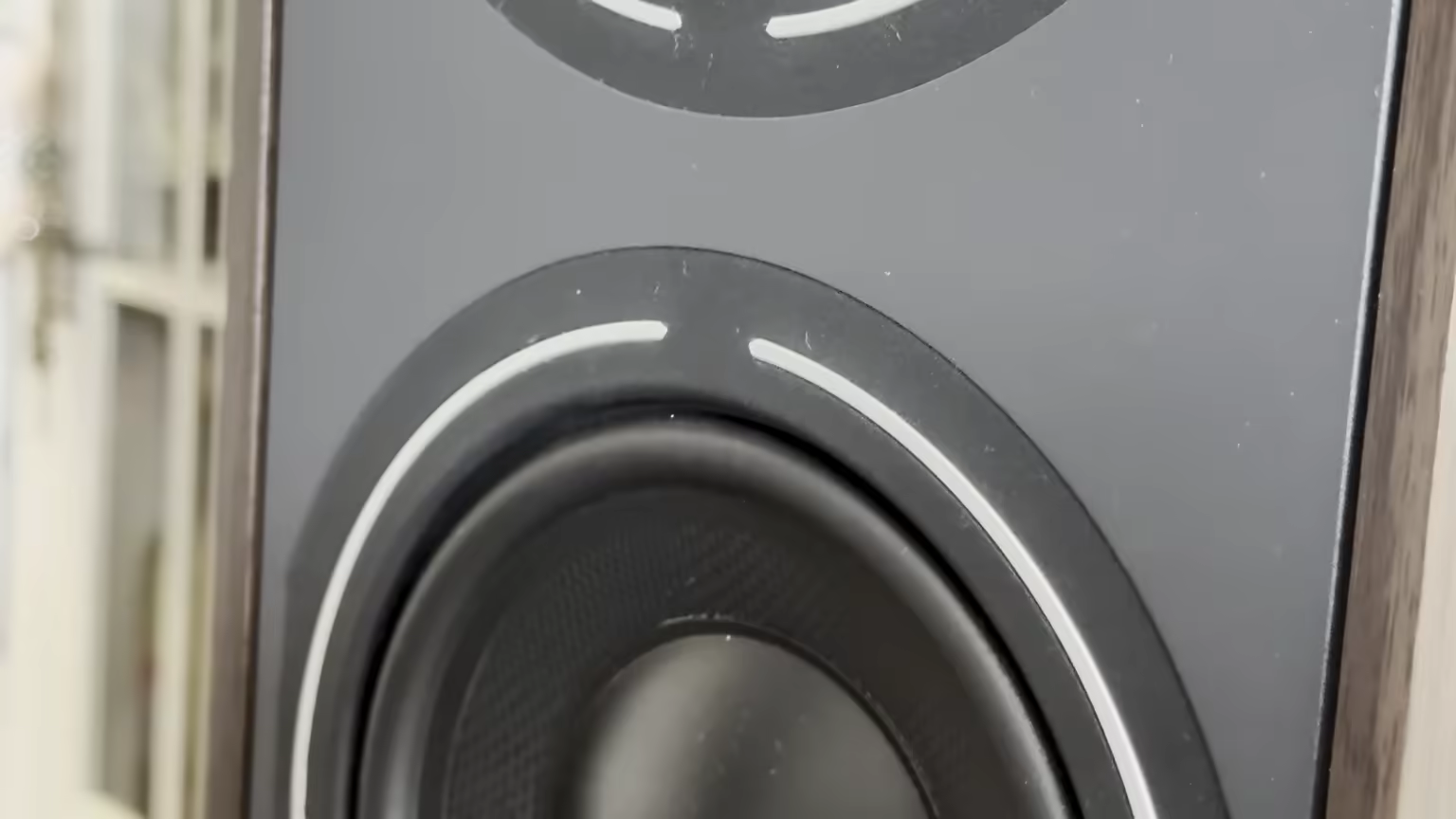 (view larger)
Technical Specs: Big Power Handling, Easy to Run
The BR09 is a speaker with a 3-way crossover and a front bass reflex port.
It's recommended for rooms above 30m² in size - however, that's just a recommendation. In my opinion, it's going to do just fine in much smaller rooms, under one condition - you can't put it too close to the rear or side walls, otherwise you are going to encounter issues with bass.
The recommended amplifier power for this speaker is from 60 to 300 watts at 8 ohms. I'd say that you don't need nearly as much power, but it's always good to have some headroom. The power handling is specified to be 170W - that's a lot for such a speaker.
The sensitivity comes at 92dB - that's a fairly high number, meaning you won't have to provide it with tons of power to get a decent volume level. Its nominal impedance is 8Ω, however, it drops to 3.3Ω but never drops below 3. The frequency response goes from 35Hz to 22kHz. Personally, with such bass extension a subwoofer is optional, but still highly recommended.
Sound Quality: Balanced, Dry-Leaning, Wide
Surprisingly, it's a very tonally balanced speaker. From the bass, which is not overdone, through the mids - it can be described as more or less a flat line. The top end is a little spicier than expected on the axis. But as soon as you go around 10 to 20 degrees off the axis, this region becomes much less exciting. Such positioning helps greatly in achieving a wider soundstage, in situations where you can't put speakers super wide apart.
The midrange of this speaker is full of clarity and transparency. It can come off as a bit dry, and it kind of is. That's why pairing it with warmer, perhaps tube amplifiers, is a good idea. R2R DACs also help with making it just a tad bit more enjoyable.
The bass region has decent extension, but not a lot of presence. It's good - they didn't push the drivers past their limits just to get crazy measurements on paper, while sacrificing the bass quality. It's far from being boomy or overpowering. If you want more, you can get it by putting the speaker closer to the rear wall, or by using a subwoofer.
The soundstage size is surprisingly good for such a budget speaker. It goes quite large laterally - so left to right - with a great sense of scale to the instruments, orchestras, and such. The only thing I'm missing a little bit is the depth, but we can't possibly expect it to do that at this price.
Summing up, it's a very balanced speaker that does pretty much everything right, sounds correct, and doesn't have any real disadvantages. It doesn't require crazy amplification to perform its best, so you can save even more money on this front. The bass extension is pretty good - you probably won't need a subwoofer, unless you want to. It lets you experience most of the songs the way you're supposed to, yet with no clear signs of coloration or other unpleasant effects.
Sound signature
Derived from the words this review uses: each axis runs between two opposite descriptors, and the shape leans toward whichever side the writing does.
- Warm ↔ Bright Leans warm
- Relaxed ↔ Analytical Sits close to centre
- Polite ↔ Aggressive Sits close to centre
- Lean ↔ Bass-heavy Neutral, no clear signal in the review language
- Intimate ↔ Wide stage Leans wide stage
Hear what "warm, wide stage" means: a short synthesised loop, flat and then with those leanings. An illustration of the words, not a recording of the Borea BR09.
Not sure which signature suits you? Find yours with a blind A/B test
Watch the video review
Subscribe on YouTube (opens in new tab)Prefer to read? The written review above covers everything in the video.

- 0:00 Large Floorstanding Speakers That Are CHEAP? (opens in new tab)
- 0:18 Build Quality & Design (Finishes, Slim Aesthetic, Single Speaker Terminals, Low Weight, DVAS, Pedestal, Spikes, Fabric Grills) (opens in new tab)
- 3:14 Technologies (Esprit EZ R&D, Silk Dome Tweeter with Efficient Flow System, Cooling System, Partial Horn, Natural Cellulose Paper Midrange, Carbon Fiber Bass, Neodymium Magnets) (opens in new tab)
- 5:20 3-Way Crossover, Front Bass Port, Room Size, Frequency Response, Power Requirement, Sensitivity, Impedance (opens in new tab)
- 6:30 Sound Quality (Tonality, Midrange, Bass Extension & Amount, Clarity, Transparency, Midrange, Dryness, Sound Stage Size) (opens in new tab)
Common questions about the Borea BR09
Is the Triangle Borea BR09 worth it?
Yes, for the right listener. It scored 8.0/10, Recommended, higher than 34% of everything we have tested, against a catalogue median of 8.1. On value it rates fair: mid-pack for the price in speakers. Price: $1,099/pair.
Who should buy the Triangle Borea BR09, and who should skip it?
Buy it if you want the balance to lean warm, with the top end eased. Skip it if you want every last bit of treble detail.
What should I consider instead of the Triangle Borea BR09?
On the same chain, against the same recordings: the Diora Acoustics Chors 5 scores 0.5 higher and costs $1,400 more and the Triangle Australe EZ scores 0.1 higher and costs $3,900 more. Each of those has a full head-to-head page below.
Do the Borea BR09 need a big room?
Triangle recommend above 30m², and I think that is conservative. In my view they will do fine in much smaller rooms under one condition: you cannot put them too close to the rear or side walls, or you will run into bass problems. Placement is the variable that matters here, not floor area. If your room forces them against a wall, the bass will thicken and no amount of amplifier will fix it.
How much amplifier power do the Borea BR09 need?
Far less than the sticker suggests. Triangle recommend 60 to 300 watts into 8 ohms and power handling is rated at 170W, which is a lot for a speaker at this price - but at 92dB sensitivity you do not need anything like that for decent volume. Some headroom is always good. The nominal impedance is 8Ω and it dips to 3.3Ω without ever going below 3, so it is not a difficult load either. You can save money here.
Do the Borea BR09 sound dry?
A little, and it is worth planning around. The midrange is full of clarity and transparency and it does come off slightly dry - which is why pairing them with warmer gear, tube amplifiers in particular, is a good idea. An R2R DAC helps too, making the presentation a touch more enjoyable. This is a speaker that takes direction from what is in front of it rather than imposing a character of its own.
Should you toe the Borea BR09 in?
Less than you might expect, and the treble is the reason. On-axis the top end is a little spicier than anticipated. Move 10 to 20 degrees off-axis and that region calms down considerably. The bonus is that this positioning also helps you get a wider soundstage in a room where you cannot place the speakers far apart, so the two problems solve each other.
Do you need a subwoofer with the Borea BR09?
Probably not. The response reaches down to 35Hz, which is genuine extension rather than a paper figure, and with that you can get away without one - though I would still call a sub highly recommended if you have the space and budget. The bass here has decent extension without a lot of presence, and that is a deliberate choice: Triangle did not push the drivers past their limits to win a specification, so it is clean rather than boomy. Move them closer to the rear wall if you want more.
Why can't you bi-wire the Borea BR09?
There is only one pair of binding posts, so bi-wiring and bi-amping are both off the table. At this level I see very little reason to want either - the goal here is quality rather than quantity of connections, and the posts themselves are attractive and well made. If bi-amping is central to your plan, this is the wrong speaker, but it is not a corner cut so much as a feature declined.
Is the 23kg cabinet too light?
It is light for a floor-stander, and low weight usually means resonance. High-end speakers solve that with very heavy, thick cabinets in high-density materials, which costs money and is impractical for a lot of people. Triangle's answer is the Driver Vibration Absorption System: a back brace on every driver that meets the rear of the motor through a high-density foam gasket, so suspension vibration is not passed into the cabinet. Use the included spikes rather than the rubber pads where your floor allows.