Hearing Safety

Safe Listening & SPL Calculator

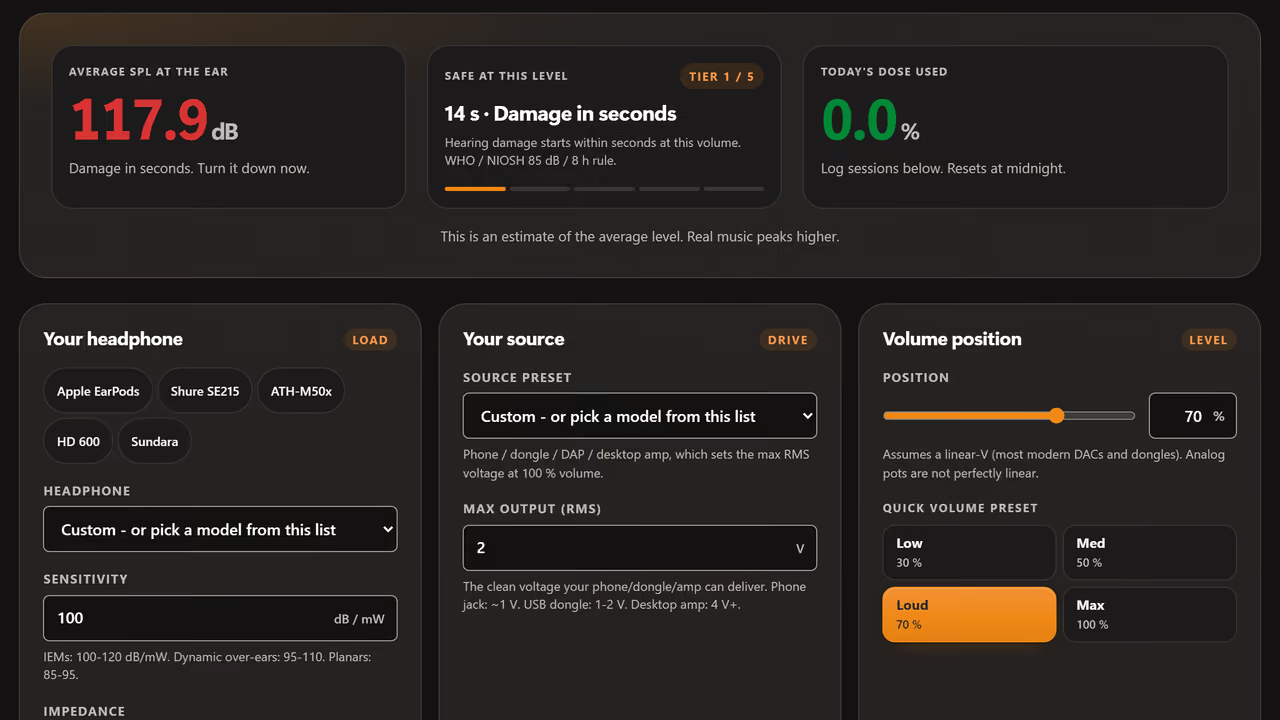
Find out the exact SPL you are listening at right now, based on your headphone sensitivity, impedance, source output, and volume setting - and how long that level is safe before WHO and NIOSH put you in hearing-damage territory.

The 3 dB rule: safe exposure halves for every 3 dB you go above 85 dBSPL. At 88 dB you have 4 hours; at 100 dB you have 15 minutes; at 110 dB you have 90 seconds. Noise-induced hearing loss is permanent and cumulative.

Common: 80-115 dBSPL/mW. IEMs often 100-115; planars 85-95.

Phone: 0.5-1 V. Portable DAP: 1-4 V. Desktop amp: 4-10 V+.

%

WHO and NIOSH safe listening guidelines

The 85 dB / 8-hour anchor

Both the World Health Organization and the U.S. NIOSH set 85 dBSPL for 8 hours as the safe daily exposure limit. The dose halves for every 3 dB you go higher: 88 dB at 4 hours, 91 dB at 2 hours, 100 dB at 15 minutes, 109 dB at under two minutes.

Hearing damage is cumulative - a loud commute plus loud music at home stacks. The worst part is the damage is usually painless and silent, showing up years later as tinnitus, frequency notches, and reduced spatial hearing.

What this calculator gets right (and what it can't)

The math here is the textbook headphone power-to-SPL formula: P = V² ÷ Z, then SPL = sensitivity + 10·log10(P_mW). It tells you the average SPL at a given volume; real music has 10-15 dB of crest factor on top, so transient peaks land higher than the displayed average.

Coupling to your ear (open vs. closed cans, IEM seal quality, head-related transfer function) shifts the in-ear SPL by a few dB in either direction. For a precise measurement, use a coupler or a calibrated SPL meter at the ear cup.
WHO daily-exposure limits, by SPL

The dose halves every 3 dB above 85 dBSPL. These numbers are not "uncomfortable" - they are cumulative across the day. A 30-minute commute at 95 dB plus 4 hours at 80 dB at the desk is close to the safe ceiling before you even put on headphones.

SPLSafe daily doseWhat that level is
82 dB16 hoursPolite-volume hi-fi listening. All-day-safe ceiling.
85 dB8 hoursWHO safe ceiling. Loud movie at home. Office din.
88 dB4 hoursAverage level at a club bar from across the room.
91 dB2 hoursLoud music in the car on the highway with road noise.
94 dB1 hourComfortable rock-album listening level.
97 dB30 minutesCinema action peak average.
100 dB15 minutesFront of a club PA. Subway at 1 m.
103 dB7.5 minutesMid-floor of a rock concert.
106 dB3.75 minutesFront row of a club gig. Power drill at 1 m.
109 dB~2 minutesStadium concert at the rail.
115 dB~30 secondsPA at full tilt. Chainsaw at 1 m.
120 dB+AvoidPain threshold. Fireworks, jet engine, gunshot.

FAQ

Safe headphone listening FAQ.

WHO and NIOSH exposure limits, how to estimate your real listening SPL, and whether noise-cancelling headphones actually help you listen quieter.

  1. How loud is too loud for headphones?

    Above 85 dB SPL, hearing damage risk rises with exposure time. WHO guidelines: 80 dB is safe for 40 hours/week; 85 dB for 8 hours/day; 100 dB for 15 minutes; 115 dB causes immediate damage. The calculator converts your headphone sensitivity and volume setting into a real SPL number with a safe-time countdown.

  2. How do I measure my headphone listening level?

    Without a measurement microphone, the next best thing is the calculator: enter the headphone sensitivity (dB/mW or dB/V from the spec sheet), the source output voltage, and the volume position. The result is the approximate SPL at your ears - not lab-grade, but close enough to know if you are in a safe zone.

  3. What are the WHO safe listening limits?

    World Health Organization recommends a maximum weekly noise dose equivalent to 80 dB for 40 hours. Doubling the level halves the safe time: 83 dB for 20 hours, 86 dB for 10, 89 dB for 5, and so on. The tool applies this exchange rate to your input and shows the daily safe-time budget.

  4. Are noise-cancelling headphones safer than regular ones?

    Indirectly, yes - they let you listen at lower volumes in noisy environments, where most loudness creep happens. The headphones themselves are not safer at the same SPL. Use the calculator to verify your typical commute setting is below the WHO threshold for the time you spend listening.