How speaker wire gauge is calculated
Cable resistance and signal loss
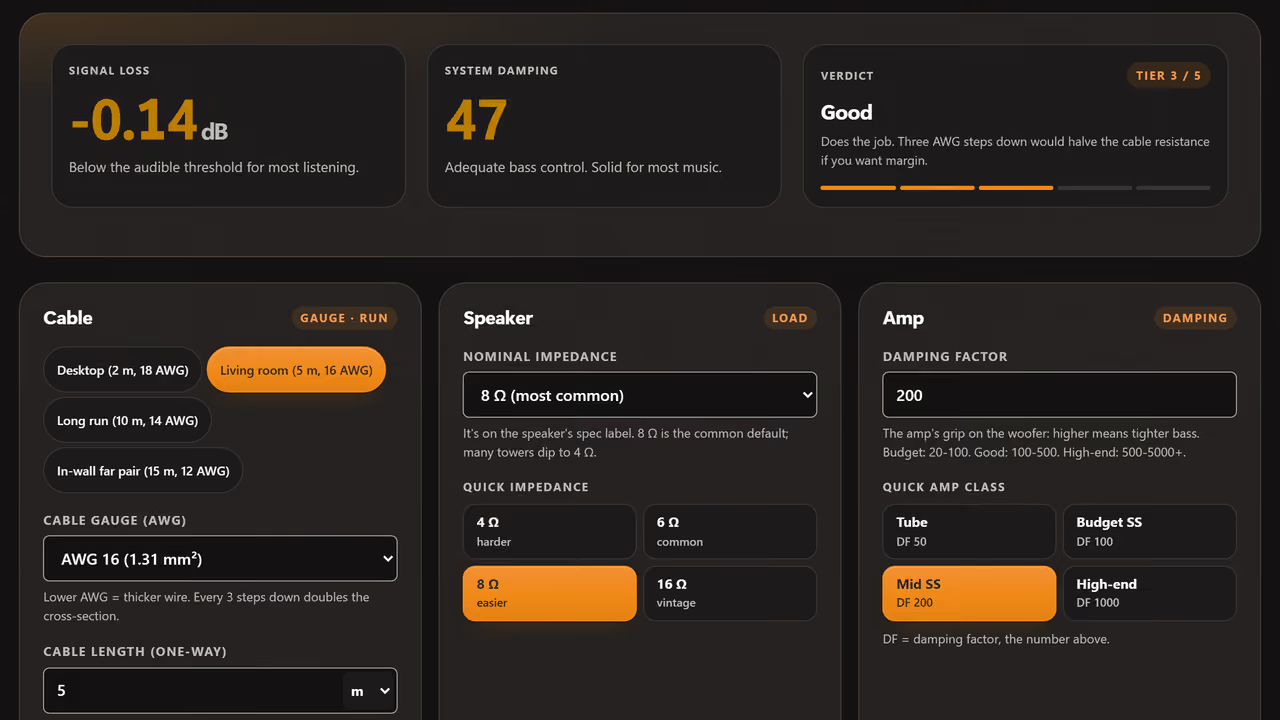
Resistance is ρ x (length x 2) ÷ cross-section. Copper at AWG 16 over 5 m is 0.131 Ω round-trip. The voltage divider against speaker impedance gives the loss: dB = 20·log10(Z ÷ (Z + R_cable)).
Below -0.5 dB is generally inaudible; below -0.1 dB is bulletproof. Halve the length and you halve the resistance; double the cross-section (3 AWG steps down) and you halve it too.
System damping factor
DF_sys = Z ÷ (Z_amp + R_cable) where the amp's output impedance is the rated DF rolled back against the 8 Ω reference it is quoted into: Z_amp = 8 ÷ DF_amp. Output impedance is a fixed property of the amp, so it does not rescale when you pick a 4 Ω speaker. Cable resistance is in series with the amp, so it directly degrades damping.
Damping controls how well the amp grips bass transients. Below 20 you lose grip on woofers; below 10 the bass becomes audibly loose. A high-DF amp (500+) gives you generous headroom against cable degradation.