Audiophile & Hi-Fi Gear Reviews

Honest headphone, speaker, DAC and amplifier reviews from weeks of real listening, with side-by-side comparisons and buying guides built from the verdicts. Zero sponsored takes.

Reviews published
70
Highest score
9.3
Buying guides
12
Last updated

Find the right gear, not the highest score.

The best product on the list is rarely the right one for your ears, your room or your budget. Start from where you are: a product you already have in mind, two you are torn between, or none.

  • I know what I want Browse reviews Every verdict in one list, filterable by category, price and sound signature. 8 categories, one scale
  • I'm choosing between two things Compare Both products side by side on specs, signature and score, with a pick and the reason for it. 35 head-to-heads
  • I don't know what I want Help me choose Answer a few questions about how you listen and get a shortlist, with what to watch out for. Four questions, all skippable

New audiophile gear reviews.

The latest reviews, newest first, each with the catch that comes with it.

Browse all 70 reviews
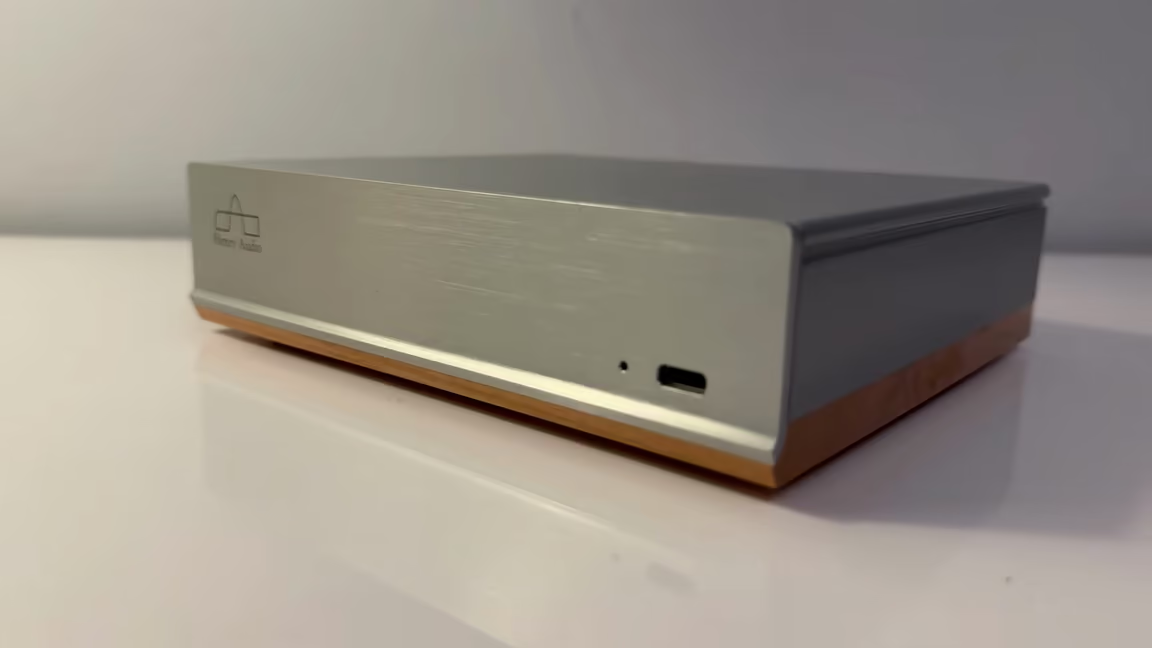
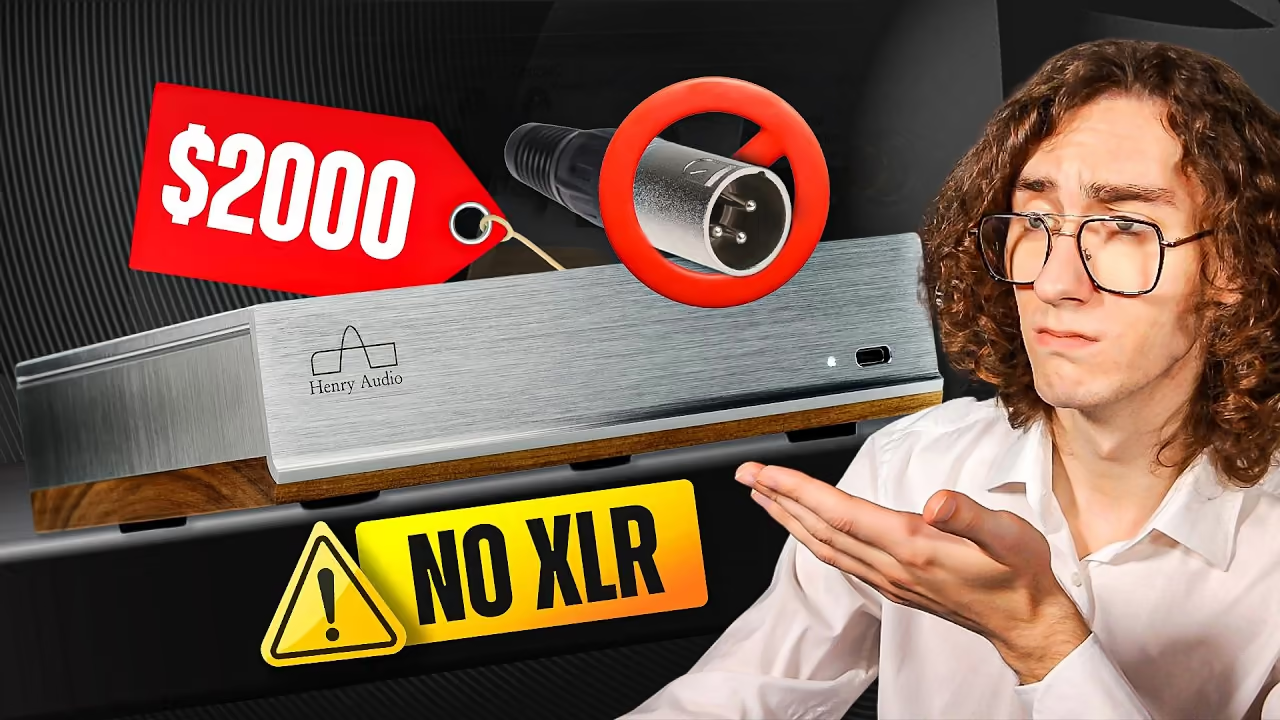
Henry Audio DA 256 in brushed aluminum on a wood base, with one small LED and a USB-C port on the front DACs DA 256

8.2

Henry Audio DA 256 Review: A €1,600 Open-Source DAC That Skips XLR on Purpose

Twenty years of one engineer's work in a €1,600 box: a published schematic and firmware, reclocked coax and optical, RCA only, PCM to 24-bit/192 kHz, and every omission deliberate.

Watch out for: No XLR outputs at all
List price €1,600 about $1,730 8 min Read the DA 256 review
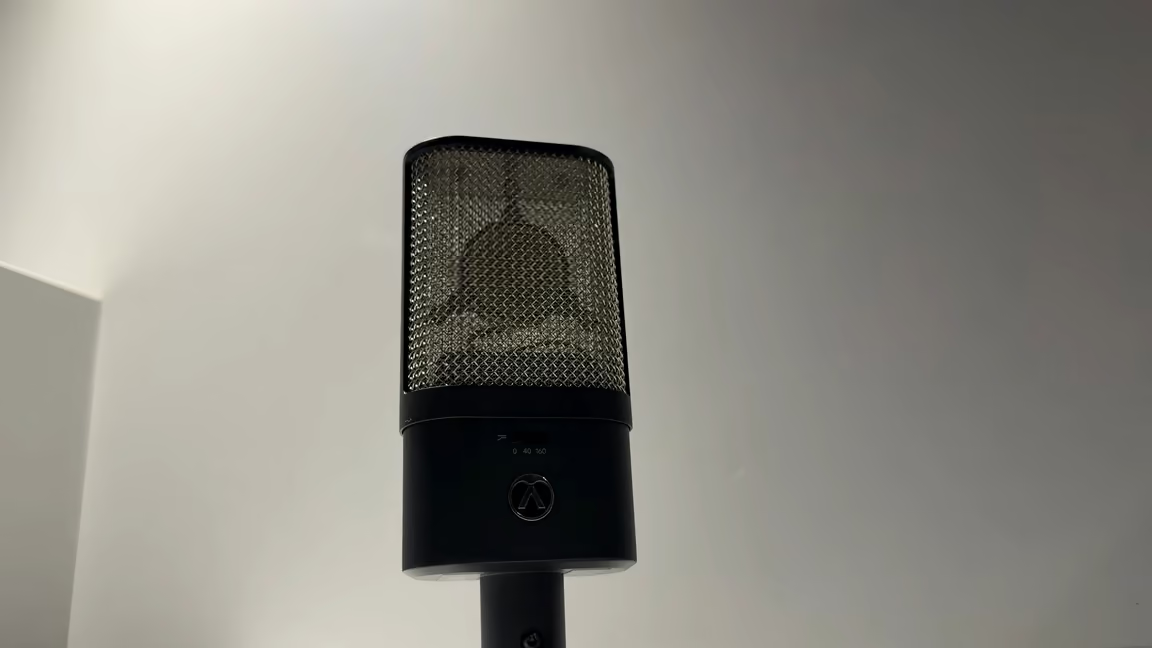
Austrian Audio OC16 front on atop a stand, capsule behind the mesh and a 0/40/160 filter switch below Microphones & Recording OC16

8.7

Austrian Audio OC16 Review: A $449 Condenser With a Hand-Built Vienna Capsule

A $449 cardioid condenser built around the CKR6, a ceramic-ring capsule hand-assembled and measured in Vienna: 148 dB max SPL, 14 dB(A) self-noise, one high-pass filter.

Watch out for: One polar pattern, one switch and no pad
Bright, lean bass
List price $449 8 min Read the OC16 review
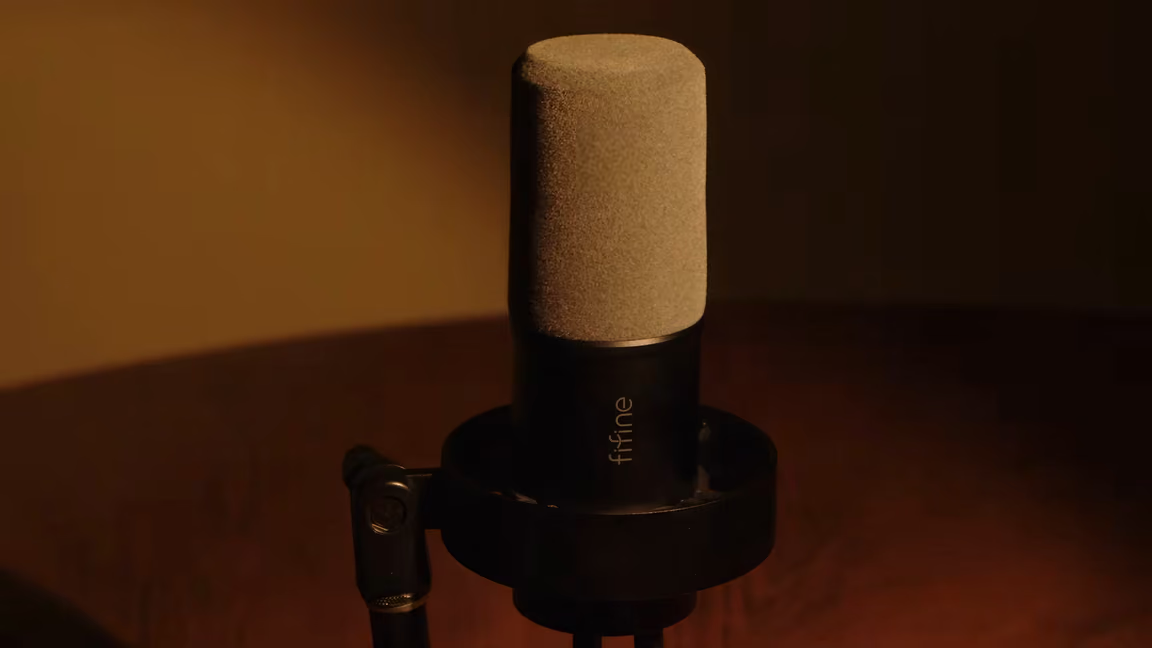
FIFINE K688 upright in its round shock mount on a stand, foam windscreen over the capsule Microphones & Recording K688

7.2

FIFINE K688 Review: A $69 XLR and USB Broadcast Mic

A dynamic broadcast microphone with both XLR and USB-C outputs, so the audio interface is already inside it: cardioid rejection, 130 dB max SPL, on-body gain and mute.

Watch out for: Frequency response stops at 50 Hz and 16 kHz
List price $68.99 7 min Read the K688 review
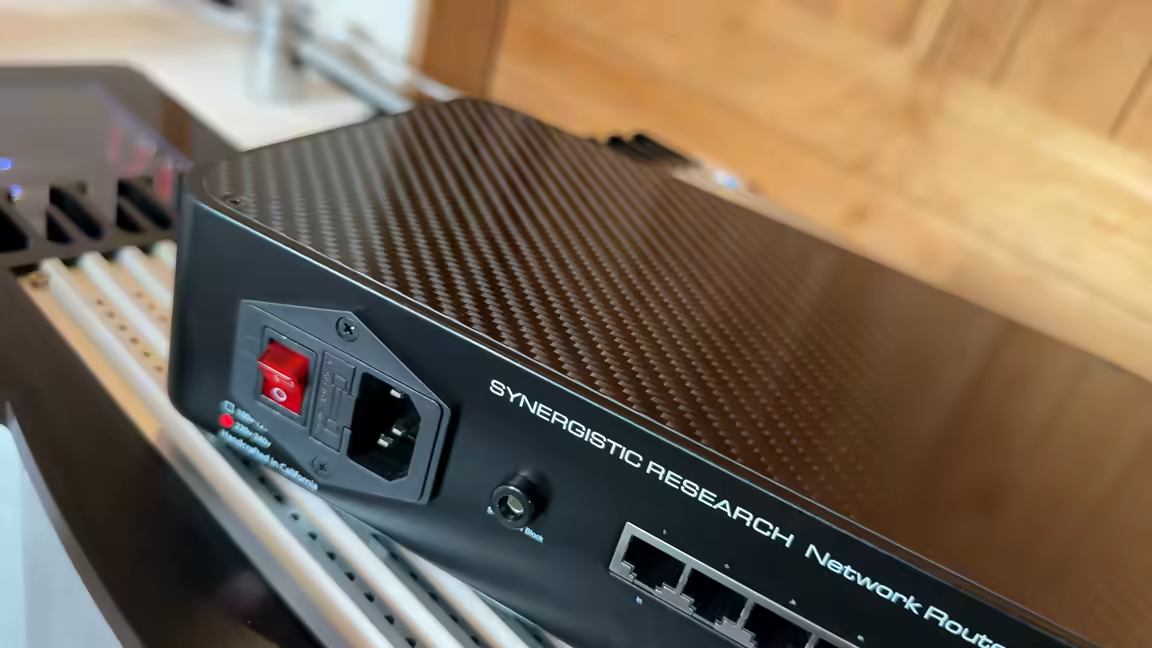
Synergistic Research Network Router UEF from a rear corner, carbon fiber lid above the inlet and ports Accessories Network Router UEF

7.8

Synergistic Research Network Router UEF Review: Does a $3,000 Router Improve Sound?

A wired-only audiophile router with a linear power supply, EM cell, ULF generator and carbon fiber voicing. In my system it lowered the noise floor on everything I stream.

Watch out for: Three thousand dollars, for a network router
List price From $2,995 8 min Read the Network Router UEF review
Ortvik Parametric Tower in natural oak, its wavy slats rising to the top edge against a pale wall Accessories Parametric Tower

8.5

Ortvik Parametric Tower Review: An Acoustic Panel and Diffuser

A freestanding acoustic tower that scatters and absorbs at the same time - handmade Czech oak over a recycled PET felt core, placed wherever the room needs it.

Watch out for: No bass absorption
List price Varies 8 min Read the Parametric Tower review
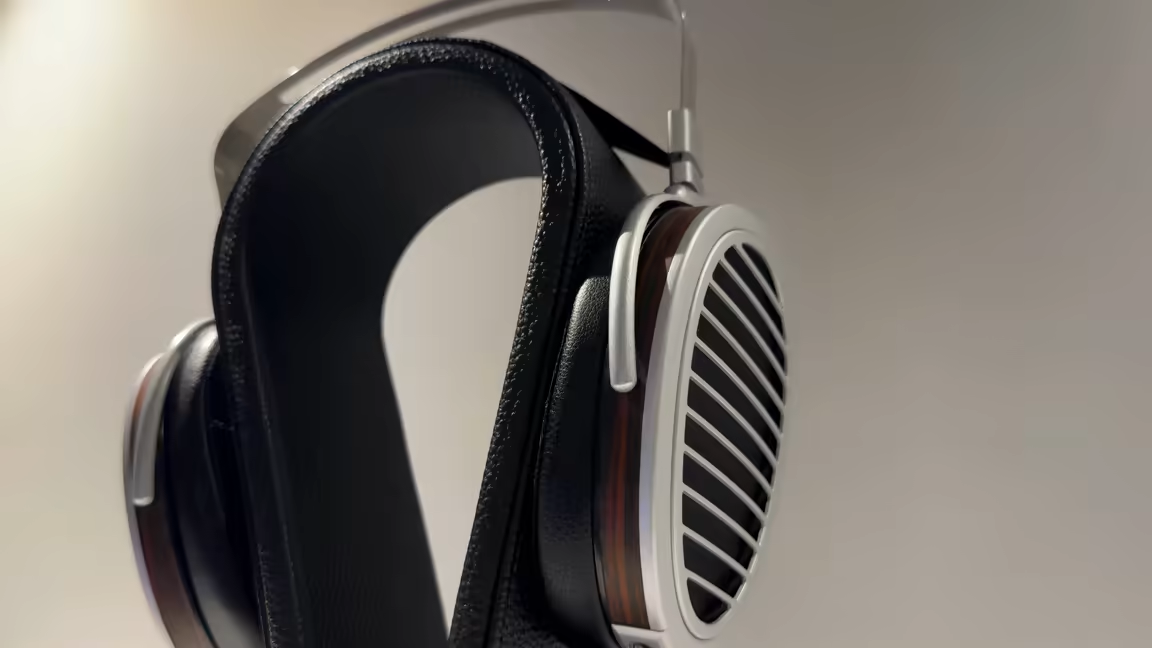
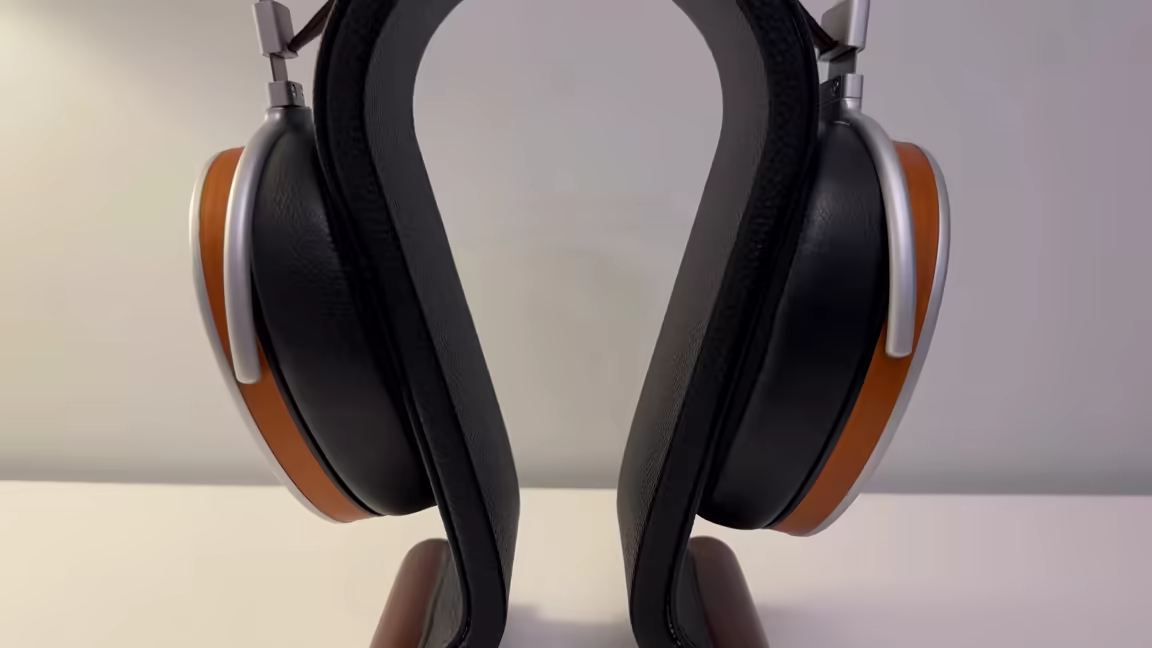
The HIFIMAN HE1000se in profile on a leather stand, a dark wood-veneer rim between its grille and pad Headphones HE1000se

9.3

HIFIMAN HE1000se Review: The $1,700 Flagship Planar

An ex-$3,500 flagship, now $1,700: nanometer diaphragm, Stealth Magnets, a holographic soundstage, and state-of-the-art detail - bright, honest, merciless with bad sources.

Watch out for: Bright, peaky treble
Bright, lean bass
List price $1,700 8 min Lowest price now: $1,699 at Apos Audio and 4 other stores on Oct 11, 2026 Read the HE1000se review

How every review is tested and scored.

Four rules, applied to every review without exception. The median score across all 70 reviews is 8.1, and nothing has scored above 9.3.

  1. No sponsored verdicts

    Brands have zero editorial input. Pre-publication review is never granted. The site carries no advertising and no affiliate links, so a negative review ships with nothing for a brand to withdraw.

  2. Long listening, every time

    Two-week minimum on the chain, multiple sources, multiple genres. No first-impressions reviews. No demo-room verdicts.

  3. One rubric, every change dated

    Every score is one writer's judgement, weighed on the same five published axes and set against the gear its category is compared on. Scores compare within a category, and a score that changes keeps the old one on the review, with the date and the reason.

  4. Disclosure first

    Most flagship units are lent by their maker or distributor and go back after the review, and a loan never buys a verdict. We never accept payment to influence one - and we publish it if a brand tries.

The test chain

A product under review is swapped into the same fixed chain, with everything else held constant, and heard sighted with the volume set by ear. Each piece is a published review.

Who does the listening

Every review is signed by the writer who tested the gear, and each writer's page lists everything they have reviewed and the verdicts they have given.

  • Jakub Charkiewicz, founder and lead reviewer, has written 66 reviews and 12 buying guides since .

  • Bastien Beauchamp, reviewer, has written 4 reviews since .

Audiophile gear reviews, by category.

Eight review hubs, one per kind of gear, each filterable by price and specs and each stating what earns the points in its category.

Buying guides, ranked by score.

Every pick is a product we reviewed, and a guide only goes up once there are enough qualifying reviews to fill it.

All 12 guides

Head-to-head comparisons.

The highest-scoring pair from each category: two products from the same class, within half a point of each other, and the better buy on score and price.

All 35 comparisons

Seventeen free audio tools.

Calculators, blind tests and analyzers. Every one runs in your browser: no signup, no upload, no tracking.

  • Online Tone Generator Sine, square, triangle and sawtooth tones from 20 Hz to 20 kHz, five noise colors, sweeps and a polarity check.
  • Speaker & Headphone Test Left and right, in or out of phase, how low the bass goes and how high you hear.
  • Headphone Power Will the amp you own actually drive those headphones? Get the answer in watts and volts.
  • ABX Blind Test Can you really hear the difference? Take a double-blind test and get a p-value.
  • FLAC & Hi-Res Checker Drop in a file and see where its spectrum stops, and whether a lossy source shows.
  • Online Equalizer Hear a 10-band graphic EQ live over music, then export the preset for your gear.
Browse all 17 free tools

The Audio Stuff on YouTube

The same reviews on video: long-form listening sessions, A/B comparisons and the occasional teardown. New videos most weeks.

Henry Audio DA 256, video review thumbnail
Henry Audio DA 256
@TheAudioStuff Watch on YouTube (opens in new tab)

Common questions about our reviews.

How scoring works, what the verdicts mean and which gear we cover.

More questions about how we work

  1. How does The Audio Stuff score audio gear?

    Every review carries a single score from 0 to 10 plus a one-word verdict, and each verdict owns a score band no other tier shares: Reference 9.2-10.0, Highly Recommended 8.2-9.1, Recommended 7.0-8.1, Mixed 5.5-6.9, Pass 0.0-5.4. The bands do not overlap, so a score names one tier. The single exception is a score exactly on a tier's floor (9.2, 8.2, 7.0 or 5.5): that makes a product eligible for the tier, and the verdict may hold it one tier lower where price, competition or reliability argue against the higher one. Our publishing system will not let a review go live with a verdict its score does not allow. A score is one writer's overall judgement after weeks of listening, set against the reference for its category at a similar price, with the five published weights of the rubric (Sound 30%, Technical performance 25%, Build & comfort 15%, System fit 15% and Value 15%) as the guide; it is not computed from them. Scores compare within a category, and the verdict bands are this site's own. A published score is not recomputed when a price moves or a newer product arrives, and a score the editor changes keeps the earlier one on the review, with the date and the reason.

  2. What does 'Reference' mean in the verdict scale?

    Reference is the top verdict, for scores of 9.2 and up: a product that sets the standard in its class, and rare by design. It does not mean the product suits everyone - price, taste and the rest of your system still decide that. It is also a different thing from the test chain, the gear every review is compared on: a piece is in the chain because it stays the same from one review to the next, and three of its six pieces score below 9.2.

  3. What audio gear brands does The Audio Stuff cover?

    Gear from 33 brands so far, most of all HIFIMAN, SMSL, Sivga, Taga Harmony, Denafrips, Kiwi Ears, Melodika and Monosaudio; the other 25 are in the review catalogue, searchable by name. Category, merit and reader requests decide what gets reviewed next; brand relationships do not.

  4. Do reviews use measurements or just listening tests?

    Listening. Every review is sighted listening over weeks on the fixed chain its category is compared on, with levels set by ear, and none is a blind test. Nothing is measured in-house: the impedance, sensitivity, power and noise figures a review quotes are the maker's published specifications, corrected on the review when the maker's own page says otherwise. That puts the large differences a review describes, such as a headphone's tonal balance, on firmer ground than the small ones, such as what a cable changes. The how-we-test page sets out what a score can and cannot tell you.