
HIFIMAN HE1000 Stealth Review: Flagship Planar at a Lower Price
A years-old HIFIMAN flagship, cheaper than ever: Stealth Magnets, a nanometer diaphragm, a wide open soundstage, and a fun, bright tuning - mind the treble peaks and the large fit.
higher than 63% of everything we have tested
Value Steep. You are buying performance here, not value.
- Standout
- Excellent comfort despite 458g
- Watch out for
- Genuinely large
- Better alternative
- HIFIMAN HE1000se: $600 more, scores 0.8 higher.
Is it for you?
- You want the balance to lean bright, with the detail pushed forward
- You're treble-sensitive
- $1,119 has to buy value as well as performance
Pick #9 of 11 in our Best Planar Magnetic Headphones guide.
There's a HIFIMAN flagship that almost nobody mentions anymore - and I think that's a mistake. Years after it launched, the HE1000 Stealth is cheaper than it's ever been, which leaves one question - did it quietly fade out for a reason?
Is It Comfortable? Big, Light-Wearing, Beautifully Made
The first word that comes to my mind is big. The HE1000 Stealth is a large headphone - large cups, a tall, almost preposterous headband - and there's no way around it. On the scale it lands at around 458 grams, which for a planar magnetic isn't unusual, but it does sit on the heavier side. Here's the thing, though - you don't really feel those 458 grams. The weight distribution is genuinely good thanks to that wide suspension band, which spreads it across the top of your head. The strap that actually touches you is soft genuine leather, wide enough to feel cushioned, even though there's no padding inside it. Height is set by two aluminum slides secured with a clicking mechanism, with plenty of stops to adjust the fit - and luckily there are no squeaks or creaks when you swivel the cups around. (view larger)
Now, I want to be straight with you, because this matters before you spend the money. This is a genuinely large headphone, and if you've got a smaller head, it might not fit perfectly even at its tightest setting. The earcups are big enough that on some people the bottom edge can press against the jaw. So if you're on the petite side, that's the one thing to be honest with yourself about. But if you do fit it - and most people will - the comfort is excellent. The clamping force is medium, never too much. The pads are truly spacious and deep, so your entire ear sits inside without ever getting close to the driver, and I'm talking hours and hours of listening with no hot spots creeping in. They even stay comfortable for long stretches in the summer because the hybrid design - fabric on the inside with synthetic leather around the rim - actually breathes. And the pads are user-replaceable, clipping on and off, though I'll warn you - don't do it if you don't have to.
On build, this is about as good as old school HIFIMAN gets. The headband frame, the attachment yokes, and the grilles on the cups are all hand-polished, CNC-machined aluminum - real metal and real leather, not plastic pretending to be either. Owners of the previous HE1000 report it still looking basically new, and the newer adjustment arms resist the scratching better - which is something that plagued older models. HIFIMAN had a reputation for shaky quality control years ago, but in practice that's behind them now. The cable that comes with the headphone connects with a common dual 3.5-millimeter jack, which makes swapping cables easy. That's my favorite connector to have on a headphone, plus it comes with an extra balanced cable - which is going to come in handy considering the power needs of the HE1000 Stealth.
And the look? It's a HIFIMAN, you can't mistake it for anything else. That signature egg-shaped cup that's been the face of this lineup for years. But the detail that really sells it, for me, is the wood. Each cup is finished with a wooden accent all around. Whether it's real, or just a veneer, I'm not sure. That warm wooden band gives you a lovely color break that makes the whole headphone look more elegant - and, to my eye, far more expensive than it really is. On top of that, the tan leather headband instead of the usual black, makes the whole thing just click.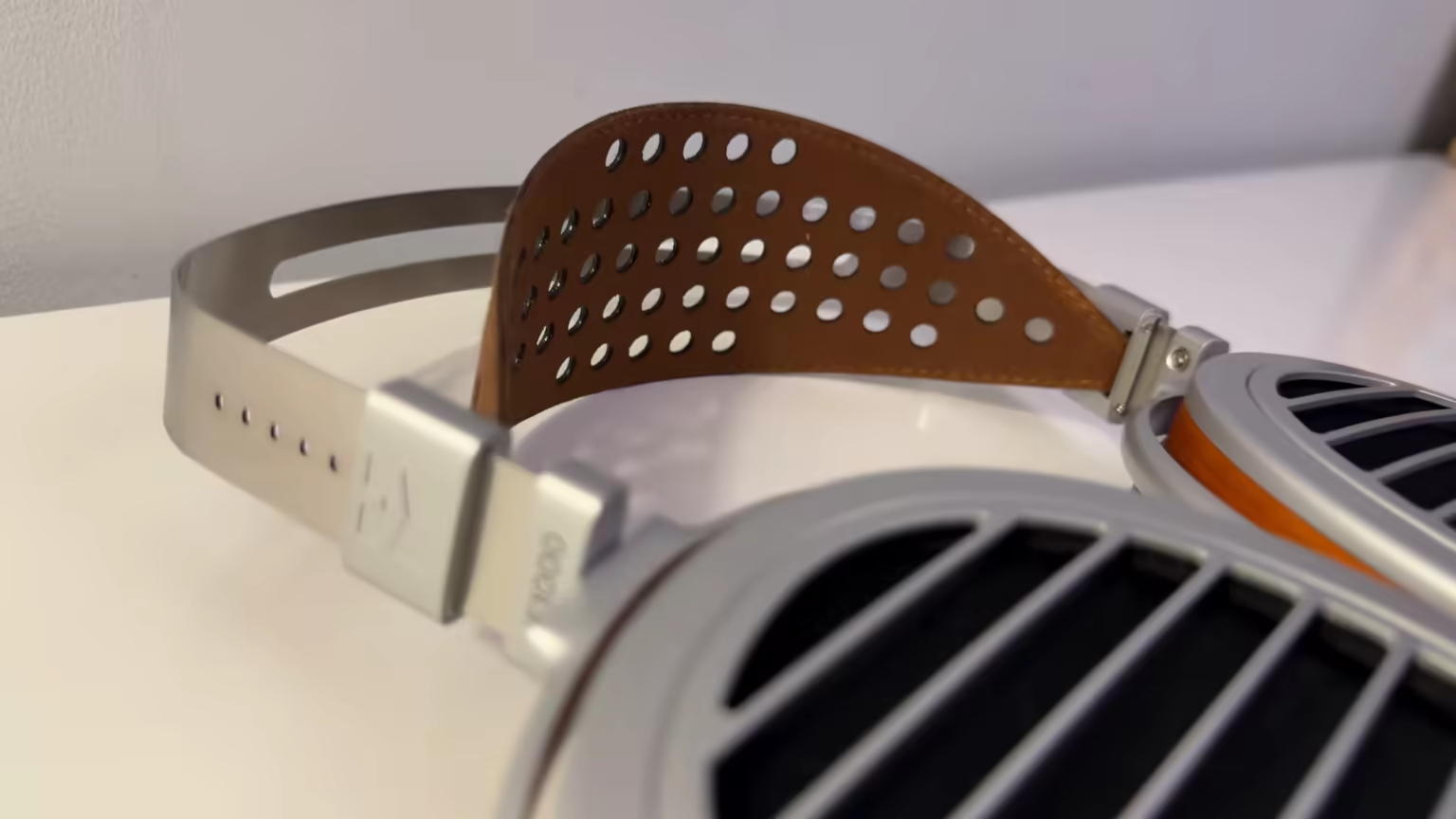 (view larger)
Stealth Magnet Technology: Inside the Driver
So what's actually going on inside these things? Because the HE1000 Stealth isn't expensive just for the sake of it - you're paying for a stack of driver technology HIFIMAN spent years developing. It starts with the diaphragm - the film part that actually moves to create the sound. HIFIMAN made theirs extremely thin. They market it as the world's first diaphragm measured in nanometers, and to be fair, it's almost impossibly thin and light. And the lighter that film is, the more precisely it can react to the music. That's the whole idea.
Then there's the technology the headphone is actually named after - the Stealth Magnets. In most planar headphones, the magnets sit right in the path of the sound, and the waves have to squeeze past them, which introduces a kind of turbulence that smears the detail. HIFIMAN reshaped those magnets to be, in their words, "acoustically invisible," so the sound waves pass through far more cleanly. Then, there's something they call an Advanced Asymmetrical Magnetic Circuit - basically an uneven arrangement of magnets on either side of that film, the payoff of around seven years of research, all aimed at driving the diaphragm more evenly and accurately. And finally, that distinctive metal grille on the cups. That's the patented "Window Shade" system. It's not just a styling choice - but probably that too. It's engineered to shield the very delicate driver while keeping the back of the headphone as open as possible.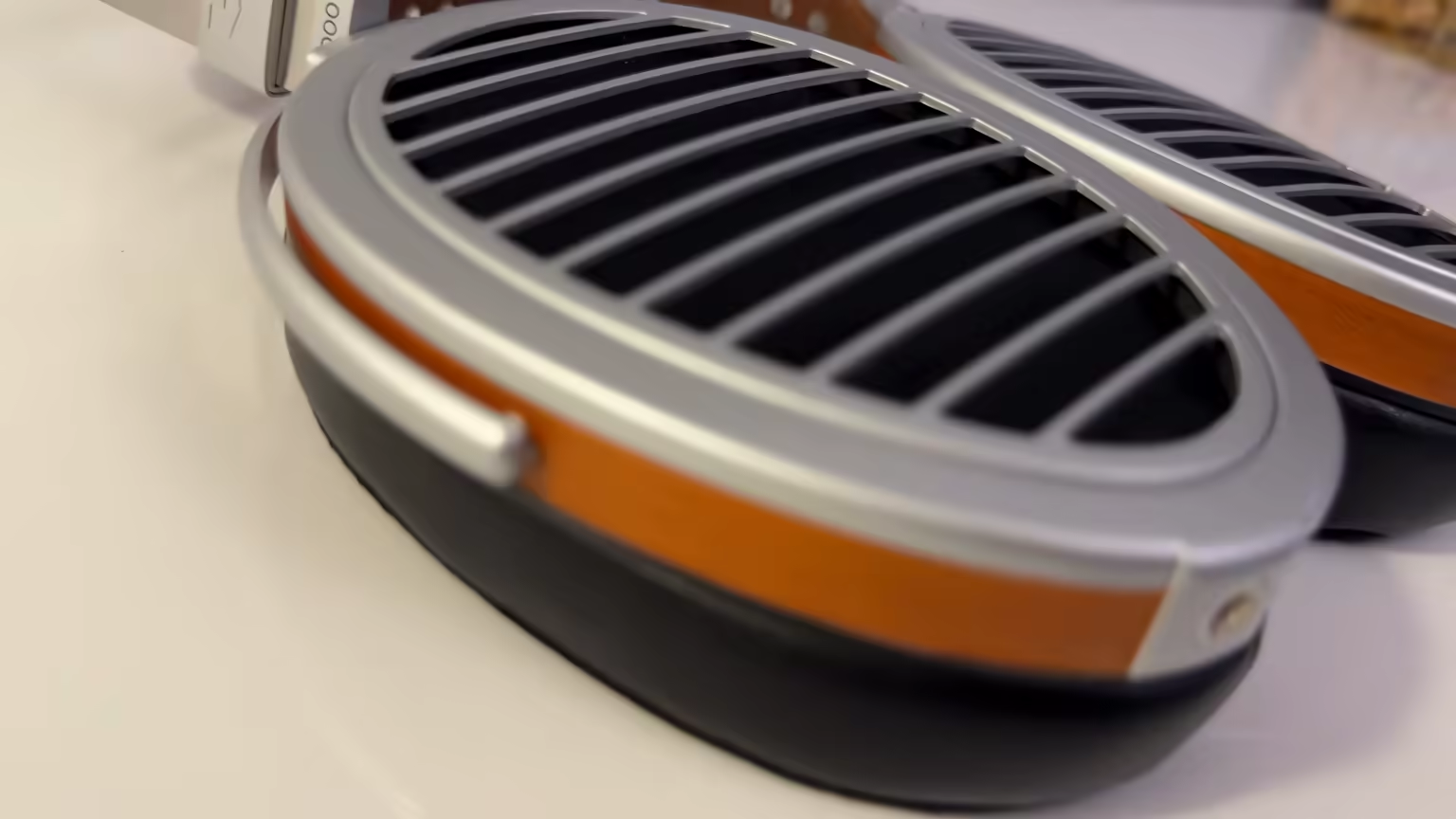 (view larger)
Technical Specifications: Easy to Drive, Better With Power
On paper, the frequency response stretches from 8 hertz all the way up to 65 kilohertz - far wider than anything you or I can actually hear, but that kind of headroom at the extremes is exactly what you'd expect from a flagship, and it has many hidden benefits. The two figures that matter most day to day are impedance and sensitivity: 32 ohms and 93 decibels. And here's what that actually means - the HE1000 Stealth is somewhat easy to drive, so you can plug it into just about anything and get enough volume, though it does perform much, much better with a proper amplifier behind it. For a high-end planar, that's to be expected. It simply has enough resolution to tell you with a straight face that you're cheaping out on the source.
How Does It Sound? Bright, Open, and Fun
What stands out about these as soon as you start listening is how clean everything sounds. The tuning is neutral with a bright tilt, very much a reference sound, and the detail you get out of them is seriously high-end. Play something well recorded and you can hear right into the mix, catching little things in a track you'd usually miss. That clarity has a flip side, though. The HE1000 Stealth is revealing, and it won't do you any favours with a poor recording or a cheap source. It shows you what's there, the good and the bad. If what you want is something warm and easy to leave running in the background, this isn't really built for that.
The bass is very good. It's tight, well textured, and with more weight than most other HIFIMANs. What it isn't is a basshead headphone. Switching from a big dynamic driver you might find it a little reserved, because it gives you the bass the recording asks for rather than piling bloat on top of it.
The midrange follows the usual HIFIMAN recipe. There's a small lift in the upper mids and a dip below that - it's the ear-gain dip the egg-shaped HIFIMANs are known for. In everyday listening, vocals come through clean, present and very natural, with some of the most believable timbre I've heard from a planar. That dip won't suit everyone, but it does suit me. If you like your vocals thick and pushed right up front, the presentation here sits a touch further back.
Then there's the treble, which is what everyone asks about. Yes, it's bright. But the part that matters is the shape of that brightness. The top end is a little peaky and uneven, with some sharp spots, rather than one smooth rise, and that's what gives the Stealth its sparkle and its bite. On the right track it's exciting. On a hot recording it can be too much.
The soundstage is the part I enjoy most. It's wide and open, with that out-of-your-head quality the big planars do so well. Imaging is strong too. It may not be the most pinpoint I've heard, but it lays everything out convincingly in a large, believable space.
Now - the comparison you've probably been waiting for. How does it stack up against its pricier, newer sibling, the HE1000se? And this is fascinating, because the two go bright in completely different ways. You'd assume the cheaper Stealth is the brighter one. It isn't, exactly. The SE actually has more treble overall - it's the more elevated, more airy headphone up top - but here's the twist: on the SE it's smoother and more even, a lift across the whole region rather than those sharp little spikes. So the Stealth pokes at you, while the SE lifts everything more gracefully. The SE is also the more transparent, more detailed, wider-staged of the two. The trade-off is bass and body. The Stealth gives you more low-end weight and a fuller, richer sound, where the SE runs leaner and more clinical. And to my ears, the Stealth is just the more fun, while the SE is more technically superior. The difference isn't all that huge though - I'd say it mostly boils down to what kind of tuning you prefer, and that's the whole reason for the HE1000 Stealth's existence.
Sound signature
Derived from the words this review uses: each axis runs between two opposite descriptors, and the shape leans toward whichever side the writing does.
- Warm ↔ Bright Leans bright
- Relaxed ↔ Analytical Leans analytical
- Polite ↔ Aggressive Leans aggressive
- Lean ↔ Bass-heavy Neutral, no clear signal in the review language
- Intimate ↔ Wide stage Leans wide stage
Hear what "bright, analytical, aggressive, wide stage" means: a short synthesised loop, flat and then with those leanings. An illustration of the words, not a recording of the HE1000 Stealth.
Not sure which signature suits you? Find yours with a blind A/B test

Watch the video review
Subscribe on YouTube (opens in new tab)Prefer to read? The written review above covers everything in the video.

- 0:00 Older High-End Headphones Are A HiFi Hidden Gem! (opens in new tab)
- 0:28 Comfort & Build Quality - Weight, Suspension Strap, Earcup Size, Ear Pads (opens in new tab)
- 4:09 Technologies - Asymmetrical Stealth Magnets, Nanometer Diaphragm (opens in new tab)
- 5:52 Technical Specs - Impedance, Sensitivity, Frequency Response, Amplifier Pairing (opens in new tab)
- 6:46 Sound Quality - Tonal Balance, Clarity, Detail Retrieval, Sound Stage, Dynamic Range (opens in new tab)
Common questions about the HE1000 Stealth
Is the HIFIMAN HE1000 Stealth worth it?
Yes - 8.5/10, Highly Recommended, higher than 63% of everything we have tested, against a catalogue median of 8.1. On value it rates steep: better value exists in headphones, so you are buying performance here, not value. Price: $1,119.
Who should buy the HIFIMAN HE1000 Stealth, and who should skip it?
Buy it if you want the balance to lean bright, with the detail pushed forward. Skip it if you're treble-sensitive, and $1,119 has to buy value as well as performance.
What amplifier does the HIFIMAN HE1000 Stealth need?
Impedance is 32 Ω. By the rule of eighths the amplifier feeding it wants an output impedance no higher than 4 Ω, otherwise the interaction between the two tilts the frequency response rather than simply making it quieter. Power is the separate question. About 50 mW to reach 110 dB peaks, which is most dongle DACs. The review records 93 dB without saying against what, but it can only be dB/mW here: read as dB/V it would work out to 78 dB/mW, less sensitive than the Susvara and harder to drive than any headphone in production.
What should I consider instead of the HIFIMAN HE1000 Stealth?
The pieces we have actually run against it: the HIFIMAN Ananda Stealth scores 0.3 higher and costs $760 less, the HIFIMAN Arya Stealth scores 0.2 higher and costs $360 less, and the HIFIMAN Edition XS scores 0.2 higher and costs $850 less. Every one of those matchups has its own page in the head-to-head section.
Will the HE1000 Stealth fit a smaller head?
Possibly not, and I want to be straight about it before you spend the money. This is a genuinely large headphone - large cups, a tall, almost preposterous headband - and at its tightest setting it may still not fit a smaller head properly. The cups are big enough that on some people the bottom edge presses against the jaw. Most people will be fine and the comfort is then excellent. If you are on the petite side, this is the one thing to be honest with yourself about.
Is 458g too heavy to wear for hours?
You do not really feel it, which sounds like a dodge and is not. 458 grams is on the heavier side even for a planar, but the wide suspension band spreads the load across the top of your head, and the strap that touches you is soft genuine leather, wide enough to feel cushioned with no padding inside it. Clamp is medium and never excessive. The pads are deep enough that your ear never approaches the driver, and the fabric-and-leather hybrid actually breathes, so hours of summer listening pass without hot spots.
Is the HE1000 Stealth's treble too bright?
It is bright, and the shape of that brightness is the part that matters. The top end is a little peaky and uneven, with some sharp spots, rather than one smooth rise. That is what gives it its sparkle and its bite: exciting on the right track, too much on a hot recording. Combined with how revealing the headphone is generally, a poor master or a cheap source gets no favours here. If you want something warm to leave running in the background, this is not built for it.
HE1000 Stealth or HE1000se?
They go bright in completely different ways, and that is the whole decision. You would assume the cheaper Stealth is the brighter one; it is not, exactly. The SE has more treble overall and is the airier headphone, but it lifts the whole region smoothly instead of spiking. So the Stealth pokes at you where the SE rises gracefully. The SE is also more transparent, more detailed and wider-staged. The trade is weight and body: the Stealth is fuller and richer, the SE leaner and more clinical. The Stealth is more fun, the SE more technically superior.
Does the HE1000 Stealth need a powerful amplifier?
It will run off almost anything and it will tell you when you have cheaped out. At 32 ohms and 93 decibels it is somewhat easy to drive, so volume is never the issue - but it performs much, much better behind a proper amplifier, and it has enough resolution to make the difference obvious rather than subtle. HIFIMAN include an extra balanced cable in the box for exactly this reason, and the dual 3.5mm connectors make swapping easy.
Has HIFIMAN's build quality problem gone away?
On this headphone, yes. The headband frame, the yokes and the cup grilles are hand-polished, CNC-machined aluminium - real metal and real leather, not plastic imitating either. There are no squeaks or creaks when you swivel the cups, the height slides click positively through plenty of stops, and the newer adjustment arms resist the scratching that plagued older models. Owners of the previous HE1000 report theirs still looking basically new. The old reputation for shaky quality control is genuinely behind them.
Are the HE1000 Stealth pads replaceable?
Yes, they clip on and off, and I would leave them alone unless you have to. They are spacious and deep, with a hybrid construction - fabric on the inside, synthetic leather around the rim - that is doing real work for both comfort and tuning. Pads are part of how a planar is voiced, so treat a swap as a change to the sound rather than a maintenance job. Knowing you can replace them years from now is the point; doing it for fun is not.
Is the HE1000 Stealth still worth buying years after launch?
That is precisely why it is interesting. It is cheaper than it has ever been, and it did not fade from the conversation because anything is wrong with it - the tuning simply divides people, and the newer SE took the attention. What you get is a flagship stack of driver technology, a build that has aged well, a wide out-of-your-head soundstage, and bass with more weight than most HIFIMANs manage. If the peaky treble suits you, the value here is unusual.